London Criminal Solicitors: UK Court Process from Arrest to Tria
London criminal solicitors guide the UK court process from arrest to trial — here's exactly what to expect at every critical stage of criminal proceedings.
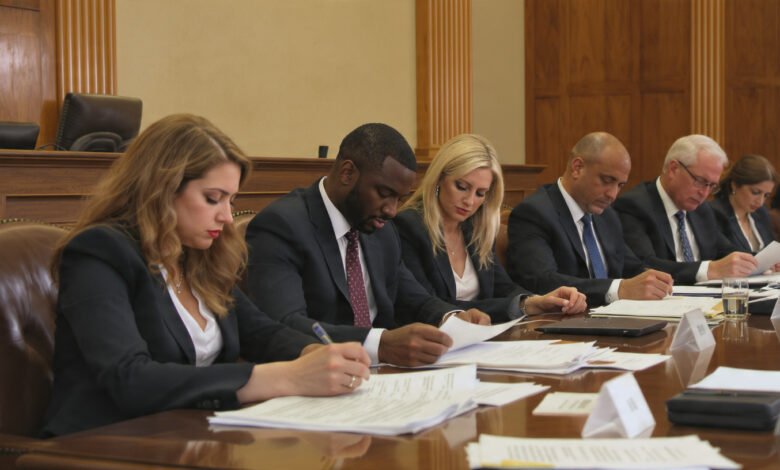
London criminal solicitors deal with one of the most stressful situations a person can face. Whether you have been arrested, invited for a voluntary police interview, or charged with an offence, the UK criminal justice system can feel overwhelming if you do not know how it works. Most people have never been through it before, and the combination of legal jargon, tight deadlines, and high stakes makes it easy to feel lost.
This guide breaks the whole process down clearly — from the moment of arrest right through to trial in either the Magistrates’ Court or Crown Court. Understanding how each stage works helps you make better decisions, ask the right questions, and know what to expect from your legal team. It also explains why getting a solicitor involved early is not just a good idea but, in many cases, the difference between a case collapsing and a conviction.
The UK criminal court system has a defined structure. Cases move through specific stages in a specific order. Knowing that order — and knowing what your solicitor should be doing at each point — puts you in a far stronger position. This article covers all of it, plainly and honestly, so you can go into the process informed rather than anxious.
What Do London Criminal Solicitors Actually Do?
Before getting into the court process, it is worth being clear about what a criminal defence solicitor does, because there is still some confusion about roles in the UK legal system.
A solicitor is your main legal adviser. They handle your case from start to finish — taking your instructions, reviewing evidence, applying for legal aid, preparing your defence strategy, and instructing a barrister if your case goes to trial. A barrister advocates for you in court. Most people in the Crown Court will be represented by a barrister who has been instructed by their solicitor.
Some solicitors hold Higher Rights of Audience, which means they can represent you in the Crown Court themselves without a separate barrister. This is increasingly common among experienced London criminal solicitors and can reduce costs and improve communication since you are dealing with one person throughout.
What sets a good criminal defence solicitor apart is not just legal knowledge. It is the ability to spot weaknesses in the prosecution’s case early, manage client expectations realistically, and make the right tactical decisions at every stage. In a system where procedural deadlines can make or break a defence, having someone who knows the process inside out matters enormously.
Stage 1 — Arrest and Detention at the Police Station
The UK court process formally begins before anyone sets foot in a courtroom. It starts at the point of arrest.
Under the Police and Criminal Evidence Act 1984 (PACE), the police have powers to arrest anyone they have reasonable grounds to suspect has committed, is committing, or is about to commit an offence. Once arrested, you will be taken to a police station and formally detained.


Your Rights After Arrest
The moment you are arrested or detained, you have rights that the police are legally required to inform you of. The most important ones are:
- The right to free legal advice — you are entitled to speak to a solicitor, and this does not cost you anything at the police station stage
- The right to have someone informed of your arrest
- The right to remain silent — you do not have to answer police questions
These rights are not formalities. They are protections built into the system, and exercising them does not make you look guilty. In fact, speaking to a criminal defence solicitor before any police interview is one of the most important things you can do.
How Long Can the Police Hold You?
Without charge, the police can hold you for up to 24 hours. A senior officer can authorise an extension to 36 hours. After that, a magistrate must authorise any further detention, up to a maximum of 96 hours for serious offences. Terrorism cases have separate rules under different legislation.
During this detention period, your solicitor should be at the police station advising you, reviewing what evidence the police say they have, and helping you decide whether to answer questions, stay silent, or provide a prepared statement. The choices made during this stage can significantly affect what happens later in court.
Stage 2 — The Police Interview Under Caution
The police interview under caution is a formal recorded process. The caution itself — “You do not have to say anything, but it may harm your defence if you do not mention when questioned something which you later rely on in court” — is deliberately worded to create pressure. That wording matters.
If you stay silent during interview and then raise a defence at trial that you never mentioned to police, a jury can draw what is called an adverse inference from your silence. Your solicitor will advise you on how to handle this, and in some cases a prepared written statement handed to police — which goes on record without you answering questions directly — is the right approach.
What Your Solicitor Should Be Doing Here
A good London criminal solicitor will:
- Request disclosure of the police case before the interview starts
- Advise you on whether to answer questions, remain silent, or provide a statement
- Be present in the interview room to object to improper questions
- Ensure the interview is conducted lawfully under PACE codes of practice
What happens in the police interview is often critical evidence in any subsequent trial. Getting it wrong at this stage is very difficult to undo later.
Stage 3 — Charging and the Decision to Prosecute
After the investigation, a decision is made about whether to charge you. For less serious matters, the police can charge directly. For more serious offences, the file goes to the Crown Prosecution Service (CPS), which applies a two-part test:
- The evidential test — is there enough evidence to provide a realistic prospect of conviction?
- The public interest test — is it in the public interest to prosecute?
Both tests must be met. If either fails, the CPS should not charge.
Your solicitor can make pre-charge representations to the CPS — a formal written argument for why charges should not be brought or should be reduced. This is particularly valuable in complex cases and in situations where the evidence is borderline. A well-crafted pre-charge submission sometimes prevents a prosecution from starting at all.
If you are charged, you will be given a charge sheet explaining exactly what you are accused of and which law you are alleged to have broken. At this point, the court process formally begins.
Stage 4 — First Appearance in the Magistrates’ Court
Every criminal case in England and Wales begins at the Magistrates’ Court, regardless of how serious the offence is. This is a fundamental feature of the UK court structure.
The Magistrates’ Court is presided over by either two or three lay magistrates (also called justices of the peace) or a single district judge. Cases dealt with entirely in the Magistrates’ Court are called summary offences — these are generally less serious matters like minor assaults, road traffic offences, and low-value theft.
The Three Categories of Criminal Offence
Understanding which type of offence you face determines where your case will ultimately be heard:
Summary offences — Magistrates’ Court only. Examples include common assault, driving without insurance, and most road traffic matters.
Either-way offences — can be heard in either the Magistrates’ Court or the Crown Court. This includes things like theft, assault occasioning actual bodily harm (ABH), and many drug offences. Both the magistrates and the defendant have some say in where the case is heard.
Indictable-only offences — Crown Court only. These are the most serious crimes: murder, manslaughter, rape, serious robbery, and complex fraud. The Magistrates’ Court will handle the initial paperwork but will send the case straight to Crown Court.
What Happens at the First Hearing?
At the first appearance, the charge is read out. The court will consider:
- Whether you need legal aid (and your solicitor should already have this application in hand)
- Bail — whether you are released pending further hearings, and on what conditions
- Which court will deal with the case
- A provisional timeline for the next steps
Your solicitor should attend this hearing with you. If your case is going to be dealt with in the Magistrates’ Court, a trial date may be set at an early stage. If it is heading to Crown Court, the process becomes longer and more structured.
Stage 5 — Bail, Remand, and Pre-Trial Preparation
Bail in the UK Court System
Bail is the release of a defendant before trial, either unconditionally or subject to conditions. Common bail conditions include:
- Curfew (being at a specified address between certain hours)
- Surrendering your passport
- Reporting to a police station on specified days
- No contact with witnesses or the alleged victim
- Staying away from a specific area
If the court refuses bail and remands you in custody, your solicitor can apply for bail at a subsequent hearing. They can also apply to vary conditions if they become impractical.
Building the Defence
Once bail is sorted, the real work begins. Pre-trial preparation is where criminal defence solicitors earn their fees, even if nobody sees most of it.
This involves:
- Reviewing all evidence disclosed by the prosecution
- Taking detailed instructions from you about what happened
- Identifying witnesses who support your account
- Instructing expert witnesses if needed (forensic scientists, medical professionals, psychologists)
- Advising on the likely outcomes of different pleas
- Developing a defence strategy
The prosecution is required to disclose all material relevant to the case — including evidence that might help the defence. This is called disclosure. Failures in disclosure are one of the most common grounds for appeal, and your solicitor should be scrutinising the prosecution’s disclosure schedules carefully.
Stage 6 — Hearings in the Crown Court
For cases heading to trial in the Crown Court, there is a structured sequence of hearings before the actual trial begins.
Plea and Trial Preparation Hearing (PTPH)
The first Crown Court appearance is usually the Plea and Trial Preparation Hearing. At this point, you enter a formal plea — guilty or not guilty. If you plead guilty, the case moves to sentencing. If you plead not guilty, the case is listed for trial and the court gives directions to both sides about what needs to happen before it.
Directions at a PTPH might cover:
- Dates for the prosecution to serve additional evidence
- Defence to serve its case statement
- Any preliminary legal arguments (called abuse of process arguments or applications to exclude evidence)
- Expert evidence timetable
- A provisional trial date
Preparatory Hearings
In long and complex cases — serious fraud, multi-defendant cases, terrorism — there may be additional preparatory hearings to resolve legal issues before the jury is even sworn in. These can cover anything from admissibility of evidence to applications to stay the prosecution.
Your criminal defence solicitor will attend or instruct your barrister to attend these hearings, and they are not merely procedural box-ticking. The decisions made at preparatory hearings can fundamentally shape how the trial unfolds.
Stage 7 — The Trial: Magistrates’ Court vs Crown Court
Trial in the Magistrates’ Court
A Magistrates’ Court trial has no jury. The magistrates or district judge decide both the facts and the law. Hearings are generally shorter and less formal than Crown Court, though they should never be taken lightly.
The process runs as follows:
- The prosecution opens the case and calls witnesses
- Defence solicitor or barrister cross-examines prosecution witnesses
- Defence may submit there is no case to answer (a half-time submission)
- If the case continues, the defence presents its case and calls witnesses
- Prosecution cross-examines defence witnesses
- Both sides make closing arguments
- The magistrates or district judge retire and return a verdict
The maximum sentence in the Magistrates’ Court is generally six months for a single offence, or up to twelve months for two or more offences. From 2022, magistrates also gained powers to impose sentences of up to two years for certain either-way offences, depending on the case.
Trial in the Crown Court
Crown Court trials are heard before a judge and a jury of 12 members of the public. The jury decides the facts — guilty or not guilty. The judge rules on legal questions and, if there is a guilty verdict, passes sentence.
The trial process in Crown Court follows this structure:
- Jury selection — 12 jurors are selected from a pool. Either side can make limited challenges
- Prosecution opening — the prosecutor explains the case to the jury and what they intend to prove
- Prosecution evidence — witnesses give evidence and are cross-examined by the defence barrister
- Half-time submission (if applicable) — defence can argue there is no case to answer
- Defence case — the defendant may give evidence (they cannot be compelled to), and defence witnesses are called
- Closing speeches — both sides address the jury
- Judge’s summing up — the judge directs the jury on the law and summarises the evidence
- Jury deliberation — the jury retires to reach its verdict
The standard of proof in a criminal trial is beyond reasonable doubt — or, as judges now direct juries, the prosecution must make them “sure” of guilt. This is a high threshold, and it is the defence solicitor’s and barrister’s job to ensure the jury understands exactly what that standard means.
Verdicts and Sentencing
If a jury returns a not guilty verdict, the defendant is acquitted and immediately discharged. The case ends there (subject to extremely limited exceptions for double jeopardy).
If the verdict is guilty, the judge will either sentence immediately or adjourn for pre-sentence reports from the probation service. These reports help the judge understand the defendant’s background, circumstances, and risk factors before imposing a sentence.
For serious offences in the Crown Court, sentences can range from community orders through to life imprisonment. Your criminal defence solicitor and barrister will prepare a mitigation plea — a structured argument for a less severe sentence — which can make a very real difference to the outcome.
How Legal Aid Works for Criminal Cases
The question of cost is understandably important. Legal aid in criminal proceedings is means-tested and merits-tested. For police station representation, legal aid is available automatically and free to everyone — regardless of income. This is one of the most important protections in the system and should always be used.
For court proceedings, the Means Test and Interests of Justice Test both apply. The interests of justice test considers factors like the likelihood of imprisonment, the complexity of the case, and your ability to understand the proceedings without legal representation.
You can find full information about criminal legal aid eligibility on the GOV.UK legal aid guidance pages.
If you do not qualify for legal aid, private representation is available. Costs vary significantly depending on the complexity of the case, the seniority of the solicitor and barrister instructed, and whether the case is in the Magistrates’ or Crown Court. Many firms offer a free initial consultation.
How Long Does the UK Court Process Take?
One of the most common questions people have is how long the whole thing takes. The honest answer is: it depends.
- Magistrates’ Court cases — straightforward matters are often resolved in a single hearing. Cases requiring a trial might take four to six months from charge to verdict
- Crown Court cases — from charge to trial, it commonly takes 12 to 18 months, and complex cases (serious fraud, multi-defendant trials) can run considerably longer
- Court backlogs — the UK Crown Court has faced significant backlogs since 2020, and delays beyond 18 months are not uncommon for cases listed for trial
Your solicitor should keep you updated throughout, explain any delays, and ensure all defence deadlines are met. Missing a court-imposed deadline — for example, failing to serve a defence statement on time — can damage your case.
Appeals After Conviction
If you are convicted and believe the verdict or sentence was wrong, there are routes to challenge it.
Appeals from the Magistrates’ Court go to the Crown Court. Appeals from the Crown Court go to the Court of Appeal (Criminal Division). In exceptional cases, matters may proceed to the UK Supreme Court. There is also the Criminal Cases Review Commission (CCRC), which investigates possible miscarriages of justice.
Grounds for appeal include:
- Errors in law made by the trial judge
- Fresh evidence that was not available at trial
- Procedural irregularities that made the trial unfair
- A sentence that was wrong in principle or manifestly excessive
Time limits apply strictly — appeals from Crown Court must generally be lodged within 28 days of conviction or sentence. Your London criminal solicitor should advise you on prospects of appeal and take urgent steps if you wish to pursue one.
Choosing the Right London Criminal Solicitor
Not all criminal solicitors are equal in experience or specialism. When choosing representation, consider:
- Accreditation — look for solicitors accredited by the Law Society’s Criminal Litigation Accreditation Scheme
- Specialisation — a solicitor who handles mainly conveyancing and does the occasional criminal matter is not the right choice for a serious Crown Court case
- Police station coverage — 24-hour availability matters if you are arrested outside office hours
- Track record — peer-rated directories like Chambers & Partners and The Legal 500 provide independent assessments of criminal defence solicitors across London
The relationship between client and solicitor also matters. You need someone who explains things clearly, gives you honest advice about realistic outcomes, and keeps you informed at every stage.
Conclusion
London criminal solicitors play a central role in guiding clients through a court process that is detailed, time-sensitive, and consequential at every stage. From the moment of arrest through to police interview, charging decisions, Magistrates’ Court appearances, Crown Court hearings, and ultimately trial, having experienced criminal defence representation makes a material difference to how cases unfold. The UK court process follows a structured sequence — understanding that sequence, knowing your rights at each stage, and working closely with a solicitor who knows the system thoroughly are the three things that give any defendant the best possible chance of a fair outcome.
Whether you are facing a summary offence in the Magistrates’ Court or a serious indictable matter in the Crown Court, the quality of your legal representation from the very first contact with police will shape everything that follows.