Glasgow Business Partnership Disputes: 5 Warning Signs You Need a Lawyer
Glasgow business partnership disputes can destroy your company fast. Spot these 5 critical warning signs early and know exactly when to call a solicitor.
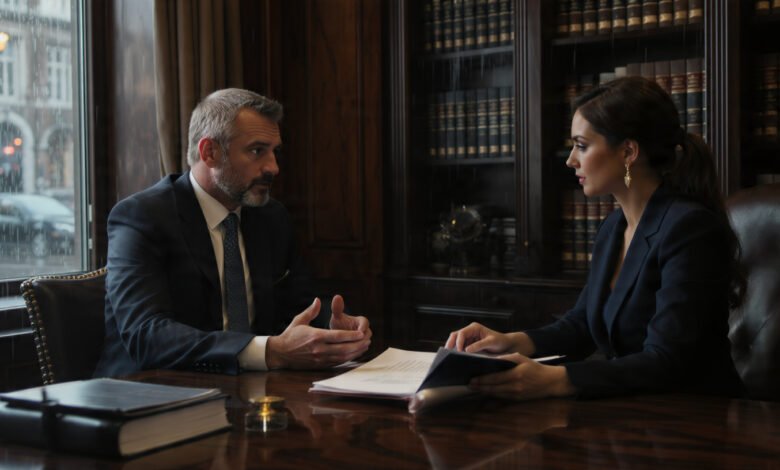
Glasgow business partnership disputes don’t usually arrive with a bang. They creep in quietly, starting with a missed meeting or a conversation that felt slightly off, then gradually building until one day you realize the business you built is in serious trouble.
Scotland’s commercial landscape is full of thriving partnerships, from small independent firms in the West End to growing enterprises in the city centre and beyond. But even the strongest business relationships carry risk. Partners drift apart. Financial pressures create friction. Ambitions evolve in different directions. And when that happens, the consequences can be severe, affecting not just your income but your reputation, your assets, and years of hard work.
The problem is that most business owners in Glasgow wait too long before getting proper legal advice. By the time they pick up the phone to a commercial solicitor, money may already be missing, contracts may have been signed without consent, and their legal options have quietly narrowed.
This article walks you through the five clearest warning signs that your business partnership dispute in Glasgow has crossed the line from a difficult conversation into a legal problem, and explains why acting early makes all the difference. You’ll also understand what Scottish partnership law actually says, what your options are, and how to protect yourself before things get worse.
What Scottish Law Says About Business Partnerships
Before we get into the warning signs, it’s worth understanding the legal framework you’re operating in. In Scotland, business partnerships are primarily governed by the Partnership Act 1890, a piece of legislation that’s older than most of the buildings on Buchanan Street, but still very much in force.
The Partnership Act 1890 and What It Means for You
Under the Act, if you don’t have a written partnership agreement in place, several default rules automatically apply to your business:
- All partners are treated as equal, regardless of how much capital each contributed
- Profits and losses are split equally between partners
- Every partner has the right to participate in the management of the business
- No partner can be expelled without the unanimous consent of the others
- Any partner can dissolve the partnership at any time by giving notice
These defaults sound reasonable on paper, but in practice they can create serious problems. If one partner contributed significantly more capital or takes on more of the operational work, equal profit sharing may feel deeply unfair. If the partnership has grown substantially, the ability of any single partner to dissolve the business overnight creates enormous instability.
A well-drafted partnership agreement overrides these defaults and sets out exactly how decisions are made, how profits are divided, what happens when a partner wants to leave, and how disputes are resolved. Without one, you’re relying on legislation that wasn’t designed with your specific business in mind.
Limited Liability Partnerships in Glasgow
Many Glasgow businesses operate as Limited Liability Partnerships (LLPs), which are governed by the Limited Liability Partnerships Act 2000. LLPs offer partners protection from personal liability for the firm’s debts, but they come with their own set of governance requirements and dispute dynamics. If you’re in an LLP and something has gone wrong, the legal analysis is slightly different, and specialist advice from a Scottish commercial solicitor is essential.


Glasgow Business Partnership Disputes: 5 Warning Signs You Need a Lawyer
So when does a difficult business relationship become a legal matter? Here are the five most significant warning signs that it’s time to stop hoping things will sort themselves out and start getting proper legal advice.
Warning Sign 1: Financial Transparency Has Broken Down
Money is the most common trigger for partnership disputes in Glasgow and across Scotland. When financial information starts flowing in one direction only, or stops flowing altogether, that’s a serious red flag.
What This Looks Like in Practice
- One partner is handling the accounts but refusing to share full financial statements
- You’ve noticed unexplained withdrawals or expenses from the business account
- Invoices are being raised or payments made without your knowledge
- Business funds appear to be funding one partner’s personal expenses
- A partner has taken a salary increase or bonus without agreement
This kind of behaviour may be a sign of financial misconduct, and in some cases it can constitute a breach of fiduciary duty. Under both Scottish common law and the Partnership Act, partners owe each other a duty of good faith. They must act in the best interests of the partnership, not for personal gain at the expense of other partners.
If you suspect money is being misused, do not wait. A solicitor can help you secure financial records, potentially seek an interim interdict (the Scottish equivalent of an injunction) to freeze business assets, and begin the process of establishing what’s actually happened. The longer this goes on, the harder it becomes to trace funds and prove misappropriation.
Key takeaway: Any unexplained change in financial transparency is not just a communication problem. It is a potential legal issue.
Warning Sign 2: Your Partner Is Making Major Decisions Without You
Decision-making is at the heart of every business partnership. When one partner starts acting unilaterally on matters that should require joint agreement, the trust that holds the partnership together starts to erode fast.
Examples of Unilateral Decision-Making
- Signing contracts with clients or suppliers without informing you
- Hiring or dismissing employees without your agreement
- Committing to significant capital expenditure you weren’t consulted on
- Opening or closing bank accounts in the partnership’s name
- Entering into loans or financial agreements on behalf of the business
- Changing the business’s strategic direction without discussion
Under the Partnership Act 1890, each partner generally has the authority to bind the partnership in ordinary business matters. This means that if your partner signs a contract in the partnership’s name, you may be legally bound by it even if you knew nothing about it.
This is one of the most practical reasons to seek legal advice early. A solicitor can review recent decisions and contracts, advise you on your exposure, and help you put measures in place, whether through a formal partnership agreement or through correspondence, to limit your partner’s unilateral authority going forward.
If the decisions being made are clearly harmful to the partnership’s interests, or if your partner appears to be positioning the business for their own exit, you may have grounds for a claim of breach of fiduciary duty or breach of the partnership agreement.
Warning Sign 3: Communication Has Effectively Stopped
This one might sound like a soft issue, but it’s actually one of the clearest indicators that a business partnership dispute in Glasgow is heading toward legal territory. When communication breaks down completely, the ability to resolve disagreements informally disappears with it.
The Difference Between a Rough Patch and a Real Problem
Every partnership goes through periods of tension. That’s normal. What’s not normal is when:
- Emails and messages go unanswered for days or weeks
- Meetings are cancelled repeatedly or avoided entirely
- Your partner communicates only through third parties or in writing that reads like it’s being prepared as evidence
- Conversations become hostile, accusatory, or are recorded without your knowledge
- Your partner has engaged a solicitor without telling you and communications have become formal
That last point is important. If your business partner has quietly instructed a solicitor, it means they’re already thinking about this legally. You should be too.
Communication breakdown also makes it far easier for things to go wrong in the business itself. Contracts get missed, deadlines are ignored, staff are left without direction, and clients notice. The longer communication stays broken, the more damage accumulates, and the harder it becomes to separate out the legal dispute from the operational crisis.
Early legal advice in this situation can help you understand your position, protect your interests in any written communications you do have with your partner, and explore structured options like business mediation before a full dispute takes hold.
Warning Sign 4: There Is a Fundamental Disagreement About the Business’s Future
Some partnership disputes in Glasgow aren’t about bad faith or misconduct. They’re about two people who once shared a vision now seeing that vision very differently. This is sometimes called a deadlock, and it can be just as damaging to a business as fraud or financial misconduct.
What a Deadlock Looks Like
- One partner wants to expand; the other wants to consolidate or sell
- Disagreement about whether to bring in outside investment or new partners
- Conflicting views on major clients, pricing strategy, or market direction
- One partner wants to exit the business but can’t agree terms with the other
- Fundamentally different views on what the business is worth
Deadlocks are particularly dangerous in 50/50 partnerships, where neither partner has a majority to override the other. Without a mechanism in the partnership agreement to break ties, the business can genuinely grind to a halt. Neither partner can force a resolution, and both may be unwilling to back down.
In these situations, Scottish courts can, in some circumstances, order the dissolution of a partnership or appoint a judicial factor to manage the business’s affairs. But litigation is expensive, slow, and unpredictable. A better approach in most cases is structured alternative dispute resolution (ADR), including commercial mediation, which allows both partners to work toward a negotiated exit or restructure with the help of a neutral third party.
A solicitor can advise you on whether mediation is appropriate, help you prepare for it, and ensure any agreement reached is properly documented and legally binding. For more detail on ADR options available in Scotland, the Scottish Mediation Network is a useful resource.
Warning Sign 5: You Suspect Your Partner Is Competing With You or Preparing to Leave With Clients
This is one of the most urgent warning signs on this list, and one of the most legally significant. If you have reason to believe your business partner is setting up a competing business, approaching your clients, or planning to walk out the door with your most valuable relationships, you need legal advice immediately.
Signs Your Partner May Be Competing Against You
- Unusual activity on their personal devices or email during business hours
- Unexplained meetings with clients or suppliers you were not invited to
- A new company registered at Companies House in your partner’s name (or a family member’s name) operating in a similar sector
- Staff being approached about joining a new venture
- Client data, proprietary information, or business contacts being downloaded or transferred
- Changes to their professional social media that suggest they’re positioning for a move
Under Scottish law, partners have a duty of loyalty to the partnership. They cannot use partnership resources, information, or relationships for personal gain without the consent of their fellow partners. If your partner is competing with the business while still a partner, or misusing confidential information or trade secrets, this is a serious legal matter.
A solicitor can act quickly in these situations. In urgent cases, it may be possible to seek an interim interdict through the Scottish courts to prevent further harm while the dispute is resolved. The sooner you act, the more options you have.
What to Do When You Spot These Warning Signs
Recognizing the warning signs is just the first step. Here’s what you should actually do.
Document Everything
Start keeping a detailed record of anything relevant. Save emails, messages, and letters. Note dates and times of conversations. If you have access to financial records, make copies. This documentation becomes critical evidence if the dispute escalates.
Avoid Making the Situation Worse
It’s tempting to respond to a difficult partner by withdrawing from the business, refusing to authorize payments, or taking steps to lock them out. In most cases, this is a mistake. Actions taken in the heat of a dispute can create additional legal liability for you, even if your partner is behaving badly.
Get Legal Advice Early
The most consistent piece of advice from commercial dispute lawyers in Glasgow and across Scotland is to seek legal advice sooner rather than later. Many people worry that calling a solicitor will escalate things. In practice, the opposite is usually true. A solicitor can help you understand your position, protect your rights without inflaming the situation, and explore options you might not have considered.
Consider Mediation Before Litigation
Commercial mediation is a confidential process in which a neutral mediator helps both parties work toward a negotiated resolution. It’s significantly cheaper and faster than going to court, and it often produces better outcomes because the parties are in control of the resolution rather than leaving it to a judge.
The Law Society of Scotland maintains a directory of accredited solicitors and can help you find a commercial dispute specialist in Glasgow who has the experience to handle partnership disputes under Scottish law.
When You Might Need to Go to Court
Most Glasgow business partnership disputes can be resolved without litigation, but not all of them. There are situations where court action becomes necessary or unavoidable.
You may need to consider court proceedings if:
- Your partner has caused serious financial harm to the business and is refusing to cooperate with any resolution process
- You need urgent interim protection, such as an interdict to freeze assets or prevent a competing business from operating
- All attempts at negotiation and mediation have failed
- The dispute involves criminal conduct, such as fraud or theft
- You are seeking the formal dissolution of the partnership through the courts
Litigation in Scotland is conducted through the Court of Session for higher-value or more complex commercial disputes, or the Sheriff Court for smaller claims. A specialist commercial litigation solicitor in Glasgow will be able to advise you on which court is appropriate and what remedies are available in your specific situation.
How a Glasgow Business Solicitor Can Help
If you’re dealing with any of the warning signs discussed in this article, a specialist partnership dispute solicitor in Glasgow can:
- Review your partnership agreement (or advise you on your position without one)
- Assess the strength of your legal position and your exposure to risk
- Communicate with your partner or their solicitor on your behalf
- Represent you in mediation, arbitration, or court proceedings
- Help you negotiate an exit from the partnership on fair terms
- Seek emergency legal remedies if the situation is urgent
- Draft a new or updated partnership agreement once the dispute is resolved
Acting early gives you the widest range of options. The further a dispute progresses, the more expensive and unpredictable the outcome tends to be. Whether you want to save the partnership or exit it cleanly, legal advice will help you do it on better terms.
Frequently Asked Questions About Glasgow Business Partnership Disputes
Do I need a written partnership agreement to have legal rights in Scotland?
No. Even without a written agreement, you have rights under the Partnership Act 1890. However, without a written agreement, the default rules of the Act apply, which may not reflect what you and your partner originally intended. A solicitor can advise you on your position.
Can I force my business partner out of the partnership?
This depends on whether your partnership agreement includes an expulsion clause. Without one, expelling a partner requires the unanimous consent of all other partners. In some circumstances, the courts can intervene, particularly where a partner has fundamentally breached their duties to the partnership.
What is the difference between mediation and arbitration?
Mediation is a voluntary, non-binding process where a neutral third party helps the partners reach their own agreement. Arbitration is a process where an arbitrator acts as a private judge and makes a binding decision. Both are forms of alternative dispute resolution and are generally faster and cheaper than going to court.
How long does it take to resolve a business partnership dispute in Glasgow?
This varies enormously depending on the complexity of the dispute and the approach taken. A mediated resolution can sometimes be reached within weeks. Court proceedings can take months or years. Getting early legal advice often helps identify the fastest path to a resolution.
What happens to the business if the partnership is dissolved?
Partnership dissolution triggers a winding-up process in which the partnership’s assets are used to pay its debts, and any remaining assets are distributed between the partners according to the partnership agreement or, in its absence, equally under the Act.
Conclusion
Glasgow business partnership disputes are one of the most disruptive challenges a business owner can face, but they don’t have to mean the end of everything you’ve built. The five warning signs covered in this article, including the breakdown of financial transparency, unilateral decision-making, collapsed communication, strategic deadlock, and suspected competition or client-poaching, are your clearest signals that a conversation has become a legal matter.
Acting on those signals early, by documenting what’s happening, seeking specialist legal advice from a qualified commercial solicitor in Glasgow, and exploring structured resolution options like mediation, gives you the best possible chance of protecting your interests, your business, and your financial future. Don’t wait until the situation has become irreversible; the sooner you understand your legal position, the more control you have over how this ends.