New York Felony Charges: What to Expect During Your Criminal Case
Facing New York felony charges? Learn the 7 critical stages of your criminal case, from arrest to sentencing, and what to expect at every step.
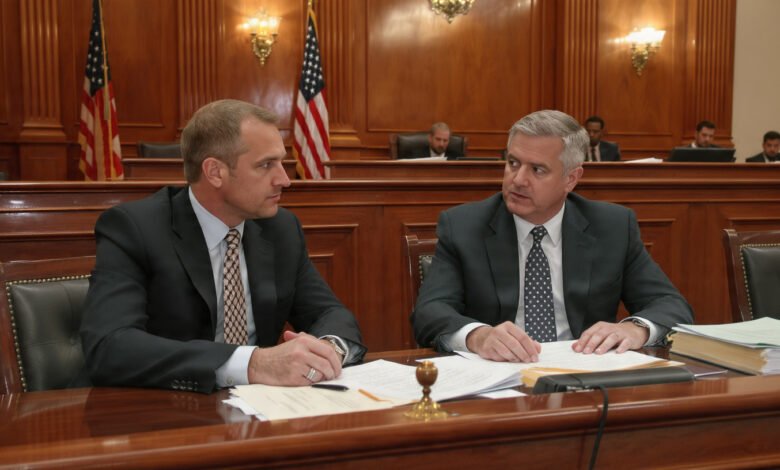
New York felony charges are not something anyone plans for — but if you or someone you care about is suddenly in the middle of the criminal justice system, confusion and fear can make everything feel worse. The process is long, layered, and built on rules most people have never had to think about.
Here is the hard truth: not knowing what comes next puts you at a serious disadvantage. From the moment of arrest through arraignment, grand jury review, pre-trial hearings, and potentially a full trial, every stage of a New York felony criminal case has consequences that can shape the rest of your life. Miss a court date, say the wrong thing to police, or fail to understand a plea offer — and you could end up with a far worse outcome than necessary.
This guide walks you through the entire process, step by step, in plain language. Whether you are trying to understand what happened to a family member or you are personally facing charges, this article covers the felony criminal case process in New York, the different felony classifications under New York Penal Law, your rights at each stage, what sentences look like, and why hiring an experienced New York criminal defense attorney is one of the most important decisions you will ever make.
Let’s start at the beginning.
Understanding New York Felony Charges: The Basics
Before getting into the process, it helps to understand what a felony charge in New York actually means compared to other types of offenses.
How New York Classifies Criminal Offenses
New York State law divides offenses into four main categories:
- Traffic infractions — Minor violations of traffic law. Not criminal, no criminal record.
- Violations — Non-criminal offenses punishable by up to 15 days in jail and/or a $250 fine.
- Misdemeanors — The lowest level of criminal offense. Class A misdemeanors carry up to one year in jail; Class B misdemeanors carry up to 90 days.
- Felonies — The most serious category. A felony conviction in New York can result in more than one year in state prison, and in the worst cases, life imprisonment.
New York Felony Classifications: Class A Through E
Under the New York State Penal Law, felonies are broken down into five classes — A through E — based on severity. Class A is the most serious; Class E is the least serious among felonies.
Here is how the New York felony sentencing guidelines break down:
- Class A-I Felony — The most severe category, covering crimes like first-degree murder and certain major drug trafficking offenses. Sentences can range from 15 to 25 years all the way up to life without the possibility of parole.
- Class A-II Felony — Serious drug offenses fall here. Sentences range from 3 to 8.5 years minimum, up to life.
- Class B Felony — Includes crimes like second-degree murder, first-degree robbery, and first-degree assault. Maximum sentence is 25 years.
- Class C Felony — Examples include second-degree criminal possession of a weapon and second-degree aggravated manslaughter. Maximum sentence is 15 years.
- Class D Felony — Covers charges like second-degree assault, second-degree stalking, and third-degree robbery. Maximum sentence is 7 years.
- Class E Felony — The least serious felony class. Examples include fourth-degree conspiracy and child abandonment. Maximum sentence is 4 years, and in some cases, probation with no jail time is possible.
Violent vs. Non-Violent Felonies in New York
This distinction matters enormously and it trips a lot of people up. Whether a felony is labeled “violent” under New York law is determined by statute — not by what actually happened in the specific case. For example, Robbery in the 2nd Degree is a violent felony offense, while Robbery in the 3rd Degree is classified as non-violent, even though both involve taking property from another person.


Violent felony convictions carry determinate sentences — a fixed amount of time. Non-violent felony convictions (for first-time offenders) typically carry indeterminate sentences — a range, like 1 to 3 years, where the parole board plays a role in the actual release date.
Your criminal background also matters. Whether you are classified as a predicate felon, a violent predicate felon, or a persistent violent felon under New York law will directly influence the sentence a judge is allowed to impose.
Stage 1: The Arrest and Booking Process
Most New York felony criminal cases begin with an arrest. This can happen in one of two ways: a police officer witnesses or responds to a crime with probable cause to detain you, or law enforcement executes a judicially issued arrest warrant following an investigation.
Once you are in custody, you will go through the booking process, which includes:
- Fingerprinting and photographing (mugshot)
- A criminal history check — law enforcement pulls your “rap sheet”
- An interview with a Criminal Justice Representative (CJR) or pretrial services officer who evaluates whether you are likely to return to court
For lower-level offenses, you might receive a Desk Appearance Ticket (DAT) — essentially a notice telling you when and where to show up in court instead of being held in custody. For serious felony charges, you will almost certainly be held until arraignment.
Your most important right at this stage: the right to remain silent. Do not answer questions beyond basic identifying information. Politely but clearly ask for your attorney before any questioning begins.
Stage 2: Arraignment — Your First Court Appearance
Arraignment in New York must happen within 24 hours of your arrest. This is your first appearance before a judge, and several important things happen here:
- The charges against you are formally read aloud.
- You enter an initial plea — almost always “not guilty” at this stage.
- The judge decides on bail — whether you are released, held on bail, or remanded (held without bail) pending further proceedings.
For felony charges, the judge will evaluate your risk of flight, your ties to the community, your criminal history, and the seriousness of the alleged offense. Class D felony charges and above, as well as certain violent misdemeanors, generally result in the defendant staying in custody until arraignment is complete.
Recent bail reform in New York has limited the use of cash bail for many non-violent offenses. However, for violent felonies or repeat offenders, judges retain broad discretion — and in serious cases, can simply remand the defendant to jail for the entire duration of the case.
One important strategic note: if jail time looks likely as an eventual outcome, being held on bail is the only way to accrue “time served” that can later be credited toward your sentence. This is something your attorney needs to factor into the strategy from day one.
Stage 3: Grand Jury Indictment
This is one of the most distinctive parts of the New York felony criminal case process, and it is where things get fundamentally different from misdemeanor cases.
Under New York law, a person cannot be formally prosecuted for a felony without either:
- A grand jury indictment, or
- A Superior Court Information (SCI) — a mechanism that allows the defendant to waive the grand jury process as part of a negotiated plea
How the Grand Jury Works
A grand jury in New York is a group of ordinary citizens — typically 23 people — who review the prosecution’s evidence in secret. Defense attorneys are generally not present. The standard the grand jury applies is probable cause: is there enough evidence to believe the defendant committed the felony? This is a lower bar than “beyond a reasonable doubt,” which is the trial standard.
If the grand jury finds sufficient evidence, it issues a true bill of indictment. If not, a no bill is issued, and the felony charges can be reduced or dismissed. The prosecution has six months from the date of arrest to secure an indictment.
Waiving the Grand Jury via SCI
In some situations, a defendant’s attorney may negotiate an agreement where the defendant waives the grand jury process entirely in exchange for a better plea deal. This can dramatically speed things up and often results in a significantly reduced charge or a lighter sentence recommendation. For defendants facing dozens of counts or serious exposure, this can be a very smart strategic move.
Stage 4: The Felony Preliminary Hearing
If a defendant is held in custody after arraignment, the prosecution faces a tighter timeline. Under those circumstances, the prosecution must either present the case to a grand jury within six days of arrest or hold a felony preliminary hearing.
At a preliminary hearing, a judge — not a grand jury — evaluates whether there is probable cause to continue holding the defendant on felony charges. The police officer who made the arrest is typically the key witness.
The defense has the opportunity to cross-examine that officer, which is a rare early chance to gather useful information about the strength (or weakness) of the prosecution’s case. For that reason, the preliminary hearing is sometimes waived by the defense in exchange for expanded pre-trial discovery from the prosecutor — essentially trading the hearing for more evidence to review.
Stage 5: Pre-Trial Motions and Discovery
After indictment, the case moves into the pre-trial phase. This is where a skilled criminal defense attorney in New York earns their keep.
Discovery in New York Felony Cases
Discovery is the process of exchanging evidence between the prosecution and defense. New York’s discovery rules have evolved significantly in recent years. The prosecution is now required to turn over evidence earlier in the process, including police reports, witness statements, and lab results.
Your attorney will review everything — looking for weaknesses in the prosecution’s case, potential constitutional violations, and evidence that supports your defense.
Pre-Trial Motions
Defense attorneys commonly file several types of pre-trial motions, including:
- Motion to suppress evidence — arguing that certain evidence was obtained illegally and should not be allowed at trial (for example, an unlawful search and seizure)
- Huntley hearing — a hearing to determine whether statements made by the defendant were obtained properly, without violating Miranda rights
- Dunaway hearing — challenges the legality of the arrest itself
- Wade hearing — challenges identification procedures (like lineups)
These hearings can result in critical evidence being thrown out before trial, which significantly changes the prosecution’s ability to prove their case.
Stage 6: Plea Bargaining in New York Felony Cases
The reality of the New York criminal justice system is this: the vast majority of cases never reach trial. Most felony criminal cases in New York are resolved through plea bargaining.
A plea deal means the defendant agrees to plead guilty — usually to a reduced charge — in exchange for a lighter sentence or other concessions. This can happen at virtually any stage of the process, but it most commonly occurs after discovery, once both sides have a clearer picture of the evidence.
Why Defendants Take Plea Deals
- Avoiding the risk of a much harsher sentence after a trial conviction
- Reducing a felony to a misdemeanor (which has significant implications for your record)
- Securing a sentence that does not include prison time — probation, a conditional discharge, or a fine
- Faster resolution, especially if the defendant is held in custody
When You Should Fight a Charge
Not every plea deal is worth taking. If the evidence against you is weak, if there are constitutional violations in how the case was built, or if the prosecution’s offer is unreasonable, going to trial may be the right call. This is exactly the kind of strategic analysis your attorney needs to walk you through carefully.
Stage 7: Trial, Verdict, and Sentencing
If no plea is reached, the case goes to trial. Under New York’s speedy trial laws, the prosecution must be ready to begin a felony trial within six months of indictment. In practice, felony cases average around 13 months from arrest to trial, largely because of how much preparation both sides require.
Jury Trial vs. Bench Trial
In a jury trial, 12 citizens hear the evidence and decide guilt or innocence. In a bench trial, the judge serves as both the factfinder and the legal authority. The defendant has the right to choose.
What Happens at Trial
- Jury selection (voir dire) — Both sides question potential jurors and can exclude those who appear biased.
- Opening statements — Prosecution goes first, then defense.
- Prosecution’s case — Witnesses are called, evidence is presented. The defense cross-examines.
- Defense’s case — The defendant is not required to testify or present any evidence at all. The burden of proof rests entirely on the prosecution.
- Closing arguments — Each side summarizes their case.
- Jury deliberation and verdict — The jury must reach a unanimous verdict of guilty or not guilty. If they cannot agree, it results in a mistrial.
The prosecution must prove every element of the charge beyond a reasonable doubt — the highest standard in the legal system.
Possible Outcomes
- Acquittal — Not guilty on all charges. The defendant is released (unless other charges are pending).
- Guilty verdict — The case proceeds to sentencing.
- Mistrial — The jury could not reach a unanimous decision. The prosecution can choose to retry the case.
Sentencing After a Felony Conviction in New York
Sentencing is handled by the judge, guided by the New York felony sentencing guidelines, the specific class of felony, whether it is violent or non-violent, and the defendant’s prior criminal history. Sentences can include:
- State prison — Ranging from a minimum of 1 year (Class E non-violent) to life without parole (Class A-I)
- Probation — Supervised release without incarceration
- Conditional discharge — Release with conditions but no probation supervision
- Unconditional discharge — Release with no further obligations
- Fines
- Drug treatment programs
- Orders of protection
For certain drug offenses, sex offenses, and violent crimes, mandatory minimum sentences apply — meaning the judge has very limited discretion.
The Long-Term Consequences of a Felony Conviction in New York
A felony conviction does not just mean time behind bars or a probation sentence. The collateral consequences can follow you for decades:
- Loss of voting rights while incarcerated
- Inability to possess firearms under federal law
- Employment barriers — many employers screen for felony convictions
- Housing challenges — landlords routinely reject applicants with felony records
- Immigration consequences — for non-citizens, a felony conviction can trigger deportation proceedings
- Loss of professional licenses in fields like law, medicine, finance, and education
New York’s Clean Slate Act
In November 2024, New York’s Clean Slate Act took effect. This law provides a pathway for certain felony convictions to be automatically sealed after a set period of time — giving people a second chance at employment, housing, and normal life. Class A felonies, including murder and most sex offenses, are not eligible for sealing under this act.
For eligible convictions, the sealing process is expected to be completed by November 2027. This is genuinely good news for people who have served their time and want to move forward.
Why Hiring a New York Criminal Defense Attorney Is Non-Negotiable
Every person charged with a crime in New York has the constitutional right to an attorney. If you cannot afford one, the court will appoint a public defender. But if you have any ability to hire private counsel, doing so gives you access to an attorney who can dedicate more time and resources to your specific case.
A good New York criminal defense attorney will:
- Challenge the legality of your arrest and any evidence obtained
- File strategic pre-trial motions to suppress evidence
- Negotiate with prosecutors for reduced charges or lighter sentences
- Evaluate whether a plea deal is truly in your best interest
- Build and present a defense at trial if necessary
- Guide you through every single stage of a process that most people find completely overwhelming
The moment you are arrested — or even if you suspect you are under investigation — is the moment to get an attorney involved. Early intervention gives your lawyer the best chance to shape the outcome of your case.
For additional guidance on your rights during a criminal case, you can refer to the New York State Courts Criminal Justice Resources and the detailed procedural overview from the Federal Defenders of New York, which covers federal felony cases that often intersect with state proceedings.
Frequently Asked Questions About New York Felony Charges
How long does a felony case take in New York?
Felony cases in New York average around 13 months from arrest to trial, though many resolve earlier through plea agreements. The prosecution has six months after indictment to be trial-ready under speedy trial rules.
Can a felony charge be reduced to a misdemeanor in New York?
Yes. This is one of the most common outcomes of plea bargaining in New York felony cases. Prosecutors sometimes agree to reduce a felony to a misdemeanor, especially for first-time offenders or when the evidence has weaknesses.
What happens if I miss a court date on a felony charge?
Missing a court date on a felony case in New York will almost certainly result in the judge issuing a bench warrant for your arrest. It can also seriously damage your credibility in front of the court and harm your case overall.
Do I have to testify at my own trial?
No. Under the Fifth Amendment to the U.S. Constitution, you have the absolute right not to testify. The prosecution cannot comment on your silence to the jury, and the jury is instructed not to draw negative conclusions from your decision not to take the stand.
Conclusion
New York felony charges are among the most serious legal situations a person can face, and the criminal case process — from arrest and booking through arraignment, grand jury indictment, pre-trial motions, potential plea negotiations, and trial — is complex, high-stakes, and unforgiving to those who navigate it without proper guidance. Understanding the seven critical stages of a New York felony criminal case, the different felony classifications under New York Penal Law, the sentencing consequences of a conviction, and the long-term collateral effects empowers you to make better decisions at every step.
Most importantly, the single most effective thing you can do — from the very first moment you interact with law enforcement — is exercise your right to remain silent and immediately secure the help of an experienced New York criminal defense attorney who can protect your rights, challenge the evidence against you, and fight for the best possible outcome in your case.