Melbourne Truck Accident Lawyers: Interstate Freight Claims in Victoria
Melbourne truck accident lawyers explain how interstate freight claims work in Victoria, who's liable, and how the TAC scheme pays out.
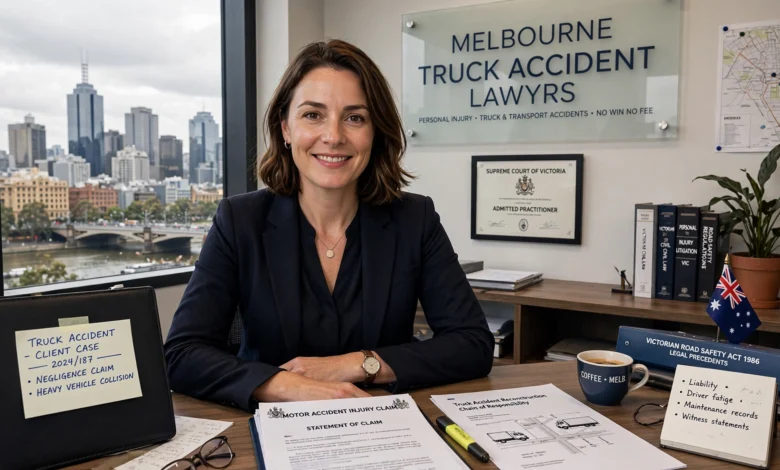
Melbourne truck accident lawyers deal with a type of case that looks nothing like a standard car crash claim. When a semi-trailer coming off the Hume Freeway from Sydney jackknifes on the Western Ring Road, or a B-double hauling freight from Adelaide loses its load on the Calder, you’re not just dealing with one driver and one insurer. You’re dealing with a freight company based interstate, a logistics broker who booked the job, a loading depot in another state, and sometimes a vehicle registered somewhere Victoria has no direct authority over. That’s before anyone even mentions the injuries.
If you’ve been hurt in a collision involving a heavy vehicle on a Victorian freeway, arterial road, or freight corridor, understanding how these claims actually work matters more than it does with an ordinary fender-bender. Victoria runs its own no-fault compensation scheme through the Transport Accident Commission (TAC), but truck accidents involving interstate freight bring in extra layers: national heavy vehicle law, chain of responsibility rules, and jurisdictional questions about where and how you can pursue compensation. Getting any of that wrong can cost you money, time, or your entire claim.
This guide walks through how interstate freight accident claims work in Victoria, who can be held responsible, what compensation looks like, and why these cases usually need a lawyer who’s handled them before.
Why Interstate Freight Truck Accidents Are Different From Ordinary Car Crashes
A truck accident involving interstate freight isn’t just “a bigger car crash.” The scale of the vehicle, the commercial pressures behind the trip, and the number of businesses involved in getting that load from one state to another all change how a claim gets built and who ends up paying.
A few things set these cases apart:
- Multiple potentially liable parties. The driver, the transport operator, the freight broker, the company that loaded the trailer, and even the business that scheduled an unrealistic delivery time can all carry some responsibility.
- National regulation on top of state law. Heavy vehicles over 4.5 tonnes gross vehicle mass are governed by the Heavy Vehicle National Law (HVNL), which applies across Victoria, New South Wales, Queensland, South Australia, Tasmania, and the ACT. That’s a separate legal framework sitting on top of Victoria’s own transport accident laws.
- Evidence that’s harder to pin down. Freight companies use electronic logbooks, GPS tracking, fatigue management records, and load manifests. That data is often held interstate and needs to be requested and preserved quickly, before it’s overwritten or “lost.”
- Bigger injuries, bigger claims. Collisions involving heavy freight vehicles are disproportionately likely to cause serious or fatal injuries, simply because of the mass and speed differential involved. That pushes many of these cases toward the more complex end of the compensation system.
None of this is meant to scare anyone off pursuing a claim. It just explains why a Melbourne truck accident lawyer with specific freight experience tends to get better outcomes than someone handling their first heavy vehicle case.
Common Causes of Truck Accidents on Victorian Freight Routes
Victoria sits at the crossroads of the national freight network. The Hume Freeway, Western Highway, Princes Freeway, and the Western Ring Road all carry heavy volumes of interstate trucks moving goods between Sydney, Adelaide, Brisbane, and the Port of Melbourne. That volume brings predictable risks.
Driver Fatigue
Long-haul interstate driving is one of the most common contributing factors in serious truck crashes. Drivers pushing to make delivery windows across state lines sometimes skip mandated rest breaks or falsify fatigue logs, which is precisely the behaviour the national chain of responsibility laws were designed to stop.
Poor Load Restraint and Overloading
A load that shifts mid-transit, or a trailer that’s carrying more weight than it’s rated for, can cause a rollover or make a truck impossible to control in an emergency stop. Loading failures often trace back to the depot or warehouse where the freight was packed, not the driver on the road.


Mechanical Failure
Brake failure, tyre blowouts, and steering defects are more common on vehicles running long interstate circuits with tight maintenance windows. Under the HVNL, the vehicle’s owner carries the greatest responsibility for keeping it roadworthy, even if a separate maintenance contractor did the actual work.
Scheduling Pressure
Unrealistic delivery timeframes set by a freight broker, consignor, or client can push a driver toward speeding or skipping breaks. This is a growing area of liability, because responsibility can extend well beyond the person behind the wheel.
Poor Weather and Road Conditions
Victoria’s freight corridors cross varied terrain and weather, from coastal fog around the Princes Freeway to fatigue-inducing flat stretches of the Western Highway. Conditions alone rarely cause an accident, but combined with speed or fatigue, they’re a frequent contributing factor.
Who Can Be Held Liable in an Interstate Freight Claim
This is where interstate freight claims genuinely diverge from a standard motor vehicle accident. Liability in a freight crash can spread across several parties, and identifying all of them is often the difference between a modest payout and full compensation.
The Truck Driver
The driver remains the most direct party if the crash was caused by speeding, fatigue, distraction, or a straightforward driving error. But drivers are frequently employees operating under conditions set by someone else, which is why liability rarely stops there.
The Trucking or Freight Company
The transport operator that owns or operates the vehicle usually carries the heaviest legal duty. Under the Heavy Vehicle National Law, operators have a primary duty to ensure the safety of their transport activities “so far as is reasonably practicable,” which covers maintenance, driver rostering, and fatigue management.
Consignors, Consignees, and Loading Depots
The business that packed the freight, the company receiving it, and anyone who scheduled the pickup or delivery can all be classed as parties in the Chain of Responsibility (CoR). If a badly restrained or overweight load caused or contributed to the crash, these parties can share liability even though they never touched the truck’s controls. As the National Heavy Vehicle Regulator explains it, the Chain of Responsibility makes <cite index=”11-1″>parties other than drivers responsible for the safety of heavy vehicles on the road, extending accountability from the business that employs a driver through to the business that sends or receives goods</cite>.
Freight Brokers and Logistics Coordinators
Third-party logistics companies that book jobs and set delivery windows can also be drawn into a claim if their scheduling decisions pressured a driver into unsafe conduct.
Vehicle Manufacturers or Maintenance Contractors
If the crash was caused by a defective part or negligent repair work, liability may extend to a parts manufacturer or an independent maintenance provider, separate from the trucking company itself.
Why this matters for your claim: identifying every liable party isn’t just a legal formality. It affects which insurer pays, how much cover is available, and whether a common law claim for damages beyond the TAC scheme is realistic.
How Compensation Works Under Victoria’s TAC Scheme
Victoria doesn’t run a fault-based compulsory third party (CTP) insurance system like most other states. Instead, it uses the Transport Accident Commission (TAC), a no-fault scheme owned by the Victorian Government.
Here’s what that means in practice:
- No-fault access to basic benefits. If you’re injured in a transport accident in Victoria, you can generally access TAC support for medical treatment, rehabilitation, and some income replacement, <cite index=”1-1″>even if the accident was your fault</cite>.
- What TAC can cover. Depending on your circumstances, support can include medical and hospital costs, income replacement, home and personal care, and in serious cases, lump sum payments for permanent impairment.
- Interstate vehicles are still covered. The TAC will <cite index=”3-1″>pay compensation to a person injured, or to the dependants of a person who dies as a result of a transport accident that occurs in Victoria, regardless of whether the vehicle involved is registered in Victoria or interstate</cite>. So if you’re hit in Melbourne by a truck registered in NSW or Queensland, you’re still generally eligible to claim through the TAC.
- Common law claims for serious injury. Basic TAC benefits don’t fully compensate someone with a serious, life-changing injury. If you meet a legal threshold for “serious injury,” you may be able to pursue a common law damages claim against the at-fault party for pain and suffering and economic loss, on top of your TAC benefits.
- Property damage is limited. The TAC scheme is built around personal injury, not vehicle or cargo damage, so property losses from a freight accident are usually pursued separately, often through a standard insurance or negligence claim against the transport operator.
Because the scheme is no-fault at the benefits level but fault-based for common law damages, working out which pathway applies to your specific injuries is one of the first things a truck accident lawyer in Melbourne will assess.
Interstate Jurisdiction Issues: Why These Claims Get Complicated
Interstate freight accidents raise a jurisdictional question that doesn’t come up in a two-car Melbourne suburban crash: which state’s laws and compensation scheme actually apply?
If the Accident Happens in Victoria
Generally, if the crash occurs on Victorian roads, the TAC scheme applies regardless of where the truck, driver, or freight company is based. This is one of the more straightforward aspects of Victorian law, and it’s a genuine advantage for anyone injured here by an interstate operator.
If You’re a Victorian Hurt Interstate
If you’re a Victorian resident injured in a freight-related accident in another state, whether you can claim through the TAC depends on specific rules, including whether the vehicle involved was Victorian-registered. Otherwise, you may need to pursue a claim under that state’s compensation scheme, which can mean dealing with entirely different rules, time limits, and thresholds.
Cross-Border Evidence and Regulation
Even when the TAC scheme clearly applies, the practical evidence in an interstate freight case, such as logbooks, maintenance records, and driver rosters, is often held by a company based outside Victoria. The Heavy Vehicle National Law helps here, because it creates one consistent set of safety obligations across most states, which means a Melbourne lawyer doesn’t need to separately interpret six different sets of trucking regulations. The regulator itself frames this as a national framework built to keep heavy vehicle operations <cite index=”12-1″>consistent and accountable across state lines</cite>.
Multiple Insurers, Multiple Lawyers
Larger freight companies often have layered insurance arrangements and legal representation across more than one state. That’s not something a person should be negotiating with alone while also recovering from an injury.
Steps to Take After a Truck Accident in Melbourne
What you do in the hours and days after a crash can shape the strength of your claim later. If you’re able to, or once you’re medically stable, the following steps matter.
- Get medical attention first. Some injuries, particularly internal injuries and concussion, don’t show obvious symptoms straight away. A medical record also becomes important evidence later.
- Report the accident to police. A police report is generally required for a TAC claim to proceed, and it creates an independent record of how the crash happened.
- Note the truck and company details. Where possible, record the truck’s registration, the company name on the trailer, and any identifying signage. Interstate trucks may be operating under a different company name to the one on the paperwork.
- Photograph everything. The vehicles, the road, skid marks, load spillage, and weather conditions can all matter, especially in freight cases where load restraint or roadworthiness is in question.
- Get witness details. Independent witnesses are particularly valuable in multi-vehicle freight accidents, where fault can be disputed between several parties.
- Avoid giving a recorded statement to a trucking company’s insurer without advice. Insurers for freight companies are often quick to contact injured people directly. You’re not obligated to give a detailed account before you’ve had legal advice.
- Lodge your TAC claim promptly. There are strict notification windows, and delays can complicate an otherwise straightforward claim.
- Speak to a truck accident lawyer early. Interstate freight evidence, like logbooks and GPS data, can be requested and preserved far more effectively if a lawyer is involved from the start, before records are routinely deleted or overwritten.
Time Limits for Filing a Claim in Victoria
Time limits in Victoria’s transport accident system are strict, and missing one can end an otherwise valid claim.
- Police report: should generally be made as soon as possible after the accident.
- TAC claim notification: the TAC generally needs to be notified within a limited window after the accident, though late notifications are sometimes accepted in genuine circumstances.
- Common law claims: if you’re pursuing damages beyond basic TAC benefits, Victorian limitation law generally requires proceedings to be commenced within a set number of years of the accident, though exceptions exist for children and people with certain incapacities.
- Interstate accidents: if your claim falls under another state’s scheme because of where the accident occurred, that state’s own limitation periods will apply instead, and they can be shorter or structured differently to Victoria’s.
Because these dates can vary depending on the specifics of your accident, and because interstate freight cases sometimes involve more than one possible limitation period, it’s worth getting advice well before any deadline is close.
Why You Need a Melbourne Truck Accident Lawyer for Freight Claims
You can lodge a basic TAC claim without a lawyer, and many people do for straightforward injuries. Interstate freight cases are usually a different proposition.
Untangling Multiple Liable Parties
Working out whether the driver, the transport operator, a loading depot, or a freight broker holds primary responsibility takes a genuine understanding of the Chain of Responsibility provisions under the HVNL, not just standard negligence principles.
Preserving Time-Sensitive Evidence
Electronic logbooks, GPS tracking data, and fatigue records aren’t kept indefinitely. A lawyer can send preservation notices and formal requests quickly, before that evidence disappears.
Negotiating With Well-Resourced Insurers
Large interstate trucking companies typically carry substantial insurance and use experienced claims teams. Someone recovering from a serious injury is rarely in a strong position to negotiate against that alone.
Maximising a Common Law Claim
If your injuries meet the threshold for a serious injury claim, the value of that claim depends heavily on how well the case is built, including expert medical evidence, economic loss calculations, and a clear liability argument against every responsible party.
Managing Jurisdictional Complexity
When an accident touches more than one state’s laws, a lawyer experienced in interstate freight claims can identify which scheme actually gives you the better outcome, and pursue the claim through the correct pathway from the start.
How to Choose the Right Truck Accident Lawyer in Melbourne
Not every personal injury lawyer regularly handles heavy vehicle and freight cases. A few things worth checking before you commit to representation:
- Specific truck and freight accident experience, not just general motor vehicle claims.
- Familiarity with the Heavy Vehicle National Law and Chain of Responsibility provisions.
- A track record with TAC common law claims, particularly for serious injury thresholds.
- No win, no fee arrangements, which are standard for most Victorian personal injury firms and reduce financial risk while you’re unable to work.
- A direct, responsive point of contact, rather than being passed between paralegals with no clear ownership of your file.
- A free initial consultation, so you can get a read on your options before committing to anything.
Frequently Asked Questions
Do I need to prove the truck driver was at fault to get TAC benefits? No. Basic TAC benefits are available on a no-fault basis for transport accidents in Victoria. Fault becomes relevant if you’re pursuing a common law claim for damages beyond those basic benefits.
What if the truck that hit me was registered interstate? You’re generally still eligible for TAC benefits if the accident happened in Victoria, regardless of where the truck is registered.
Can I claim against the freight company, not just the driver? Yes, in many cases. Under Chain of Responsibility laws, transport operators, loaders, and schedulers can all carry legal responsibility for safety failures that contribute to a crash.
How long do interstate freight claims usually take? It varies significantly depending on the complexity of liability, the severity of injuries, and whether more than one state’s laws are involved. Cases with multiple liable parties and serious injuries typically take longer than straightforward single-vehicle claims.
Is there a cost to speaking with a lawyer about my claim? Most Melbourne personal injury firms offer a free first consultation, and many work on a no win, no fee basis for these claims.
Conclusion
Melbourne truck accident lawyers who handle interstate freight claims are dealing with a genuinely more layered problem than a typical car accident case. Victoria’s no-fault TAC scheme still applies to most crashes that happen on Victorian roads, regardless of where the truck or driver came from, but figuring out who’s actually responsible, whether that’s the driver, the transport operator, a loading depot, or a freight broker, requires an understanding of both Victorian transport accident law and the national Chain of Responsibility rules under the Heavy Vehicle National Law.
Add in tight notification windows, cross-border evidence that can disappear quickly, and well-resourced insurers on the other side, and it’s easy to see why these cases are rarely worth handling alone. Getting medical care, reporting the accident, preserving evidence early, and speaking with a lawyer experienced in freight and heavy vehicle claims gives you the best chance of a fair outcome, whether that’s straightforward TAC support or a full common law claim for a serious injury.