California Motorcycle Accident Lawyers: Why You Need Specialized Representation
A California motorcycle accident lawyer can mean the difference between a lowball check and full compensation. Here's why specialized help matters.
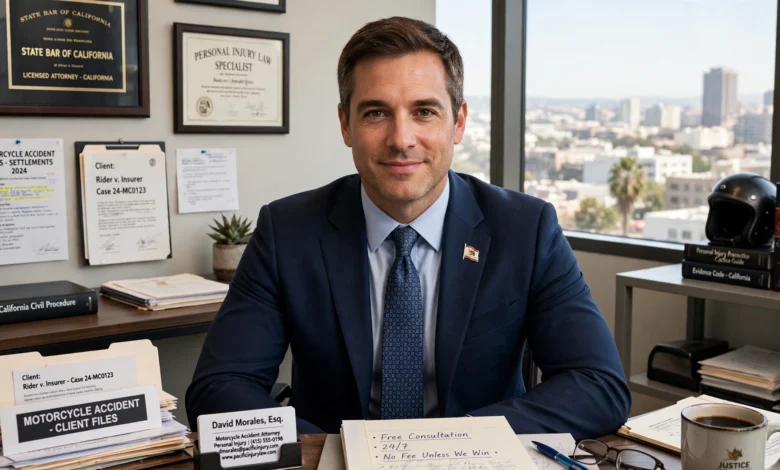
If you’ve been hurt in a crash, you already know the search for a California motorcycle accident lawyer starts the moment you realize the insurance company isn’t on your side. That’s not paranoia. It’s how the system works. Insurers train adjusters to minimize motorcycle claims specifically because bias against riders is so common among jurors and claims handlers alike. A rider gets hurt, and before the swelling even goes down, someone’s already building a file to argue the crash was partly the rider’s fault.
This is exactly why generic personal injury help often falls short. A motorcycle accident attorney in California who actually rides, or who has spent years buried in motorcycle-specific case law, understands things a general practice lawyer might miss: how lane splitting affects fault, how road rash and orthopedic injuries get undervalued by insurance software, and how California’s comparative negligence rule can be twisted to blame the victim.
In this guide, we’ll walk through what makes motorcycle accident cases different from a typical car wreck claim, the specific California laws that shape your case, how compensation actually gets calculated, and what to look for when you’re choosing legal representation. Whether your crash happened on the 405 during rush hour or on a rural highway in the Central Valley, the same core principle applies: the right lawyer changes the outcome.
Why Motorcycle Accident Cases Are Different From Car Accident Claims
Not all personal injury cases are created equal, and lumping motorcycle crashes in with fender-benders is one of the biggest mistakes an injured rider can make when picking counsel. A California motorcycle accident lawyer who focuses specifically on two-wheeled crashes brings something a general practice attorney simply doesn’t have: a working knowledge of how these cases get attacked, valued, and settled.
The Built-In Bias Problem
Studies on jury behavior and insurance claims handling have repeatedly shown that motorcyclists face an uphill battle when it comes to being believed. Even when a rider did everything right, there’s a persistent (and unfair) assumption that motorcyclists are reckless or partly responsible just by virtue of choosing to ride. A specialized motorcycle accident lawyer knows how to counter this bias directly, using accident reconstruction, dashcam and helmet-cam footage, and expert testimony to establish exactly what happened instead of letting stereotypes fill in the gaps.
The Injuries Tend to Be More Severe
There’s no seatbelt, no airbag, no steel frame around a motorcyclist. When a collision happens, riders absorb the impact directly. That means:
- Traumatic brain injuries from impact even with a helmet
- Road rash severe enough to require skin grafts
- Compound fractures and orthopedic damage requiring multiple surgeries
- Spinal cord injuries with long-term or permanent effects
- Amputations, particularly involving lower limbs caught in a collision
Because these injuries are often catastrophic and long-lasting, the compensation at stake is significantly higher than in a typical fender-bender. That raises the stakes for both sides, and it’s exactly why insurance companies fight harder against motorcycle claims than they do against routine auto claims.
Evidence Disappears Fast
Motorcycle wreckage gets towed, skid marks fade, and witnesses move on with their day. A California motorcycle accident attorney who’s handled these cases before knows to move quickly: securing the bike before it’s scrapped, pulling traffic camera footage before it’s overwritten, and sending preservation letters to insurers and third parties before evidence disappears.
Understanding California’s Motorcycle Laws
California has some of the most rider-specific traffic laws in the country, and they directly shape how liability gets determined after a crash. A lawyer who doesn’t understand these nuances is working from a disadvantage before the case even starts.


Lane Splitting Is Legal, But Fault Still Gets Contested
California is the only state that has formally legalized lane splitting, defined under California Vehicle Code Section 21658.1 as riding between rows of stopped or slow-moving traffic in the same lane. The law itself doesn’t set a hard speed limit, but the <cite index=”6-1″>California Highway Patrol advises that lane splitting should only be done when surrounding traffic is moving no faster than 30 mph, and riders shouldn’t exceed the flow of traffic by more than 10 mph</cite>. The CHP also recommends splitting in the leftmost lanes, since drivers are more accustomed to being passed on that side.
Here’s the catch: just because lane splitting is legal doesn’t mean insurers won’t use it against you. If your crash happened while you were splitting lanes, expect the other driver’s insurance company to argue you contributed to the accident, even if you were riding safely and lawfully. A motorcycle accident lawyer in California who understands lane-splitting case law can push back on that narrative using CHP guidance, expert reconstruction, and witness testimony.
For official guidance straight from the source, the California Highway Patrol’s motorcycle safety program outlines the agency’s recommended practices for safe lane splitting.
Helmet Laws and How They Affect Your Claim
California requires all riders and passengers to wear a DOT-approved helmet, full stop, no exceptions for age or experience. If you weren’t wearing one at the time of the crash, it likely won’t bar your claim entirely, but it can be used to reduce your compensation for head or facial injuries under the state’s comparative fault rules, discussed below. This is another area where an experienced motorcycle accident attorney knows how to limit the damage a helmet-law argument can do to your case.
Pure Comparative Negligence: What It Means for Your Payout
California follows a pure comparative negligence rule, a doctrine established by the California Supreme Court in Li v. Yellow Cab Co. (1975) and later reinforced through Civil Code Section 1714. Here’s what that means in plain terms: <cite index=”8-1″>an injured party can still recover damages even if they were primarily at fault for the accident, but their recovery gets reduced in proportion to their percentage of fault</cite>.
For example, if a jury awards you $200,000 in damages but finds you 20% at fault for the crash, your final payout drops to $160,000. Even if you were 90% at fault, you could technically still recover 10% of the total value. This is more generous to injured riders than the modified comparative negligence rules used in many other states, where a plaintiff who’s more than 50% at fault gets nothing.
That said, insurance adjusters know this rule exists too, and they’ll try to inflate your percentage of fault to shrink their payout. This is where having a California motorcycle accident lawyer who can build a strong liability case really pays off. Every percentage point of fault they shave off your side of the ledger is real money back in your pocket.
The Statute of Limitations You Can’t Afford to Miss
Under California Code of Civil Procedure Section 335.1, most personal injury claims, including motorcycle accidents, must be filed within two years from the date of the injury. Miss that deadline, and you generally lose your right to sue entirely, no matter how strong your case is. A few important exceptions apply:
- Claims against a government entity (a city, county, or state agency) require a formal claim to be filed within just six months of the incident, not two years.
- Delayed discovery cases, where an injury wasn’t immediately apparent, may extend the clock to the date the injury was discovered or reasonably should have been.
- Minors generally have the statute of limitations paused until they turn 18, giving them two years from that birthday to file.
Because government-claim deadlines are so short, waiting to talk to a motorcycle accident lawyer can quietly cost you your entire case before you even realize a clock was running. For a general overview of civil filing deadlines in the state, California’s court system publishes plain-language guidance through the California Courts Self-Help Center.
How Compensation Is Calculated After a Motorcycle Crash
One of the biggest reasons to bring in specialized representation is that motorcycle injury cases involve more moving parts than a standard fender-bender claim. A qualified California motorcycle accident lawyer will typically evaluate your case across several categories of damages.
Economic Damages
These are the costs you can point to a receipt or invoice for:
- Emergency room and hospital bills
- Surgery and follow-up medical treatment
- Physical therapy and rehabilitation
- Lost wages from time off work
- Loss of future earning capacity if injuries are permanent
- Property damage to the motorcycle and gear
Non-Economic Damages
These cover the harder-to-quantify impact of the crash:
- Pain and suffering
- Loss of enjoyment of life
- Emotional distress
- Disfigurement or scarring
- Loss of consortium for spouses or partners
Punitive Damages (In Rare Cases)
If the at-fault driver’s conduct was especially reckless, think drunk driving or excessive speeding, a court may award punitive damages on top of everything else, specifically meant to punish the driver and deter similar behavior in the future.
Why Insurance Companies Undervalue Motorcycle Claims
Insurance companies rely heavily on software formulas to estimate settlement values, and those formulas frequently underestimate motorcycle-specific injuries like severe road rash, joint damage, or the long recovery timelines associated with orthopedic surgery. An experienced motorcycle accident attorney knows how to counter a lowball offer with real medical documentation, expert opinions, and life-care planning estimates that reflect the true cost of recovery, not just what a computer algorithm spits out.
What to Look For in a California Motorcycle Accident Lawyer
Not every personal injury firm is equipped to handle a motorcycle case well. Here’s what actually matters when you’re comparing options.
1. A Track Record With Motorcycle-Specific Cases
Ask directly: how many motorcycle accident cases has this firm handled, and what were the outcomes? A motorcycle accident lawyer who’s negotiated dozens of these claims will recognize insurance company tactics immediately and won’t need to learn the terrain as they go.
2. Familiarity With Accident Reconstruction
Motorcycle crashes often come down to disputed facts: who had the right of way, how fast each vehicle was traveling, whether the rider was lane splitting safely. Your attorney should have working relationships with accident reconstruction experts who can recreate the crash using physical evidence, black box data, and roadway analysis.
3. No Upfront Costs
Most reputable California motorcycle accident attorneys work on a contingency fee basis, meaning you pay nothing out of pocket and legal fees come out of your settlement or verdict. If a firm is asking for money upfront just to evaluate your case, that’s a red flag worth walking away from.
4. Trial Experience, Not Just Settlement Experience
Insurance companies do their homework. If they know a firm never takes cases to trial, they have far less incentive to offer a fair settlement. A motorcycle accident lawyer with genuine trial experience carries more leverage at the negotiating table, because the insurer knows the case could end up in front of a jury if they don’t come to the table with a serious number.
5. Clear, Direct Communication
You shouldn’t have to chase your own attorney for updates. During your initial consultation, pay attention to whether they explain things clearly, answer your questions directly, and give you a realistic sense of timeline and expectations rather than vague promises.
What Happens When the Other Driver Is Uninsured or Underinsured
California doesn’t require drivers to carry especially high liability limits, and a shocking number of motorists on the road are either uninsured entirely or carrying the state minimum, which often isn’t nearly enough to cover a serious motorcycle injury. This is a scenario where a California motorcycle accident lawyer becomes essential rather than optional.
If you carry uninsured/underinsured motorist (UM/UIM) coverage on your own motorcycle policy, and California requires insurers to offer it, you may be able to file a claim against your own insurer to make up the difference between what the at-fault driver’s policy pays and the actual value of your damages. The catch is that your own insurance company still has every incentive to minimize what they pay out, so you’re not automatically in friendlier territory just because you’re dealing with your own provider.
A motorcycle accident attorney who regularly handles UM/UIM claims will know how to:
- Identify every applicable policy that could contribute to compensation, including household policies and umbrella coverage
- Push back against an insurer’s attempt to apply comparative fault reductions before you’ve even had a chance to negotiate
- Coordinate the timing of a UM/UIM claim so it doesn’t jeopardize your ability to pursue the at-fault driver directly
- Calculate the true value of long-term or catastrophic injuries so the claim isn’t settled based on short-term medical bills alone
Without this kind of guidance, injured riders frequently accept far less than they’re entitled to simply because they didn’t realize additional coverage existed or didn’t know how to access it.
Insurance Company Tactics You Should Be Aware Of
Insurance adjusters aren’t villains, but their job is to protect the company’s bottom line, not to make sure you’re fully compensated. Recognizing their playbook makes it easier to understand why hiring a motorcycle accident lawyer early in the process matters so much.
The Quick, Lowball Settlement Offer
Adjusters often reach out within days of a crash with a settlement offer that sounds reasonable, especially to someone who’s stressed, in pain, and worried about mounting bills. These early offers are almost always far below the case’s actual value, calculated before the full extent of injuries, future treatment needs, or lost earning capacity is even known.
The Recorded Statement Request
Insurers will frequently ask for a “quick recorded statement” to “process the claim faster.” In reality, these statements are often used later to find inconsistencies or extract phrases that can be framed as admissions of fault. A California motorcycle accident lawyer will typically advise against giving a recorded statement without legal guidance present, or handle those communications directly on your behalf.
Surveillance and Social Media Monitoring
It’s increasingly common for insurers to monitor a claimant’s social media accounts, and even hire private investigators, looking for anything that contradicts a claimed injury. A single photo of you standing at a barbecue, even if you were in significant pain the whole time, can be twisted into “proof” that your injuries aren’t as serious as you say.
Disputing Medical Necessity
Insurers frequently challenge whether certain treatments were “medically necessary,” particularly for ongoing physical therapy or specialist visits. This is another area where having strong documentation, and an attorney who knows how to obtain supportive medical opinions, makes a measurable difference in the final settlement amount.
Steps to Take Immediately After a Motorcycle Accident
What you do in the hours and days after a crash can significantly affect your case later. If you’re able to:
- Call 911 and get medical attention, even if injuries seem minor at first. Adrenaline masks pain, and some injuries (like concussions or internal bleeding) don’t show symptoms right away.
- Document the scene with photos of the vehicles, road conditions, skid marks, and your own injuries, if it’s safe to do so.
- Get witness contact information before people leave the scene.
- Avoid discussing fault with the other driver or their insurance company. A simple “I’m sorry” can later be twisted into an admission of liability.
- Preserve your gear, including your helmet, jacket, and riding boots. Damage to protective equipment can serve as evidence of impact severity.
- Contact a California motorcycle accident lawyer before giving a recorded statement to any insurance company, including your own.
That last step matters more than most riders realize. Insurance adjusters are trained to ask questions designed to get you to minimize your injuries or accept partial blame, often within the first 48 hours after a crash when you’re least prepared to answer carefully.
Common Causes of Motorcycle Accidents in California
Understanding how these crashes typically happen can help clarify who’s usually at fault, and why legal representation matters so much in disputed cases.
- Left-turn collisions, where a car turns in front of an oncoming motorcycle because the driver didn’t see it or misjudged its speed
- Unsafe lane changes, where a driver merges into a rider’s path without checking blind spots
- Rear-end collisions, often caused by distracted driving or following too closely
- Dooring incidents, where a parked car’s door opens directly into a rider’s path
- Road hazards, including potholes, debris, or poor road maintenance that a car might handle fine but a motorcycle cannot
- Speeding and reckless driving by other motorists sharing the road
In nearly all of these scenarios, the burden falls on the injured rider to prove what actually happened, which is exactly why documentation and quick legal intervention matter so much.
Frequently Asked Questions
How much does a California motorcycle accident lawyer cost?
Most work on contingency, typically charging between 33% and 40% of your final settlement or verdict, with no fee owed if you don’t win your case.
What if I was partially at fault for the crash?
Because California follows pure comparative negligence, you can still recover compensation even if you share some of the blame. Your final award simply gets reduced by your percentage of fault.
How long do I have to file a claim?
Generally two years from the date of the accident, though claims against government entities require action within six months, and different rules apply to minors and delayed-discovery cases.
Do I need a lawyer if the insurance company already made an offer?
Almost always, yes. Initial offers are typically far lower than what a case is actually worth, especially before all medical treatment and long-term prognosis has been factored in. For general safety statistics and rider resources, the National Highway Traffic Safety Administration’s motorcycle safety page is a solid starting point, though it won’t tell you what your specific claim is worth.
Conclusion
Motorcycle accidents carry a unique combination of severe injuries, biased assumptions from insurers and juries, and California-specific legal rules around lane splitting, helmet requirements, comparative negligence, and strict filing deadlines, all of which make general personal injury help a poor substitute for specialized counsel. A qualified California motorcycle accident lawyer understands how to counter insurance company tactics, build a strong liability case using accident reconstruction and expert testimony, and pursue full compensation for both the economic and non-economic toll a crash takes on your life.
If you or someone you love has been injured while riding, don’t wait to get informed representation. The sooner you bring in the right legal team, the stronger your case will be.