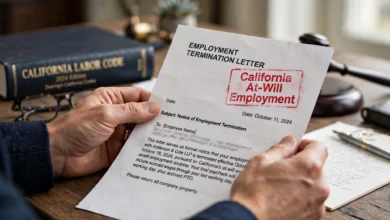
Chicago Constructive Discharge: When Quitting Counts as Wrongful Termination
Constructive discharge in Chicago can turn a resignation into wrongful termination. Learn the signs, your rights, and what to do next.

Constructive discharge happens more often than most Chicago workers realize, and most people who go through it don’t know there’s a name for it, let alone that it might be illegal. You didn’t get a termination letter. Nobody sat you down and fired you. You quit. But if your employer made your job so unbearable that quitting was the only reasonable option left, Illinois law may treat that resignation as a wrongful termination rather than a voluntary exit.
This distinction matters more than it seems. Employees who “just quit” often assume they’ve given up any legal claims against their employer. That’s not true. If the conditions that pushed you out were created deliberately, or as retaliation, or because of your race, sex, age, disability, or another protected characteristic, you may still have grounds to pursue a claim under Illinois or federal employment law.
This article breaks down what constructive discharge actually means in Chicago, how courts and agencies evaluate these claims, the evidence that strengthens your case, and the steps to take if you believe you were forced out of your job. Whether you’re still employed and weighing your options, or you’ve already resigned and are wondering what comes next, understanding these rules can help you protect your rights.
What Is Constructive Discharge?
Constructive discharge is a legal concept, not just a workplace complaint. It describes a situation where an employer deliberately makes working conditions so intolerable that a reasonable person in the employee’s position would feel compelled to resign. In the eyes of the law, that resignation is treated as if the employer fired the employee.
The key word is “intolerable.” Ordinary workplace friction, a demanding boss, an unpleasant coworker, or a stressful deadline doesn’t meet the bar. Courts look for conditions that go well beyond normal job dissatisfaction. This might include:
- Sustained harassment that management ignored or enabled
- A sudden demotion or pay cut with no legitimate business reason
- Being assigned degrading or humiliating tasks after a complaint
- Retaliation following a report of discrimination, harassment, or unsafe conditions
- Threats, intimidation, or a hostile work environment that HR failed to address
If you resigned under these kinds of pressures, you may have a wrongful termination claim even though you technically walked away on your own.
How Constructive Discharge Differs From Wrongful Termination
People often use these terms interchangeably, but they aren’t quite the same thing.
Wrongful termination typically refers to a situation where an employer directly fires an employee for an illegal reason, such as discrimination, retaliation, or violation of public policy. Constructive discharge is a specific legal theory that allows a resignation to be treated as if it were a termination, so the employee can pursue the same kinds of claims.
In practical terms, constructive discharge is often the bridge that lets someone who quit still bring a wrongful termination case. Without proving constructive discharge, an employer can argue the employee left voluntarily and has no claim at all. This is why documentation and timing matter so much, a point we’ll come back to later in this article.


The Legal Standard in Illinois and Chicago
Illinois courts and the Illinois Department of Human Rights (IDHR) generally apply an objective standard: would a reasonable employee, facing the same working conditions, have felt forced to resign? This isn’t about whether the employee subjectively felt overwhelmed. It’s about whether the situation, viewed objectively, would push a reasonable person to quit.
Federal courts, including those in the U.S. Court of Appeals for the Seventh Circuit (which covers Chicago and the rest of Illinois), have consistently held that constructive discharge requires more than an unpleasant or even unfair workplace. The conditions must be so bad that resignation was the only reasonable response.
Illinois employees pursuing a constructive discharge claim generally rely on one or more of the following legal frameworks:
- Illinois Human Rights Act (IHRA) — prohibits discrimination and harassment based on race, color, religion, sex, national origin, age, disability, and several other protected categories.
- Title VII of the Civil Rights Act of 1964 — the federal counterpart, enforced by the U.S. Equal Employment Opportunity Commission (EEOC), which also investigates constructive discharge claims tied to discrimination or harassment.
- Illinois Whistleblower Act — protects employees who report illegal activity from retaliation, including retaliation that pushes them to resign.
- Common law retaliatory discharge — a claim recognized under Illinois law when an employee is pushed out for exercising a legal right, such as filing a workers’ compensation claim.
Chicago employees have the added benefit of the Chicago Commission on Human Relations, which enforces the Chicago Human Rights Ordinance and can offer another avenue for filing a complaint, sometimes with broader protections than state or federal law.
7 Warning Signs You May Have a Constructive Discharge Claim
Not every bad job situation qualifies. Here are the patterns that most often support a legitimate constructive discharge claim in Chicago workplaces.
1. Sudden, Unexplained Demotion or Pay Cut
If your role, title, or pay changed dramatically without a documented performance issue, especially right after you complained about something, that timing is significant. Employers sometimes use demotions as a quiet way to push someone out without the paper trail of a formal firing.
2. Harassment That Management Ignored
If you reported harassment, whether sexual, racial, or otherwise, and your employer did nothing, or worse, made the situation harder for you instead of the harasser, that inaction can support a constructive discharge claim. The law doesn’t just look at the harassment itself; it looks at how the employer responded.
3. Retaliation After a Protected Complaint
Filing a complaint about discrimination, unsafe working conditions, unpaid wages, or illegal activity is a protected activity. If your treatment noticeably worsened after that complaint, colder communication, exclusion from meetings, a sudden performance improvement plan, that pattern often shows up in successful cases.
4. Being Set Up to Fail
Some employers assign impossible workloads, unreasonable deadlines, or shifting expectations specifically to manufacture a resignation. If your responsibilities changed in a way that seemed designed to make failure inevitable, document it.
5. Public Humiliation or Degrading Treatment
Being reassigned to menial tasks far below your role, being excluded from communications everyone else received, or being criticized in front of coworkers or clients can all contribute to a hostile environment that supports constructive discharge.
6. Threats of Termination Without Cause
If a supervisor repeatedly threatened to fire you without any legitimate performance basis, and you eventually resigned to avoid the stress or to protect your record, that pressure can be part of your claim.
7. A Hostile Work Environment Tied to a Protected Class
If the conditions driving you out were connected to your race, sex, age, religion, disability, national origin, or another protected characteristic, you likely have both a discrimination claim and a constructive discharge claim working together.
What You Need to Prove Constructive Discharge
Winning a constructive discharge claim in Chicago isn’t just about showing your job was stressful. You’ll generally need to establish:
- The working conditions were objectively intolerable, not just personally difficult
- Your employer knew, or should have known, about the conditions
- The employer failed to fix the problem despite having a reasonable opportunity to
- A reasonable person in your position would have felt compelled to resign
- Your resignation followed reasonably close in time to the intolerable conditions
That last point trips people up. If you wait too long to resign after conditions become unbearable, an employer’s attorney may argue that the delay shows the conditions weren’t actually intolerable, or that you accepted them. There’s no fixed rule for how much time is too much, but sooner is generally better if you’re documenting a pattern that’s building toward resignation.
Building Your Case: What to Document
If you’re currently in a situation that feels like it’s heading toward constructive discharge, start keeping records now, even if you haven’t decided whether to resign.
Keep copies of:
- Emails, texts, or messages showing the mistreatment or change in treatment
- Performance reviews, especially if they contradict a sudden negative narrative
- Any HR complaints you filed, including dates and who you spoke with
- Notes on specific incidents, written contemporaneously with dates, times, and witnesses
- Pay stubs or offer letters showing changes in compensation or title
- Your resignation letter, and any drafts, so the timeline is clear
Courts and agencies weigh contemporaneous documentation heavily. A journal entry written the day something happened carries more weight than a recollection pieced together months later.
Steps to Take Before You Resign
If you’re weighing whether to quit because of workplace conditions, consider these steps first:
- Report the issue internally if you haven’t already. Employers can sometimes argue you didn’t give them a fair chance to fix the problem. A written complaint to HR creates a record and gives the company an opportunity to respond, which strengthens your position either way.
- Consult an employment attorney before resigning. Once you quit, some options close. A lawyer can help you understand whether your situation meets the legal bar and whether there’s a path to resolve things without leaving your job.
- Consider filing a charge with the IDHR or EEOC first. In some situations, filing a charge while you’re still employed preserves more options than resigning first.
- Request leave or accommodations if applicable. If your situation involves a disability, a serious health condition, or family circumstances, you may have rights under the Family and Medical Leave Act (FMLA) or the Americans with Disabilities Act (ADA) that offer an alternative to resigning.
- Keep your resignation letter factual and professional. If you do resign, avoid venting. State clearly and briefly that you are resigning due to specific working conditions, and reference your prior complaints if relevant.
What Happens After You File a Claim
If you decide to move forward with a constructive discharge claim, the process generally starts with a charge filed with the IDHR, the EEOC, or the Chicago Commission on Human Relations, depending on the nature of your claim. From there:
- The agency will investigate, which may include requesting documents from your former employer and interviewing witnesses.
- Your employer will have the opportunity to respond and present their side.
- Many cases go through mediation before reaching a formal hearing or lawsuit.
- If the agency finds reasonable cause, or if you request a right-to-sue letter, you may be able to pursue the claim in court.
Timelines vary, but Illinois and federal law both impose strict deadlines for filing. Missing a filing deadline can permanently bar a claim, so this isn’t something to put off.
Remedies Available in a Successful Claim
Employees who successfully prove constructive discharge as part of a broader wrongful termination or discrimination claim may be entitled to:
- Back pay for lost wages since the resignation
- Front pay if reinstatement isn’t practical
- Compensatory damages for emotional distress
- Punitive damages in cases involving egregious employer conduct
- Attorney’s fees and costs, depending on the statute involved
The specific remedies depend heavily on which law applies to your case and the facts involved, which is part of why an early consultation with an attorney matters.
Common Mistakes That Weaken a Constructive Discharge Claim
Even strong cases can fall apart because of avoidable missteps. Watch out for these:
- Resigning without any documentation. A verbal complaint that was never written down is hard to prove months later.
- Waiting too long after conditions became intolerable. Delay can be used against you.
- Sending an emotional or accusatory resignation letter. Keep it factual; save the details for your attorney and the agency investigating your claim.
- Failing to use internal complaint procedures. If your employer had a clear process for reporting harassment or discrimination and you skipped it entirely, that can be used to argue you didn’t give them a chance to fix things.
- Talking about your claim publicly before filing. Social media posts can end up as exhibits in a case, and not always in your favor.
Why Chicago’s Legal Landscape Matters
Chicago employees actually have more layers of protection than workers in many other cities, thanks to the overlapping coverage of federal law, the Illinois Human Rights Act, and the Chicago Human Rights Ordinance. This layered structure means a claim that might not clear the bar under one law could still succeed under another. It’s worth having someone familiar with all three review your situation rather than assuming a single framework applies.
Conclusion
Quitting a job doesn’t automatically mean giving up your legal rights, and in Chicago, a resignation forced by intolerable, discriminatory, or retaliatory working conditions can still amount to wrongful termination under the legal theory of constructive discharge. If you’ve experienced harassment that went unaddressed, retaliation after a complaint, a sudden demotion, or a workplace made deliberately unbearable, it’s worth documenting everything and speaking with an employment attorney before assuming your options have run out.
Illinois and federal law, along with Chicago’s own human rights protections, give employees real avenues to hold employers accountable, but strict deadlines and evidentiary standards make early action important. Understanding your rights now can make the difference between walking away with nothing and holding your employer responsible for what actually happened.