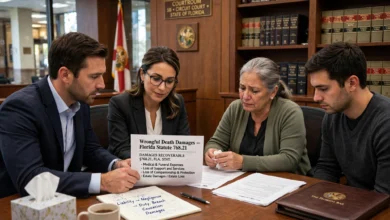
Houston Medical Malpractice Deaths: Proving Negligence in Texas
Houston medical malpractice deaths: what families need to prove negligence, Texas deadlines, and damage caps before filing a wrongful death claim.

When a hospital visit ends in a death nobody expected, the first question is almost always the same: could this have been prevented? Houston medical malpractice deaths happen more often than most people realize, and Houston’s massive medical footprint, the Texas Medical Center alone sees millions of patient visits a year, means the city sees its share of cases where a family is left wondering whether a doctor, nurse, or hospital system made a mistake that cost someone their life.
Proving that isn’t simple. Texas law sets a high bar for medical negligence claims, with strict deadlines, a mandatory expert review process, and caps on what a jury can award. Families often don’t know any of this until they’re already grieving and trying to make sense of medical records that read like a foreign language.
This article walks through what medical malpractice deaths actually require under Texas law: how negligence gets proven, what evidence matters, who can file a wrongful death claim, and what to expect in terms of time limits and compensation. None of this is a substitute for talking to a licensed Texas attorney about your specific situation, but it should give you a clear, honest picture of how these cases work before you walk into that first consultation.
What Counts as Medical Malpractice in a Death Case
Not every bad outcome is malpractice. Medicine involves risk, and even careful doctors lose patients. Medical malpractice only exists when a health care provider’s conduct falls below the accepted standard of care, and that failure is what caused the death, not the underlying illness or an accepted risk of treatment.
Texas law (through Chapter 74 of the Civil Practice and Remedies Code) defines these as “health care liability claims.” To qualify, the death has to trace back to:
- A treatment decision that a reasonably competent provider would not have made
- A failure to treat, diagnose, or monitor a condition properly
- A departure from accepted medical standards during a procedure
- Negligent staffing, supervision, or hospital protocols that contributed to the harm
The distinction matters because families sometimes assume any hospital death connected to an error is automatically a case. It isn’t. The law asks whether the specific act or omission fell outside what a competent provider in the same specialty would have done under similar circumstances.
Common Causes of Fatal Medical Errors in Houston
Certain patterns show up again and again in Houston medical malpractice deaths, including:
- Surgical errors — wrong-site surgery, damage to organs or blood vessels, or leaving instruments inside a patient
- Misdiagnosis or delayed diagnosis of conditions like sepsis, heart attack, stroke, or cancer
- Medication errors — wrong drug, wrong dose, or dangerous drug interactions missed by staff
- Anesthesia errors during surgery or childbirth
- Failure to monitor a patient’s vital signs after surgery or in the ICU
- Emergency room delays where triage or staffing shortages pushed a critical patient down the queue
- Birth injuries caused by delayed C-sections or mismanaged labor complications
- Hospital-acquired infections tied to poor sanitation or delayed treatment
Some of these overlap with broader patient-safety research. The Agency for Healthcare Research and Quality has published extensive data on how diagnostic errors and communication breakdowns contribute to preventable patient harm, which is worth reading if you want the clinical side of why these mistakes happen in the first place. You can review their findings on <a href=”https://www.ahrq.gov/patient-safety/index.html” target=”_blank” rel=”noopener”>patient safety research at AHRQ.gov</a>.
The Four Elements You Have to Prove
Every Texas medical negligence wrongful death case rests on the same four legal pillars. Miss one, and the case doesn’t survive, no matter how tragic the outcome.


1. Duty of Care
The provider had to owe the patient a professional obligation to treat them competently. This is usually the easiest element to establish, since any formal doctor-patient or hospital-patient relationship creates that duty automatically.
2. Breach of the Standard of Care
This is where most cases are won or lost. You have to show the provider’s actions fell below what a reasonably prudent doctor, nurse, or facility would have done in the same situation. This almost always requires a qualified medical expert to testify about what the standard actually was and how the provider deviated from it.
3. Causation
It’s not enough to show the provider made a mistake. You have to connect that specific mistake to the death. If a patient had a terminal illness and would have died regardless of the error, causation becomes much harder to prove. This is frequently the most contested part of a Houston medical malpractice death claim, because defense experts will argue the patient’s underlying condition, not the alleged error, caused the outcome.
4. Damages
Finally, the family has to show the death resulted in quantifiable losses: lost income, medical and funeral expenses, loss of companionship, and other damages recognized under Texas’s wrongful death statute.
The Expert Report Requirement: Texas’s Biggest Procedural Hurdle
Texas doesn’t let malpractice claims proceed on accusations alone. Under Chapter 74.351, a plaintiff must serve a detailed expert report on every defendant within 120 days of that defendant filing an answer to the lawsuit. This report has to be written by a qualified physician or health care professional and must specifically address:
- The applicable standard of care
- How the defendant failed to meet it
- How that failure caused the patient’s death
If the report is missing, late, or found insufficient by the court, the case can be dismissed outright, and the defendant can recover attorney’s fees. This single requirement is why so many families need legal help early. Gathering the right medical records, identifying the correct specialists to review them, and getting a compliant report drafted within the window takes time, and the clock doesn’t pause for grief.
Texas Statute of Limitations: How Much Time Do You Actually Have
Texas applies a strict two-year statute of limitations to medical malpractice claims, including those resulting in death. Under Section 74.251, that clock generally starts running from the date of the negligent act or the end of treatment, not from the date the family discovered the problem. Texas does not apply a general discovery rule to these claims, which catches a lot of families off guard.
A few things affect how that deadline actually plays out:
- Wrongful death claims are generally measured from the date of death, but courts have also applied the broader two-year limitations period tied to the underlying negligent act, so getting this timing right requires legal review rather than guesswork.
- Claims against government-run hospitals (like those operated by Harris Health System or UT Health) trigger an additional requirement under the Texas Tort Claims Act: written notice must reach the governmental entity within six months of the incident. This runs alongside, not instead of, the two-year deadline.
- A narrow exception exists for injuries that genuinely could not have been discovered in time, but Texas courts apply this exception very narrowly, and it does not extend the ten-year statute of repose that ultimately bars claims no matter what.
Because these deadlines interact in ways that trip up even experienced attorneys, it’s worth reviewing a detailed breakdown of the rules directly. The American Bar Association maintains general resources explaining how state-by-state statutes of limitations work in personal injury and wrongful death contexts, which you can find through the <a href=”https://www.americanbar.org/groups/committees/tort-trial-insurance-practice/” target=”_blank” rel=”noopener”>ABA’s Tort Trial and Insurance Practice Section</a>.
Texas Damage Caps in Wrongful Death Malpractice Cases
This is the part of Texas law that surprises families the most, and it’s one of the more misunderstood pieces of medical malpractice litigation nationwide.
Texas caps noneconomic damages (pain and suffering, loss of companionship, mental anguish) at:
- $250,000 per claimant against an individual physician or provider
- $250,000 per claimant against a single health care institution
- $500,000 per claimant if multiple institutions are found liable
Separately, when the malpractice results in death, Section 74.303 imposes a second cap that applies to nearly all damages in the wrongful death or survival action, including exemplary (punitive) damages, not just the noneconomic category. This wrongful death cap started at $500,000 in 1977 and has since been adjusted upward using a specific inflation index tied to the Consumer Price Index for urban wage earners, meaning the actual dollar figure today is considerably higher than the original number.
A few important carve-outs:
- Economic damages like past and future medical bills are generally not subject to the same noneconomic cap in ordinary malpractice cases, though they do fall under the combined wrongful death cap.
- Necessary medical, hospital, and custodial care costs the patient incurred before death typically remain outside the wrongful death cap entirely.
- Juries are never told these caps exist. The judge applies them after the verdict is issued, which means the jury’s award and the family’s actual recovery can look very different.
These caps have survived legal challenges since Texas voters approved Proposition 12 in 2003, so they aren’t likely to change without a new constitutional amendment. If you want to see how the numbers are calculated in more depth, background on Texas’s constitutional authority for these caps is publicly available through the <a href=”https://www.txcourts.gov/” target=”_blank” rel=”noopener”>Texas Judicial Branch’s official court records</a>.
Who Can File a Wrongful Death Claim in Texas
Under the Texas Wrongful Death Act, only specific family members have legal standing to bring a claim following a fatal medical error:
- The surviving spouse
- Children of the deceased
- Parents of the deceased
Siblings, grandparents, and more distant relatives generally cannot file directly, though they may have standing in limited circumstances involving a survival action, which is a separate but related claim brought on behalf of the deceased’s estate for damages the patient could have claimed had they survived (pain and suffering before death, medical bills, and similar losses).
Families frequently pursue both a wrongful death claim and a survival action simultaneously, since they cover different categories of loss and are calculated somewhat differently under the law.
Building the Case: What Evidence Actually Matters
Proving negligence in a fatal malpractice case comes down to documentation. The strongest cases are built on:
- Complete medical records, including nursing notes, physician orders, medication administration records, and vital sign charts, not just the discharge summary
- Hospital policies and protocols that were allegedly ignored or not followed
- Staffing records showing whether the facility was adequately staffed at the time
- Expert testimony from a specialist in the same field as the defendant provider
- Autopsy or coroner’s findings, when available, establishing the actual cause of death
- Internal incident reports, if they can be obtained, which sometimes reveal that a facility identified the error internally before the family ever raised concerns
One practical note: hospitals are required to preserve records, but families should send a formal written request for the complete medical file as early as possible. Delays in requesting records can mean losing access to electronic monitoring data that isn’t retained indefinitely.
Why Houston Cases Carry Their Own Complexity
Houston’s concentration of major hospital systems, teaching hospitals, and specialized surgical centers means malpractice cases here often involve multiple defendants: the treating physician, the hospital, anesthesiology groups that operate as separate entities from the hospital itself, and sometimes staffing agencies that supplied nurses on a contract basis. Untangling who was actually responsible, and whether that entity is a private provider or a government-run facility subject to different notice rules, is a genuinely complicated task that usually requires a lawyer with specific experience in Harris County health care litigation.
Harris County courts also see a high volume of these cases relative to most Texas counties, simply because of how many hospitals operate within the Texas Medical Center and greater Houston area. That volume means local courts and juries have more exposure to malpractice litigation than in less medically dense parts of the state, which can affect how a case is litigated and evaluated for settlement.
Steps to Take If You Suspect Malpractice Caused a Death
If you believe a loved one’s death in a Houston hospital resulted from negligence, a few early steps protect your rights:
- Request the complete medical record in writing, not just a summary, as soon as possible.
- Do not sign any settlement or release from the hospital or its insurer before speaking with an attorney.
- Write down your own timeline of events while memories are fresh, including conversations with staff.
- Avoid discussing the death in detail on social media, since these statements can be used during litigation.
- Consult a Texas medical malpractice attorney promptly, given the tight deadlines and the mandatory expert report requirement.
- Keep all bills and receipts related to the death, including funeral costs, since these factor into economic damages.
Frequently Asked Questions
How long do I have to file a malpractice death claim in Texas? Generally two years, but the exact starting point depends on the facts of your case and whether a government hospital is involved. Don’t assume you have more time than you actually do.
Can I sue if my family member had a terminal illness already? Yes, if you can show the malpractice hastened the death or caused a separate, avoidable harm, even where an underlying illness existed. Causation becomes more complex but is not automatically ruled out.
Do I need a lawyer, or can I file this myself? Given the mandatory expert report deadline and the technical damage caps, these cases are extremely difficult to handle without an attorney. Missing the expert report deadline alone can end a valid case.
Are there caps on how much my family can recover? Yes. Texas caps noneconomic and, in wrongful death cases, most other damages as well, though economic losses like medical bills generally aren’t capped the same way in the underlying claim.
Conclusion
Losing someone to a hospital error is one of the hardest things a family can go through, and Texas law doesn’t make the process of holding providers accountable easy. Proving negligence in Houston medical malpractice deaths requires showing a clear duty of care, a breach of the medical standard, direct causation, and quantifiable damages, all backed by a qualified expert report filed within a strict window.
Add in Texas’s two-year statute of limitations, special notice rules for government hospitals, and damage caps that apply differently depending on how the claim is structured, and it becomes clear why these cases demand experienced legal guidance from the very beginning. If you suspect a loved one’s death resulted from medical negligence, acting quickly to preserve records and consult a qualified Texas attorney is the single most important step you can take to protect your family’s rights.