Edinburgh Car Accident Solicitors: Scottish Insurance Claims Timeline
Edinburgh car accident solicitors explain the Scottish insurance claims timeline, from the pre-action protocol to court, step by step.
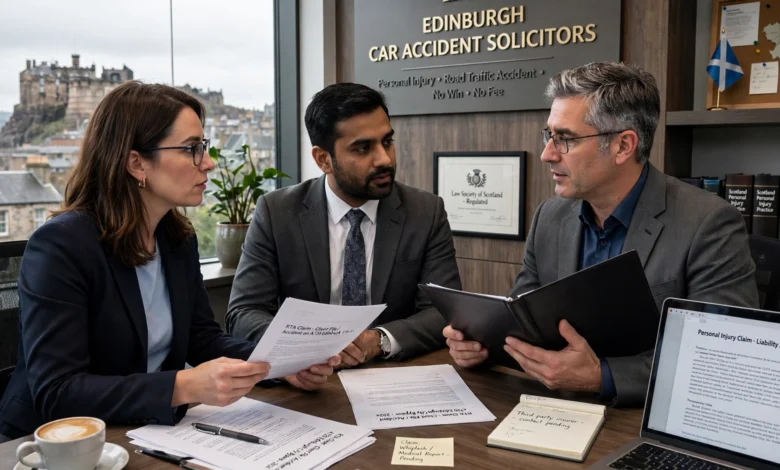
Edinburgh car accident solicitors deal with one question more than any other: how long is this actually going to take? It’s a fair thing to ask. You’ve been in a crash, you’re dealing with a sore neck or a written-off car, and now you’re being asked to be patient while an insurance company decides what your claim is worth. The truth is that Scottish claims run on a different clock than English ones, and if nobody explains the stages to you, the whole process can feel like a black box.
This guide walks through the Scottish insurance claims timeline the way it actually plays out on the ground in Edinburgh: from the minutes after impact, through the mandatory pre-action protocol, and on to negotiation or, in a minority of cases, court. Scotland has its own legislation, its own court structure, and its own procedural quirks (the Prescription and Limitation (Scotland) Act 1973 being the big one), so borrowing advice written for claimants south of the border can send you down the wrong path entirely.
By the end of this article you’ll know roughly what to expect at each stage, what tends to cause delays, and what a good Edinburgh solicitor should be doing for you at every point along the way.
What Happens After a Car Accident in Edinburgh? A Quick Overview
Before getting into the detail, it helps to see the shape of the whole journey. A typical road traffic accident claim in Scotland moves through six broad phases:
- Immediate aftermath – reporting the accident, seeking medical treatment, gathering evidence
- Instructing a solicitor – usually within days or weeks of the crash
- The Personal Injury Pre-Action Protocol – a structured, largely mandatory exchange with the other driver’s insurer
- Medical evidence and valuation – building the evidence base for your claim
- Negotiation and settlement – where most claims are actually resolved
- Court proceedings – only needed if negotiation fails
Some straightforward claims settle within six to nine months. Others, particularly those involving serious injury, contested liability, or ongoing medical treatment, can take two years or more. The rest of this article breaks each stage down properly.
Step 1: The First 24 Hours After the Accident
What you do in the hours immediately after a crash has an outsized effect on how smoothly your claim later runs.
- Report the accident to the police if anyone was injured, or if you couldn’t exchange details with the other driver at the scene
- Exchange details – name, address, registration number, and insurance information for every driver involved
- Photograph everything – vehicle damage, road conditions, skid marks, road signs, and the wider scene
- Get witness details – names and phone numbers, taken before people drive off
- Seek medical attention – even for injuries that feel minor at the time, since some symptoms (particularly whiplash) develop over the following days
- Notify your own insurer, even if you don’t intend to claim on your own policy, since most policies require this regardless of fault
This evidence forms the backbone of your claim. Edinburgh car accident solicitors frequently say the same thing: cases with poor early evidence take longer and settle for less, simply because there’s more room for the other side to argue about what actually happened.
Step 2: Instructing Edinburgh Car Accident Solicitors
Most people contact a solicitor within the first few weeks, though there’s no rule requiring you to move that fast (aside from the three-year time limit discussed below). A solicitor’s first job is to assess:
- Whether you have a valid claim and roughly how strong it is
- Whether liability is likely to be admitted or contested
- The likely value of the claim, based on your injuries and losses
- Whether the claim will fall under the compulsory Pre-Action Protocol or needs to go straight to court
A good firm will also confirm funding arrangements at this stage, usually a no win no fee agreement, so you understand exactly what happens to any compensation and what costs (if any) you’re on the hook for if the claim doesn’t succeed.


This initial consultation typically takes one to two weeks from first contact to formal instruction, assuming you can supply the basic paperwork: police reference numbers, insurance details, and any medical records you already have.
Step 3: The Personal Injury Pre-Action Protocol Timeline
This is the part of the Scottish insurance claims timeline that catches most people off guard, because it’s genuinely different from the English system. Since November 2016, most Scottish personal injury claims valued at £25,000 or less (excluding clinical negligence and disease claims) must follow the compulsory Personal Injury Pre-Action Protocol before anyone can raise court proceedings. It replaced an earlier voluntary version that had been running since 2006.
The aim is straightforward: get both sides talking, sharing evidence, and negotiating before anyone spends money on litigation. Here’s how it unfolds.
Stage 1: The Letter of Claim (Week 1–2)
Your solicitor sends a Letter of Claim to the other driver’s insurer, setting out how the accident happened, what injuries you sustained, and an outline of your losses. This letter formally starts the protocol clock.
Stage 2: Acknowledgement (Within 21 Days)
The defender’s insurer must acknowledge receipt of the claim form within 21 days. If they don’t respond within this window, your solicitor can proceed as though the protocol doesn’t apply, which can actually speed things up.
Stage 3: Investigation and Response (Up to 3 Months)
Once the claim is acknowledged, the insurer has three months to investigate and issue a full response. That response should address:
- Whether they accept liability, deny it, or accept partial liability
- Whether they need further information or medical evidence
- An indication of how they intend to proceed
In practice, this means it can be roughly four months from the initial Letter of Claim before you get a substantive answer on liability. That’s often the single biggest source of frustration for claimants, and it’s worth knowing about upfront so it doesn’t feel like your solicitor is dragging their feet.
Stage 4: Valuation and Offers
If liability is admitted, the process moves to valuing the claim. Once your medical evidence is complete and your losses (lost earnings, vehicle repairs, treatment costs, and so on) are documented, your solicitor sends a valuation to the insurer. Under the compulsory protocol, insurers are generally expected to respond with an offer within five weeks of receiving that valuation. You then have around 14 days to accept or reject it.
If you reject the offer, there’s typically a further 14-day cooling-off period before court proceedings can be raised, giving both sides one last chance to settle.
What If the Protocol Doesn’t Apply?
The protocol won’t apply if:
- The claim’s value is reasonably estimated at more than £25,000
- You’re not represented by a solicitor
- The claim involves clinical negligence, professional negligence, or an industrial disease
Higher-value or more complex claims tend to move faster into formal litigation, precisely because the protocol’s structured, slower-paced negotiation isn’t compulsory for them.
Step 4: Medical Evidence and Valuation
Medical evidence is where a lot of claims quietly stall, not because anyone is being obstructive, but because good evidence takes time to gather properly. Your solicitor will typically arrange:
- An independent medical examination, separate from your NHS treatment, specifically to assess the injuries caused by the accident
- A written medical report detailing prognosis, recovery time, and any long-term impact
- Additional specialist reports where relevant (orthopaedic, psychological, or neurological, depending on the injury)
For straightforward whiplash-type injuries, this stage might take two to four months. For more serious injuries, particularly where full recovery is uncertain, solicitors often wait until your medical condition has “settled” (reached what’s called maximum medical improvement) before finalising a valuation, since claiming too early risks undervaluing long-term effects. That alone can add six months to a year onto more serious claims.
Alongside medical evidence, your solicitor will pull together evidence of your financial losses, sometimes called special damages, including:
- Lost earnings, past and future
- Vehicle repair or replacement costs
- Medical and treatment expenses not covered by the NHS
- Travel costs to appointments
- Care and assistance costs, if family members helped you during recovery
Step 5: Negotiation and Settlement
Most car accident claims in Scotland, roughly the vast majority, settle without ever reaching a courtroom. Once liability is admitted and your evidence is complete, negotiation over the value of the claim can move relatively quickly, often within one to three months, particularly for lower-value, straightforward injuries.
Negotiation typically involves:
- Your solicitor submitting a valuation with supporting evidence
- The insurer responding with a counter-offer
- Back-and-forth negotiation until a figure is agreed, or an impasse is reached
If you reach agreement, settlement funds are usually paid within a few weeks of the final offer being accepted, once any outstanding administrative matters (such as confirming there’s no ongoing NHS charges recovery issue) are resolved.
Step 6: Raising Court Proceedings (If Needed)
If negotiation breaks down, or the insurer won’t budge on liability, the next step is formal court action. Understanding Scotland’s court structure matters here because it directly affects timing.
Sheriff Court vs the Court of Session
- Sheriff Court: Claims valued at £100,000 or less must be raised in a sheriff court. Scotland has 39 sheriff courts, each with a defined local jurisdiction.
- Court of Session: Based in Edinburgh, this court has jurisdiction over the whole of Scotland and typically handles higher-value or more complex claims.
- All-Scotland Sheriff Personal Injury Court (ASSPIC): A specialist court, also sitting in Edinburgh, that can hear personal injury claims raised anywhere in Scotland, regardless of where the accident happened.
Simple Procedure, Summary Cause, and Ordinary Cause
Depending on value, your claim will follow one of several court procedures:
- Simple Procedure – generally for claims valued at £5,000 or less (excluding personal injury claims)
- Summary Cause – often used for personal injury claims of £5,000 or less
- Ordinary Cause / Court of Session procedure – for higher-value or more complex claims
Once proceedings are raised, expect a further 9 to 12 months before a proof (the Scottish term for a trial) is scheduled, with a pre-trial meeting usually required around three weeks beforehand. Many cases that reach this stage still settle before the proof date, often once both sides have exchanged final evidence and the risk of an unfavourable court outcome becomes clearer.
Court is very much the exception rather than the rule. It’s a useful safety net when negotiation stalls, but it adds significant time (often a year or more) and cost to a claim, which is exactly why the pre-action protocol exists in the first place.
The Three-Year Time Limit: Scotland’s Prescription Period
No discussion of Scottish claims timelines is complete without covering the deadline that overrides everything else. Under the Prescription and Limitation (Scotland) Act 1973, you generally have three years to raise a personal injury claim, running either from the date of the accident or from the date you became aware (or ought reasonably to have become aware) that you’d suffered an injury caused by someone else’s negligence. This three-year window is often called the “triennium.”
A few important exceptions:
- Children: The three-year clock doesn’t start until a child’s 16th birthday, meaning they effectively have until they turn 19 to raise a claim
- Lack of mental capacity: The time limit is paused until capacity is regained
- Fatal accidents: The three years generally runs from the date of death, or the date of knowledge of the harm, whichever is later
- Court discretion: In limited circumstances, a court can allow a claim to proceed even after the three-year period has expired, though this discretion is used sparingly, as the UK Supreme Court’s ruling in Warner v Scapa Flow Charters made clear
Missing this deadline generally means losing the right to compensation altogether, no matter how strong the underlying case is. This is the single biggest reason Edinburgh car accident solicitors urge people not to sit on a potential claim, even if the injury feels minor at first.
How Long Does a Car Accident Claim Take in Edinburgh?
Pulling all of the above together, here’s a realistic breakdown of typical timescales:
| Claim Type | Typical Timeframe |
|---|---|
| Straightforward claim, liability admitted, minor injury | 6–9 months |
| Moderate injury, some negotiation over value | 9–18 months |
| Contested liability or serious injury | 18 months–3 years |
| Claim proceeding to a court proof | 2–3 years or more |
These are estimates, not guarantees. Two claims that look identical on paper can take very different amounts of time, depending on how quickly medical evidence comes together and how cooperative the insurer is.
Factors That Can Delay Your Claim
Several recurring issues stretch out an otherwise straightforward claim:
- Disputed liability – if the other driver’s insurer disputes fault, expect significant delay while both sides investigate
- Ongoing medical treatment – solicitors are often reluctant to settle before your recovery has stabilised
- Missing or incomplete evidence – gaps in witness statements, photographs, or police reports slow the investigation stage
- Uninsured or untraced drivers – claims against the Motor Insurers’ Bureau follow a different, sometimes slower, process
- Multiple parties or vehicles – more parties generally means more negotiation
- Delayed medical reports – waiting lists for independent medical examinations can add weeks or months
- Insurer administrative delays – not every insurer moves at the pace the protocol expects, even though there are cost consequences for failing to comply
Choosing the Right Edinburgh Car Accident Solicitors
Given how procedural and deadline-driven this process is, the solicitor you choose genuinely affects both the outcome and the timeline. When comparing Edinburgh car accident solicitors, it’s worth asking:
- Do they specialise in road traffic accident and personal injury claims specifically, or is it a small part of a general practice?
- Are they familiar with the All-Scotland Sheriff Personal Injury Court and local sheriff court procedure?
- What funding options do they offer, and what are the terms of any no win no fee agreement?
- How will they keep you updated at each stage of the pre-action protocol?
- Do they have experience negotiating directly with the insurers most commonly involved in Scottish claims?
A specialist firm will also be upfront about realistic timescales from the outset rather than promising a quick resolution that the protocol simply doesn’t allow for.
No Win No Fee Claims in Scotland
Most Edinburgh car accident solicitors now offer claims on a no win no fee basis, formally known as a Damages Based Agreement or Speculative Fee Agreement, particularly since the Civil Litigation (Expenses and Group Proceedings) (Scotland) Act 2018 reshaped how success fees and expenses work in Scottish litigation. Under these agreements:
- You generally pay nothing upfront
- Your solicitor’s fee is usually only payable if the claim succeeds
- The fee is typically deducted as an agreed percentage of any compensation awarded
- Some firms will cover the cost of medical reports and other disbursements as the claim progresses, recovering these only on success
It’s worth reading the terms of any agreement carefully, since success fee percentages, definitions of “success,” and what happens to any expenses recovered from the other side can vary between firms.
What Compensation Can Cover
People often assume a car accident claim is just about the injury itself, but Scottish claims typically cover two distinct categories of loss, and understanding both helps explain why valuation takes as long as it does.
Solatium (the Scottish term for general damages) compensates for pain, suffering, and loss of amenity, essentially, what the injury has cost you in quality of life. Courts and insurers refer to guideline compensation brackets based on the type and severity of injury, though every case is assessed on its own facts.
Patrimonial loss (special damages) covers your quantifiable financial losses, including:
- Past and future loss of earnings
- Vehicle repair or write-off costs
- Medical treatment not available on the NHS
- Prescription and travel costs
- Care and assistance provided by family members during recovery
- Any adaptations needed to your home or vehicle for more serious injuries
For more serious or life-changing injuries, solicitors will often also consider future losses, including reduced earning capacity and ongoing care needs, which is one reason serious injury claims take considerably longer to value accurately than a straightforward whiplash claim.
Common Questions About the Scottish Claims Timeline
Do I need a solicitor based in Edinburgh specifically?
Not necessarily. Because the All-Scotland Sheriff Personal Injury Court can hear claims from anywhere in the country, a solicitor doesn’t need to be physically based near where your accident happened. That said, many claimants prefer Edinburgh car accident solicitors simply for the convenience of local meetings and familiarity with local sheriff court practice, particularly for lower-value claims that stay within the local sheriff court rather than moving to ASSPIC.
What if the other driver wasn’t insured?
Claims involving uninsured or untraced drivers are handled through the Motor Insurers’ Bureau (MIB) rather than a conventional insurer. These claims follow a broadly similar evidence-gathering process but can take longer, since the MIB has its own investigation procedures and evidential requirements.
Can I still claim if I was partly at fault?
Yes. Scottish law applies contributory negligence, meaning your compensation is reduced in proportion to your share of the blame rather than being lost entirely. If a court or insurer finds you 20% responsible, for example, your award would be reduced by 20%. This doesn’t usually add significant time to a claim, but it does add another point of negotiation between solicitors and insurers.
What happens if I don’t agree with the insurer’s offer?
You’re under no obligation to accept a first offer, and in many cases the first offer is deliberately conservative. Your solicitor can reject it, provide a reasoned response explaining why, and continue negotiating. If no agreement is reached, the claim can proceed toward court, though as noted earlier, most cases still settle before reaching a proof.
Will my claim affect my own insurance premium?
Making a claim against a third party’s insurer for an accident that wasn’t your fault shouldn’t affect your own no-claims discount, since you’re not claiming against your own policy. It’s still worth checking your policy wording, and your solicitor or insurer can confirm this on a case-by-case basis.
Conclusion
The Scottish insurance claims timeline isn’t designed to be slow for its own sake, it reflects a genuine attempt, through the compulsory Pre-Action Protocol, to get insurers and claimants talking and settling before anyone sets foot in court. For most people involved in a road traffic accident in Edinburgh, that means a realistic timeline of somewhere between six months and two years, depending on the severity of the injury, whether liability is contested, and how quickly medical evidence comes together.
What matters most is acting early: reporting the accident properly, gathering evidence at the scene, seeking medical attention promptly, and instructing experienced Edinburgh car accident solicitors well within Scotland’s three-year prescription period. Do that, and even a process with as many moving parts as this one becomes far easier to navigate.