California At-Will Employment: 15 Exceptions That Protect You from Firing
California at-will employment has real limits. Here are 15 legal exceptions that may protect you from an unlawful firing.
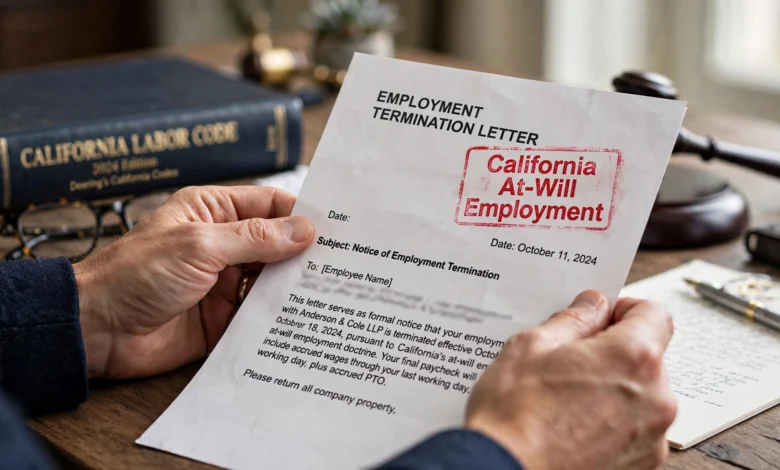
California at-will employment gives employers a lot of room to hire and fire, but it isn’t a blank check. Most workers in the state hear “at-will” and assume they have zero protection if they get let go. That’s not true. California is one of the most employee-friendly states in the country, and its courts and legislature have carved out a long list of exceptions that limit when and why a company can terminate someone.
If you were fired and something about it felt off, whether it happened right after you filed a complaint, took medical leave, or reported something illegal, it’s worth understanding where the line actually sits. At-will employment in California means either the employer or the employee can end the relationship at any time, for almost any reason, or no reason at all. The key word is “almost.” Once a firing crosses into discrimination, retaliation, breach of contract, or a violation of public policy, it stops being a simple at-will termination and starts looking like wrongful termination.
This article walks through the 15 major exceptions that carve out protection for California employees, explains how each one works in practice, and gives you a starting point if you think your termination wasn’t legal. None of this replaces advice from a licensed attorney, but it should help you recognize the warning signs.
What “At-Will Employment” Actually Means in California
Under California Labor Code Section 2922, employment is presumed to be at-will unless there’s an agreement stating otherwise. That means, by default, your employer doesn’t need “good cause” to fire you. No warning, no progressive discipline, no explanation required.
But that presumption can be overridden. Courts have consistently ruled that certain firings, even under an at-will arrangement, violate the law. These fall into a few broad buckets:
- Discrimination based on a protected characteristic
- Retaliation for exercising a legal right
- Breach of contract, written or implied
- Violation of public policy
Each of the 15 exceptions below fits into one of these categories. Understanding which bucket your situation falls into can help you figure out where to file a complaint and what kind of case you might have.
1. Implied Employment Contracts
Even without a signed contract, California courts recognize that an implied contract can limit at-will status. If your employer’s actions, an employee handbook, verbal promises, length of service, or consistent raises and positive reviews, suggested you’d only be fired for good cause, that can override the at-will presumption.
Courts look at factors like:
- How long you worked there
- Whether you received regular promotions or raises
- Statements from supervisors about job security
- Company policies describing progressive discipline before termination
This exception comes up more often than people expect, especially with long-tenured employees who were never given a formal contract but were led to believe their job was stable.


2. Public Policy Violations (Tameny Claims)
California recognizes what’s known as a Tameny claim, named after a 1980 California Supreme Court case, Tameny v. Atlantic Richfield Co. This exception protects employees fired for reasons that violate a clear public policy rooted in a constitutional, statutory, or regulatory provision.
Examples include being fired for:
- Refusing to break the law at your employer’s request
- Exercising a legal right, like taking family leave
- Reporting illegal conduct
- Performing a legal obligation, such as jury duty
A wrongful termination in violation of public policy claim can result in damages beyond what a standard breach of contract case would allow, including emotional distress and, in some cases, punitive damages.
3. Whistleblower Protections
California Labor Code Section 1102.5 is one of the strongest whistleblower laws in the country. It protects employees who report suspected violations of state or federal law to a government agency, law enforcement, or even an internal supervisor with authority to investigate.
You’re protected whether the report was accurate or not, as long as you had reasonable cause to believe a violation occurred. This covers things like:
- Reporting financial fraud
- Reporting safety violations
- Reporting wage theft
- Reporting discrimination or harassment
Retaliation, including termination, demotion, or reduced hours, after a protected report can support a whistleblower retaliation claim.
4. Discrimination Under FEHA
The Fair Employment and Housing Act (FEHA) prohibits termination based on protected characteristics. FEHA is broader than the federal Civil Rights Act in several ways and covers employers with five or more employees.
Protected categories include:
- Race, color, and national origin
- Religion
- Sex, gender identity, and sexual orientation
- Age (40 and older)
- Disability, physical or mental
- Medical condition and genetic information
- Marital status
- Military or veteran status
- Pregnancy, childbirth, and related conditions
If your termination coincided with a change in one of these categories becoming known to your employer, that timing matters. You can file a complaint with the California Civil Rights Department (CRD) before pursuing a lawsuit. More detail on filing a complaint is available through the California Civil Rights Department.
5. Retaliation for Filing a Workers’ Compensation Claim
Labor Code Section 132a makes it illegal to fire, discriminate against, or threaten an employee for filing a workers’ compensation claim after a workplace injury. Employers sometimes try to push out injured workers rather than accommodate them or pay out a claim.
If you were terminated shortly after reporting a workplace injury or filing a claim, the timing alone can raise a red flag, even if the employer offers a different reason on paper.
6. Retaliation for Taking Protected Leave
California offers several types of job-protected leave, and firing someone for using it, or for requesting it, is illegal. This includes:
- California Family Rights Act (CFRA) leave for a serious health condition or to care for a family member
- Pregnancy Disability Leave (PDL)
- Paid Sick Leave under the Healthy Workplaces, Healthy Families Act
- Federal Family and Medical Leave Act (FMLA) leave, where applicable
Employers are required to reinstate employees to the same or a comparable position after protected leave ends. Firing someone during or shortly after leave, without a legitimate, unrelated reason, often triggers a retaliation claim.
7. Retaliation for Jury Duty, Voting, or Military Service
California law protects employees who take time off for civic and military obligations. This includes:
- Jury duty (Labor Code 230)
- Voting (Elections Code 14000)
- Military service, under both state law and the federal Uniformed Services Employment and Reemployment Rights Act (USERRA)
An employer can’t fire you for missing work to serve on a jury, cast a ballot, or fulfill military service obligations, and in most cases can’t even penalize you for the absence.
8. Retaliation for Wage and Hour Complaints
Labor Code Section 98.6 protects employees who complain about unpaid wages, missed meal or rest breaks, or other wage and hour violations. This applies whether the complaint goes to the Labor Commissioner, a court, or even just a manager internally.
Common scenarios include:
- Complaining about unpaid overtime
- Asking about missing final paychecks
- Reporting misclassification as an independent contractor
- Requesting proper meal and rest breaks
If termination follows closely after a wage complaint, that sequence of events is often central to a retaliation case.
9. Protected Concerted Activity Under the NLRA
The National Labor Relations Act (NLRA) protects employees, union and non-union alike, who engage in “concerted activity” for mutual aid or protection. This includes discussing wages with coworkers, organizing around workplace conditions, or engaging in union-related activity.
Firing someone specifically for these activities can violate federal labor law, and a complaint can be filed with the National Labor Relations Board. You can find more information through the National Labor Relations Board.
10. Breach of the Implied Covenant of Good Faith and Fair Dealing
California recognizes an implied covenant of good faith and fair dealing in every employment relationship. This exception is narrower than it sounds and typically applies when an employer acts in bad faith to deprive an employee of benefits they already earned, for example, firing someone right before a large commission or bonus was due to prevent payment.
This claim often overlaps with implied contract claims and is usually argued alongside other exceptions rather than on its own.
11. Age Discrimination
Age discrimination deserves its own mention because it’s one of the most common complaints filed with the CRD. Employees 40 and older are protected under both FEHA and the federal Age Discrimination in Employment Act (ADEA).
Warning signs include:
- Layoffs that disproportionately affect older workers
- Comments about “fresh energy” or “digital natives” during restructuring
- Sudden performance issues cited for a long-tenured employee with a previously clean record
12. Retaliation for Reporting Sexual Harassment
Reporting sexual harassment, whether it happened to you or you witnessed it happen to someone else, is a protected activity under FEHA. Retaliation for reporting harassment, including termination, demotion, or a hostile shift in treatment, is illegal even if the underlying harassment claim is never proven.
Employers are required to investigate harassment complaints and cannot punish the employee who raised the issue.
13. Reporting Workplace Safety Violations
Both state and federal law protect employees who report unsafe working conditions. Cal/OSHA enforces workplace safety standards, and Labor Code Section 6310 specifically protects employees who report safety hazards or refuse to work under conditions that violate safety regulations.
If you were fired after reporting a safety issue, whether to a supervisor, Cal/OSHA, or another regulatory body, that firing may be retaliatory.
14. Refusing to Commit an Illegal Act
You can’t legally be fired for refusing to do something illegal at your employer’s direction. This is a classic public policy exception and has come up in cases involving employees asked to falsify records, violate safety codes, or participate in fraud.
If your termination followed a refusal to do something you reasonably believed was illegal, that refusal is protected.
15. Breach of a Written Contract or Collective Bargaining Agreement
If you have a written employment contract, a fixed term agreement, or you’re covered by a collective bargaining agreement, at-will status likely doesn’t apply to you at all. These agreements typically require “good cause” for termination and outline a specific process the employer must follow.
Firing someone in violation of the terms of a written contract is a straightforward breach of contract claim, separate from the wrongful termination exceptions above.
How to Tell If Your Firing Was Legal
Not every unfair firing is illegal. California at-will employment still allows termination for poor performance, restructuring, personality conflicts, or simply not being a good fit, as long as the real reason doesn’t fall into one of the protected categories above.
A few questions worth asking yourself:
- Did the firing happen shortly after you reported something, requested leave, or filed a complaint?
- Did your employer’s stated reason change or seem inconsistent?
- Were you treated differently than coworkers in a similar situation?
- Do you belong to a protected class that may have influenced the decision?
If the answer to any of these is yes, it’s worth having a conversation with an employment attorney or filing a complaint with the appropriate agency, such as the CRD or the Labor Commissioner’s Office.
What to Do If You Think You Were Wrongfully Terminated
- Write down what happened while it’s fresh, including dates, names, and any relevant conversations.
- Gather documentation, such as emails, performance reviews, pay stubs, and any complaints you filed.
- Check your timeline against protected activity, like a leave request, complaint, or injury report.
- File with the right agency, if applicable, before the statute of limitations runs out. Many FEHA claims must be filed within three years.
- Consult an employment attorney, especially if you believe discrimination, retaliation, or breach of contract played a role.
Final Thoughts
California at-will employment gives employers broad discretion, but that discretion has real limits. The 15 exceptions above, covering discrimination, retaliation, whistleblower activity, protected leave, contract breaches, and public policy violations, exist specifically to stop employers from firing people for illegal reasons while hiding behind the at-will label.
If your termination lines up with one of these categories, you may have grounds for a wrongful termination claim, and understanding these protections is the first step toward figuring out whether what happened to you was legal.