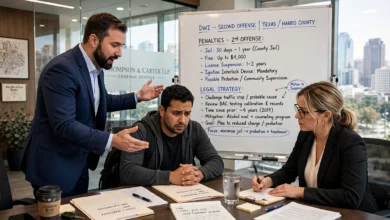
Brisbane Drink Driving Lawyers: Queensland Penalties and Licence Suspension
Brisbane drink driving lawyers explain Queensland penalties, BAC limits, licence suspension, work licences and what to expect in court after a charge.

Brisbane drink driving lawyers hear the same question almost every week: “Am I going to lose my licence?” For most people the honest answer is yes, at least for a while. Queensland treats drink driving as a serious traffic offence, and once police record a reading over your limit, a chain of consequences starts that same night and can follow you for years.
The outcome is not locked in the moment you blow into the device, though. The length of your licence disqualification, the size of any drink driving fine, whether you can apply for a work licence, and whether an alcohol ignition interlock ends up in your car all depend on the details. Your blood alcohol concentration (BAC), the type of licence you held, your traffic history and how your case is put to the magistrate all make a real difference.
This guide walks through the Queensland drink driving penalties as they stand in October 2026. It covers the low, mid and high range categories, immediate licence suspension, repeat offences and the reforms the Queensland Government has flagged for 1 December 2026. It also explains, in plain terms, what a good lawyer actually does for you and when it is worth picking up the phone. Treat it as general information rather than legal advice, and a solid starting point before you speak to someone about your own situation.
Queensland Drink Driving Laws: The Limits That Apply to You
The main offence sits in section 79 of the Transport Operations (Road Use Management) Act 1995. Before you can work out what penalty you might face, you need to know which alcohol limit applied to you on the night, because Queensland does not have a single limit for everyone.
The General 0.05 Limit
If you hold an open Queensland licence and you are driving an ordinary car, you are over the limit at a BAC of 0.05 or more. Below 0.05 you are within the law, although police can still charge you with driving under the influence if your driving shows you were affected.
Drivers Who Must Have a Zero BAC
A large group of drivers must have no alcohol at all in their breath or blood. According to Legal Aid Queensland’s guide to drink driving offences, the zero alcohol limit applies if you:
- hold a learner, provisional (P1 or P2), probationary or restricted licence, which includes anyone getting their licence back after a drink driving disqualification
- are unlicensed, or are learning to ride or have held a class RE motorcycle licence for less than a year
- drive a truck, bus, articulated vehicle, road train, tow truck, taxi, limousine, dangerous goods vehicle, pilot vehicle or driving instructor vehicle
- drive a tractor or specially constructed vehicle
This catches a lot of people by surprise, especially tradies who drive a heavy vehicle for work and assume the 0.05 rule covers them.
The Three BAC Ranges for Open Licence Holders
For open licence holders, Queensland drink driving charges are split into ranges. The range decides almost everything that follows, from suspension to sentencing.
| Range | BAC reading | What it usually means |
|---|---|---|
| Low range | 0.05 to under 0.10 | 24-hour suspension, then court; work licence may be possible |
| Mid range | 0.10 to under 0.15 | Licence suspended immediately until court; tougher penalties |
| High range (also called UIL or DUI) | 0.15 and over | Immediate suspension, highest fines, possible jail, interlock |
Being “In Charge” of a Vehicle
You do not have to be driving to be charged. Being in charge of a motor vehicle while over the limit is also an offence. Legal Aid Queensland points out that sleeping in the front seat is illegal, and even sleeping in the back seat leaves you needing to prove you had no intention of driving. Supervising a learner driver also counts as being in charge, so the supervisor must be under 0.05.


Random Breath Tests and Refusing a Sample
Police do not need any suspicion to pull you over for a random breath test (RBT). Refusing a breath or blood test within three hours of driving or being in charge is an offence in its own right. It is treated like a high range offence, so refusing is almost never a smart move.
Queensland Drink Driving Penalties for a First Offence
Every drink driving charge in Queensland goes to the Magistrates Court. There is no on-the-spot fine you can simply pay. The magistrate must disqualify you, and then decides how long the disqualification period runs and whether you are fined or, in more serious cases, sent to prison.
The Queensland Government’s drink driving penalties page sets out these maximum penalties for a first offence. The figures reflect the 3.5% indexation increase that took effect on 1 July 2026.
| BAC and driver type | Licence disqualification | Maximum fine | Maximum jail |
|---|---|---|---|
| Over 0.00, under 0.05 (learner, provisional or probationary) | 3 to 9 months | $3,454 | 3 months |
| Over 0.00, under 0.05 (drivers of particular vehicles) | 1 to 9 months | $3,454 | 3 months |
| 0.05 to under 0.10 (low range) | 2 to 9 months | $3,454 | 3 months |
| 0.10 to under 0.15 (mid range) | 3 to 12 months | $4,835 | 6 months |
| 0.15 and over (high range) | Minimum 6 months | $6,908 | 9 months |
These are maximums. Most first offenders with a low range reading receive a fine well below the cap and a disqualification toward the lower end of the range. Jail for a first offence is rare, but the court can impose it if the circumstances are bad enough.
What Magistrates Look At When Setting Your Penalty
Two people with the same reading can walk out of court with very different results. Magistrates in Brisbane and across Queensland weigh up factors like:
- Your exact BAC reading, not just the range. A 0.06 is treated differently from a 0.098.
- Your traffic history, including speeding and earlier licence suspensions.
- The circumstances of the driving, such as distance, time of night, passengers, or whether there was a crash.
- Why you drove, for example an emergency versus a choice to drive home from the pub.
- Your early guilty plea, which usually earns a discount.
- Steps you have taken since, such as completing the Queensland Traffic Offenders Program or counselling.
- Your personal situation, including your job, family responsibilities and character references.
This is where drink driving lawyers in Brisbane earn their fee. Presenting these factors properly can shave months off a disqualification.
Penalties for Repeat Drink Driving Offences
The law gets much harsher if you have a previous drink or drug driving conviction, usually counted over the past five years. For a repeat drink driving offence, the Queensland Government says you may:
- have your licence disqualified for up to 2 years
- be fined up to $12,434
- be sentenced to a term of imprisonment set by the court
- have your car impounded, if your BAC was 0.15 or more or you failed to provide a specimen
Legal Aid Queensland also notes that the court must include a jail penalty if you are convicted of three major offences within five years. That penalty can sometimes be served in the community, but it is still a term of imprisonment on your record.
Reforms Due From 1 December 2026
On 26 June 2026 the Queensland Government announced two road safety bills that will change the picture again. The changes flagged to start from 1 December 2026 include:
- doubled penalties for drug driving, with higher fines and longer disqualifications
- stronger penalties where a driver is caught with both alcohol and drugs
- new minimum court-imposed fines for these offences
The bills still needed to pass Parliament when they were announced, so the final details may differ. If your court date falls near December 2026, ask your lawyer which version of the law applies to you.
Licence Suspension and Disqualification in Queensland
People often use “suspension” and “disqualification” as if they mean the same thing. They don’t. A licence suspension is imposed by police or the transport department, usually before your case is finished. A licence disqualification is ordered by the court as part of your sentence. You can face both for the same incident.
The 24-Hour Suspension
If your BAC is under 0.10, your licence is suspended for at least 24 hours from the time the reading is confirmed. You cannot drive during that time for any reason, including moving your car out of a car park. Legal Aid Queensland warns that people who drive home during this window can end up with a second drink driving charge plus a driving while suspended charge, which is far more serious.
Immediate Suspension Until Your Court Date
For more serious charges, your licence is suspended on the spot and stays suspended until the court deals with the case. According to the Queensland Government, immediate licence suspension applies if you:
- are charged with mid range or high range drink driving (0.10 and over)
- are charged with a low range offence while an earlier drink driving charge is still pending
- are charged with a low range offence while holding a section 79E order with an X4 condition on your replacement licence
- fail to provide a breath or blood specimen when police ask
- are charged with dangerous operation of a motor vehicle while under the influence
The suspension ends when the court finalises the charge or the charge is withdrawn. It is one reason many Brisbane drink driving lawyers push to get matters listed and resolved quickly: every week of waiting is a week without a licence.
Section 79E Orders
In limited cases, you can ask the court for a section 79E order, which lets you keep driving until your case is decided. Legal Aid Queensland explains that this is generally only useful if you plan to plead not guilty and have advice that your defence has a real chance. It is not a back door for people who intend to plead guilty anyway.
Court-Ordered Disqualification
Once you are found guilty, disqualification is automatic. The magistrate cannot let you keep your licence, but can choose the length within the ranges set by law. Time already spent under immediate suspension is often taken into account, so it is worth making sure the court hears exactly how long you have been off the road.
When the court orders disqualification, you hand your licence to the police prosecutor or to the Department of Transport and Main Roads. Keeping a cancelled licence is an offence.
Getting Your Licence Back
Disqualification does not end with your licence magically reappearing. When the period finishes:
- You apply to have your driver licence reissued.
- You are issued a probationary licence, which you must hold for at least one year, with a zero alcohol limit.
- You may have to complete a short online drink driving course or the repeat drink driving course first.
- You may also have to drive with an alcohol ignition interlock fitted, depending on your offence.
Driving before you have actually been reissued a licence counts as unlicensed or disqualified driving, so wait until the paperwork is done.
Work Licences and Alcohol Interlocks: Staying on the Road
For a lot of people, the fine is not the real problem. Losing the ability to drive to work is. Queensland offers a few limited ways to keep driving, but the rules are strict and the timing matters.
Who Can Apply for a Work Licence
A work licence (formally a restricted licence) lets you drive for work during your disqualification. Legal Aid Queensland says that to be eligible for a drink driving work licence, at the time you were caught you must have:
- held a current Queensland open licence for the vehicle you were driving
- had a BAC under 0.15
- not been driving for your job or already driving under a work licence
You also generally cannot get one if, in the five years before, you were convicted of drink or drug driving anywhere, convicted of dangerous driving, or had your licence suspended, cancelled or disqualified for certain reasons. So high range drivers, P platers and learners are out, and so are most repeat offenders.
What You Need to Show the Court
Eligibility only gets you in the door. The magistrate must also be satisfied that:
- you are a fit and proper person to hold a work licence, given the safety of other road users
- losing your licence would cause extreme hardship to you or your family by depriving you of your way of earning a living
“It would be inconvenient” is not enough. Courts expect evidence, usually an affidavit from you and a letter or affidavit from your employer explaining why driving is essential to the job and what the work hours look like.
Timing: Apply at Sentencing, Not After
This is the mistake that costs people the most. The work licence application has to be made when you are sentenced. Once the magistrate has disqualified you, the chance is gone. If you think you might need one, tell your lawyer at the very start so the paperwork is ready before your plea.
If the court grants a work licence, expect conditions such as a zero BAC while driving, driving only for work purposes, carrying the court order, and keeping a logbook. Breaching those conditions can lead to a much longer disqualification.
The Alcohol Ignition Interlock
An alcohol ignition interlock is a breath testing device wired into your car’s ignition. The car will not start unless you give a clean sample. Under the Queensland interlock program, you will have to use one after your disqualification if you are convicted of a high-risk drink driving offence. In practice that covers offences such as:
- high range drink driving (0.15 and over)
- failing to provide a breath or blood specimen
- dangerous driving while under the influence
- a second drink driving offence within five years
You pay for the device, its installation and its servicing, so the cost adds up quickly. Exemptions exist in narrow cases, for example where you live too far from an approved installer or have a medical condition that stops you giving a sample, but they are not easy to get.
What About Special Hardship Orders?
You may see special hardship orders mentioned alongside work licences. These cover different situations, mainly some demerit point and similar suspensions, rather than court-ordered drink driving disqualifications. If you are unsure which option fits your case, that is exactly the kind of question to put to a traffic lawyer early.
How Brisbane Drink Driving Lawyers Help With Your Case
You are allowed to represent yourself in the Magistrates Court, and some people with a simple low range charge do. But a drink driving matter has more moving parts than it looks, and small decisions early on can lock you out of options later.
What to Do in the First Few Days After a Charge
- Don’t drive until you are sure your licence is valid. Check the paperwork police gave you for any suspension notice.
- Read your Notice to Appear and note the court date and location, usually the Brisbane Magistrates Court or a suburban court such as Holland Park, Richlands, Sandgate or Beenleigh.
- Get your traffic history from the Department of Transport and Main Roads. Legal Aid Queensland recommends doing this before you get advice, because it changes what penalties apply.
- Write down what happened while it is fresh: where you drank, how much, when you stopped, when you were tested.
- Speak to a lawyer early, especially if you might need a work licence or think you have a defence.
- Think about a traffic offenders program, which can help at sentencing if you plead guilty.
What a Good Lawyer Actually Does
The best Brisbane drink driving lawyers do much more than stand up on the day. Here is what you should expect:
- Check the evidence. Lawyers review the breath analysis certificate, the timing of the test, whether the three-hour window was met and whether police followed the correct procedure.
- Advise on your plea. Most people plead guilty, but a lawyer can tell you honestly whether a defence is worth running.
- Prepare a work licence application, including affidavits and employer evidence, in time for sentencing.
- Gather mitigation material such as character references, course certificates and proof of your work and family situation.
- Make submissions on penalty, aiming for the shortest possible disqualification and a lower fine.
- Handle appeals if the sentence was too harsh or a work licence was refused.
Possible Defences and Technical Issues
Genuine defences are less common than people hope, but they do exist. Issues a lawyer may look at include:
- whether you were actually driving or in charge of the vehicle
- whether the breath test was taken within three hours of driving
- whether the breath analysis instrument and operator met the legal requirements
- whether you had a reasonable excuse for failing to give a sample, such as a medical condition
- whether there was a genuine emergency that forced you to drive
If none of these apply, putting your energy into a strong guilty plea is usually the better path.
Choosing the Right Drink Driving Lawyer in Brisbane
Not every law firm handles traffic matters regularly. When you compare traffic lawyers in Brisbane, ask:
- How many drink driving and work licence matters do you handle each month?
- Will you or a junior appear for me in court?
- Is your fee fixed, and what does it include?
- What penalty do you realistically expect in my case?
If money is tight, Legal Aid Queensland may give free advice on drink driving charges and work licences, and community legal centres can also help. For private representation, the Queensland Law Society can point you to practising solicitors.
Quick Answers to Common Questions
Will a drink driving conviction show up on my record? It will appear on your Queensland traffic history. How it affects your criminal history depends on how the court deals with it, so ask your lawyer, especially if you work in a regulated industry.
Can I keep driving until my court date? For a low range first offence, usually yes after the 24-hour suspension ends. For mid range, high range, refusals and repeat charges, no, unless you get a section 79E order.
Does pleading guilty early help? Yes. Courts usually give a discount for an early plea, and it shortens the stressful wait.
Can I get a work licence for high range drink driving? No. Work licences are only available where your BAC was under 0.15.
Conclusion
A drink driving charge in Queensland moves fast and the consequences reach well beyond the courtroom, but understanding the system puts you back in control: your BAC range and licence type decide whether you face a 24-hour or immediate suspension, first offence penalties run from 2 to 9 months off the road and a $3,454 maximum fine at the low end up to at least 6 months and $6,908 for high range, repeat offenders face disqualification of up to 2 years, fines of up to $12,434, possible jail and an interlock, and new reforms flagged for 1 December 2026 will add minimum fines and tougher penalties where alcohol and drugs mix.
So the smartest steps are to stay off the road while suspended, get your traffic history, decide early whether you need a work licence, and speak with experienced Brisbane drink driving lawyers before your first court date so you go in prepared rather than hoping for the best.