Chicago DUI License Suspension: Illinois Secretary of State Hearings
Chicago DUI license suspension explained: Illinois Secretary of State hearings, rescission deadlines, MDDP, BAIID, and steps to get your license back.
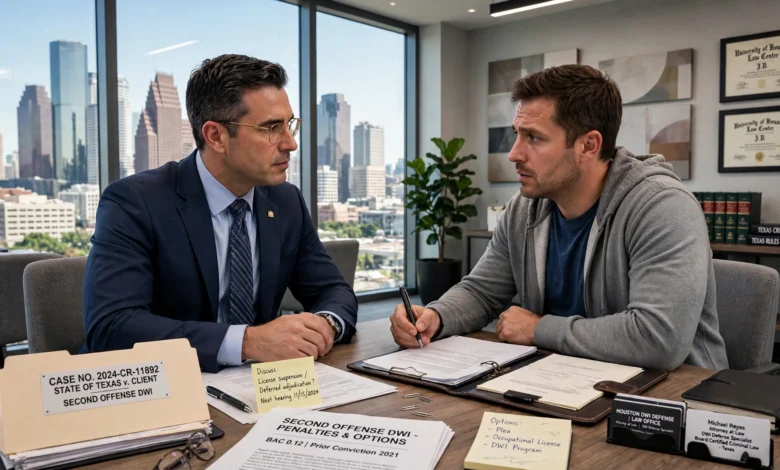
A Chicago DUI license suspension can turn ordinary life upside down almost overnight. One traffic stop on Lake Shore Drive or the Kennedy, and suddenly you are wondering how you will get to work, pick up your kids, or keep your job. What surprises most people is that losing your license after a DUI arrest has very little to do with whether you are actually convicted. Illinois runs two separate tracks: a criminal case in court and a civil, administrative process that controls your driving privileges.
That second track is where the Illinois Secretary of State comes in. Depending on your situation, you may need to fight a statutory summary suspension in Cook County court, apply for a Monitoring Device Driving Permit (MDDP), or appear at a formal or informal Secretary of State hearing to get your license reinstated after a revocation. Each step has its own deadlines, paperwork, and unwritten rules, and missing one can cost you months or even years of driving.
This guide walks you through how a DUI license suspension in Chicago actually works, how long it lasts, what happens at an Illinois Secretary of State formal hearing, and seven practical ways to improve your odds of getting back on the road. It is written in plain language for drivers and families, not lawyers. It is general information, not legal advice, so talk to a licensed Illinois attorney about your specific case.
What Is a Chicago DUI License Suspension?
When people talk about a Chicago DUI license suspension, they usually mean the statutory summary suspension that kicks in after a DUI arrest. This is an automatic, administrative penalty under the Illinois Vehicle Code. It is triggered by one of two things:
- You failed a chemical test, meaning your breath or blood showed a BAC of 0.08 or higher, or the test found drugs or other intoxicating compounds.
- You refused chemical testing after the officer read you the implied consent warning.
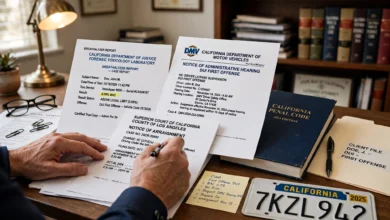
The officer hands you a Notice of Statutory Summary Suspension at the time of arrest. The suspension then takes effect on the 46th day after that notice is served. That 45-day window is your first real chance to act.
Statutory Summary Suspension vs. Revocation
These two words get mixed up all the time, but the difference matters.
A suspension is temporary and has a set end date. Once it runs out and you pay the reinstatement fee, your license generally comes back.
A revocation is more serious. Your license is cancelled, and it does not come back on its own. If you are convicted of DUI in Illinois, the Secretary of State revokes your driving privileges. To get them back, you must apply for reinstatement and, in most cases, go through an Illinois Secretary of State hearing.
Many first-time offenders who receive court supervision avoid a revocation altogether. They only deal with the summary suspension. Repeat offenders and anyone convicted face the longer, tougher revocation process.


How Long Does a Chicago DUI License Suspension Last?
The length of a Chicago DUI license suspension depends on two factors: whether you are a “first offender” under Illinois law, and whether you took the test or refused it. Here is the general breakdown under 625 ILCS 5/6-208.1:
| Situation | First Offender | Not a First Offender |
|---|---|---|
| Failed the chemical test | 6 months | 1 year |
| Refused the chemical test | 12 months | 3 years |
A few points worth knowing:
- Refusing the test doubles the suspension for first offenders. People often refuse thinking it helps their criminal case, but it usually costs them more driving time.
- You are generally not a first offender if you had a prior DUI conviction, supervision, or summary suspension within the past five years.
- Time served on the suspension counts toward any later revocation period if you are convicted on the same incident.
- Commercial drivers (CDL holders) face separate disqualification rules, and an MDDP does not allow you to drive a commercial vehicle.
Circuit Court vs. Illinois Secretary of State Hearings
One of the most confusing parts of a DUI license suspension in Illinois is figuring out which office handles what. Here is the simple version.
The Circuit Court Handles Rescission
If you want to cancel (rescind) the statutory summary suspension, you file a petition to rescind in the same court where your DUI ticket is pending. For most Chicago arrests, that means the Circuit Court of Cook County. A judge hears the petition, not the Secretary of State.
The Secretary of State Handles Reinstatement
The Illinois Secretary of State Department of Administrative Hearings handles requests for driving relief after a revocation, plus certain other suspensions. This is where you ask for a Restricted Driving Permit (RDP) or full reinstatement. These are the hearings most people mean when they search for Illinois Secretary of State hearings.
Why This Matters for Your Strategy
You may end up in both places. For example, you might lose a rescission hearing in Cook County, take an MDDP to keep driving, then get convicted and later need a formal Secretary of State hearing to reinstate. Planning ahead for every stage saves time and money.
7 Proven Ways to Fight a Chicago DUI License Suspension
There is no magic trick, but there are clear, practical steps that give you the best chance of a positive result. Here are seven that matter most.
1. File Your Petition to Rescind Within 90 Days
Under 625 ILCS 5/2-118.1 of the Illinois Vehicle Code, you have 90 days from the date you were served with the suspension notice to file a written request for a judicial hearing. Miss that deadline and you lose the right to challenge the suspension in court.
Filing the petition does not pause the suspension. If you want a shot at stopping it before day 46, file early.
The scope of a rescission hearing is narrow. The judge looks at a few specific questions:
- Were you lawfully placed under arrest for DUI?
- Did the officer have reasonable grounds to believe you were driving or in actual physical control while impaired?
- Were you properly warned about the consequences, and did you actually refuse testing?
- If you took the test, did it really show a BAC of 0.08 or more, or the presence of drugs?
If the stop lacked a legal basis, the officer skipped required warnings, or the breath machine was not properly certified, the suspension may be rescinded. Under current law, any court order rescinding the suspension must state a factual basis, or the Secretary of State will not lift it.
2. Use the MDDP and BAIID to Keep Driving
If you are a first offender and cannot win rescission, the Monitoring Device Driving Permit (MDDP) is often the next best option. With an MDDP, you can drive anywhere, at any time, after the first 30 days of the suspension, as long as your vehicle has a Breath Alcohol Ignition Interlock Device (BAIID) installed.
Things to keep in mind:
- The BAIID will not let the car start if it detects a BAC of 0.025 or higher.
- You pay for installation, monthly monitoring, and permit fees.
- The Secretary of State monitors your device. Violations can extend your suspension or get the MDDP cancelled.
- Driving a vehicle without a BAIID while on an MDDP is a Class 4 felony.
The MDDP is not glamorous, but for many Chicago drivers it keeps a job and a household running.
3. Get the Right Alcohol and Drug Evaluation Early
Whether you are dealing with court sentencing or a future Secretary of State reinstatement hearing, your alcohol and drug evaluation is the single most important document in your file. It must be done by a provider licensed by the Illinois Department of Human Services, Division of Substance Use Prevention and Recovery (SUPR).
The evaluation places you in a risk classification:
- Minimal Risk: usually requires a 10-hour DUI risk education course.
- Moderate Risk: risk education plus early intervention hours.
- Significant Risk: risk education plus outpatient treatment.
- High Risk: treatment, continuing care, and proof of a support program and abstinence.
Be completely honest during the evaluation. Hearing officers compare it against your police reports and driving abstract. If your story does not match the record, that inconsistency alone can sink your petition.
4. Complete Risk Education and Treatment Before You Apply
The Secretary of State wants proof that you have done the work, not promises that you will. Before you request reinstatement, make sure you have:
- A certificate of completion for DUI risk education, taken after your most recent arrest.
- Treatment completion documents if your classification requires them.
- An updated evaluation if your original one is more than six months old.
Showing up with incomplete treatment is one of the fastest ways to get a denial and a long wait before you can try again.
5. Choose Between an Informal and Formal Hearing Wisely
The Secretary of State offers two kinds of hearings.
Informal hearings are walk-in sessions held at various Driver Services facilities, including several in the Chicago area. They are quicker and less adversarial. They are generally available to people with a single DUI disposition or a less complicated record.
Formal hearings are required for people with more serious histories, including multiple DUI offenses or cases involving death or great bodily harm. A formal hearing is a quasi-judicial proceeding with testimony, evidence, and an attorney representing the Secretary of State. You file a written request with a $50 filing fee, and Chicago is one of the main formal hearing locations.
If you are eligible for an informal hearing, it can be a faster route. If you are not, preparing properly for the formal hearing becomes even more important.
6. Prepare Strong Documents and Support Letters
At any Illinois Secretary of State hearing, your paperwork does most of the talking. A solid packet usually includes:
- Your original alcohol and drug evaluation and any updates.
- Risk education and treatment completion records.
- Proof of your support system, such as AA attendance records or counseling letters.
- Letters of support from employers, family members, or friends who can speak to your sobriety and changed habits.
- Proof of hardship if you are asking for a Restricted Driving Permit, such as work schedules or medical appointments.
Support letters work best when they are specific, signed, dated, and written by people who see you regularly. A generic letter from a coworker who barely knows you will not carry much weight.
7. Work With a Chicago DUI Lawyer Who Knows SOS Hearings
You are allowed to represent yourself, but most people who go to a formal hearing without help are denied. The Secretary of State has its own attorney at formal hearings, and that attorney’s job is to test your evidence.
An experienced Chicago DUI lawyer who regularly handles Secretary of State hearings can review your driving abstract, spot gaps in your evaluation, prepare you for cross-examination, and make sure your documents match. That preparation often makes the difference between a quick approval and a denial that forces you to wait and start over.
What Happens at an Illinois Secretary of State Formal Hearing
Knowing what to expect makes the day far less stressful. Here is how a typical formal hearing in Chicago plays out.
Who Is in the Room
A hearing officer appointed by the Secretary of State runs the hearing. An attorney representing the Secretary of State is also present and, in practice, acts as your opponent. You, your attorney if you have one, and any witnesses you bring complete the room. The hearing is recorded.
How the Hearing Works
The process usually follows this order:
- The Secretary of State’s attorney introduces your driving record and any prior evaluations or hearing orders.
- You (or your attorney) introduce your evaluation, treatment records, and support letters.
- You testify about your drinking history, your arrests, your treatment, and your current lifestyle.
- The Secretary of State’s attorney cross-examines you.
- Both sides make closing statements.
The Burden of Proof
At a formal hearing, you carry the burden. You must show by clear and convincing evidence that allowing you to drive will not endanger public safety and welfare. For many petitioners, that means showing that any alcohol or drug problem is under control and that you are unlikely to drive impaired again.
When You Get a Decision
You will not get a ruling on the spot. The hearing officer makes a recommendation, and the Secretary of State issues a written order. By rule, the Secretary of State should render a decision within 90 days after the hearing ends. Illinois Legal Aid Online’s guide to the formal hearing process gives a helpful step-by-step look at what the order contains and how it is reviewed. For the detailed rules on evidence and procedure, see the Illinois Administrative Code rules for formal hearings (92 Ill. Adm. Code 1001.100).
Common Mistakes That Lead to a Denied Petition
After a Chicago DUI license suspension or revocation, the same mistakes come up again and again. Avoid these and you are already ahead of many applicants.
- Missing the 90-day rescission deadline. Once it passes, the court route is closed.
- Downplaying your drinking history. Hearing officers have your records. Inconsistent answers damage your credibility fast.
- Using an outdated evaluation. Evaluations generally need to be current, often within six months of the hearing.
- Skipping required treatment. Partial completion is treated the same as no completion.
- Weak or vague support letters. Letters should describe specific, recent observations about your behavior.
- Driving while suspended or revoked. This creates new charges and can push reinstatement much further away.
- Not addressing out-of-state offenses. Arrests in other states that appear on your record still count.
Restricted Driving Permit vs. Full Reinstatement
If your license is revoked, you usually have two goals: a Restricted Driving Permit (RDP) for now, and full reinstatement later.
Restricted Driving Permit (RDP)
An RDP lets you drive for specific purposes, such as work, school, medical care, support group meetings, or child care. You must show undue hardship, which means losing the ability to drive creates a real problem beyond simple inconvenience. People with two or more DUI convictions are often required to drive with a BAIID as a condition of the permit.
Full Reinstatement
Full reinstatement restores your normal driving privileges. You must wait until you are eligible based on your offense history, meet all evaluation and treatment requirements, and convince the hearing officer you are a safe driver. Once approved, you pay the reinstatement fees and may need to retake the driving tests.
Which One Should You Ask For?
If you are not yet eligible for full reinstatement, an RDP is usually the right request. Many people use the RDP period to build a clean track record of BAIID use and sobriety, which strengthens their later request for full reinstatement.
Frequently Asked Questions About Chicago DUI License Suspension
Can I drive during my Chicago DUI license suspension?
If you are a first offender, you may qualify for an MDDP and drive with a BAIID after the first 30 days. If you are not a first offender, your options during the summary suspension are much more limited, though a restricted permit may be available in some situations.
Does winning my criminal DUI case end the suspension?
Not automatically. The summary suspension is a separate civil matter. However, if your DUI charge is dismissed or you are acquitted, your attorney may be able to use that outcome to address the suspension.
How long does a Secretary of State hearing take?
The hearing itself often takes under an hour. Waiting for the written decision can take up to 90 days after a formal hearing.
Do I need a lawyer for an informal hearing?
Not always. Informal hearings are simpler, and some people handle them alone. For formal hearings, legal representation is strongly recommended.
Conclusion
A Chicago DUI license suspension is stressful, but it is not the end of the road if you understand how the system works and act quickly. The statutory summary suspension starts on day 46, and you have 90 days to challenge it in Cook County court, while first offenders may keep driving through an MDDP with a BAIID.
If a conviction leads to revocation, your path back runs through the Illinois Secretary of State hearing process, where an honest evaluation, completed treatment, strong support letters, and careful preparation make all the difference. Knowing whether you need an informal or formal hearing, avoiding common mistakes, and getting guidance from an experienced attorney can shorten the time you spend off the road and help you get your license back with confidence.