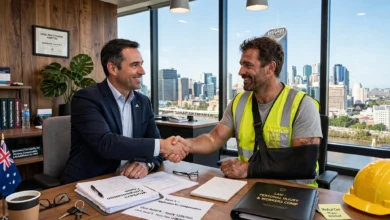
Melbourne WorkCover Claims: Victorian Workers Compensation Guide
Melbourne WorkCover claims explained: eligibility, deadlines, payments, and disputes. A clear, practical guide for injured Victorian workers.

Melbourne WorkCover claims can feel overwhelming when you’re dealing with an injury, lost income, and a pile of paperwork all at once. If you’ve been hurt at work anywhere in Victoria, whether that’s a warehouse in Dandenong, an office in the CBD, or a construction site in Geelong, understanding how the workers compensation system actually works can save you weeks of frustration and a fair amount of money. Victoria’s scheme is run by WorkSafe Victoria, and it covers medical costs, weekly wage replacement, and rehabilitation support for workers injured on the job or who develop a work-related illness.
The rules changed significantly under the WorkCover Scheme Modernisation Act, and the thresholds, excess amounts, and reporting timeframes get indexed every year on 1 July, so what applied last year might not apply now. This guide walks through exactly how the claims process works in 2026, who qualifies, what payments you can expect, and what to do if your claim gets knocked back.
Whether you’re a first-time claimant or an employer trying to understand your obligations, this is a practical, plain-English breakdown of the Victorian workers compensation system, written to reflect the current rules rather than outdated general advice.
What Is WorkCover and Who Runs It in Victoria
WorkCover Victoria is the state’s workers compensation insurance scheme, administered by WorkSafe Victoria under the Workplace Injury Rehabilitation and Compensation Act 2013. Every employer in Victoria with workers is legally required to hold a WorkCover insurance policy, which funds the compensation paid to injured employees. WorkSafe doesn’t manage every claim directly; instead, it appoints a small panel of authorised claims agents (insurers) who handle the day-to-day processing, payments, and case management on WorkSafe’s behalf.
For Melbourne workers specifically, this means your claim is likely to be managed by one of these agents rather than WorkSafe itself, though WorkSafe sets the rules and oversees the whole scheme. Recent government reporting shows WorkSafe provided $3.4 billion in support to more than 104,000 injured workers in the last financial year alone, which gives you a sense of just how large and active this system is.
Why the System Exists
The purpose of workers compensation in Victoria is straightforward: if you’re injured or become ill because of your job, you shouldn’t have to carry the financial burden alone. The scheme is designed to:
- Cover reasonable medical and like expenses related to the injury
- Replace a portion of lost income while you can’t work
- Fund rehabilitation and return-to-work support
- Provide lump sum payments for permanent impairment in eligible cases
Who Is Eligible to Make a WorkCover Claim
Not every injury automatically qualifies, and eligibility is one of the most common points of confusion for Melbourne workers.
Basic Eligibility Requirements
To make a valid WorkCover claim, you generally need to show:
- You are (or were) a worker, which includes most full-time, part-time, casual, and in some cases contract workers
- Your injury or illness arose out of, or in the course of, your employment
- Your employment was a significant contributing factor to the injury or disease
- You’ve reported the injury to your employer and sought appropriate medical treatment
Both physical injuries and psychological or mental injuries can be compensable, though mental injury claims are assessed with additional documentation requirements. Notably, mental injury now accounts for a significant share of new claims in Victoria, and the scheme has adjusted its reporting timeframes to reflect this.


What Counts as a Work-Related Injury
Melbourne WorkCover claims commonly arise from:
- Manual handling injuries (back, shoulder, and joint strains)
- Slips, trips, and falls at the workplace
- Repetitive strain and overuse injuries
- Psychological injury from workplace stress, bullying, or trauma exposure
- Occupational diseases that develop gradually, such as hearing loss or certain cancers linked to workplace exposure
- Injuries sustained while travelling for work purposes (though ordinary commuting is usually excluded)
If you’re unsure whether your situation qualifies, it’s worth getting advice early rather than assuming you’re not covered. Many workers wrongly assume that pre-existing conditions disqualify them, but if work has materially aggravated an existing condition, you may still have a valid claim.
Step-by-Step: How to Lodge a WorkCover Claim in Melbourne
Filing a claim correctly the first time makes a real difference to how quickly it gets processed.
Step 1: Report the Injury to Your Employer
Tell your employer or supervisor about the injury as soon as possible. Under current rules, mental injury claims require early notification within 3 business days, and full documentation within 10 calendar days, while physical injury claims require full documentation within 10 calendar days. Delaying this step is one of the most common reasons claims get delayed or disputed.
Step 2: See a Doctor and Get a Certificate of Capacity
You’ll need a Certificate of Capacity from a treating doctor. This certificate outlines your diagnosis, treatment plan, and whether you have capacity for work (full, partial, or none). This document is central to your claim, so choose a GP who understands occupational injuries where possible, and be thorough and honest about your symptoms and limitations.
Step 3: Complete the Worker’s Injury Claim Form
Your employer should provide you with a Worker’s Injury Claim form, which you complete and submit along with your Certificate of Capacity. Your employer is required to forward this to their WorkCover insurance agent within 10 calendar days of receiving it.
Step 4: Wait for the Claims Determination
The claims agent has 28 calendar days from receiving your claim to make a decision. During this period, they may request additional medical information or arrange an independent medical examination. In many cases, provisional payments can begin before a final decision is made, particularly for straightforward physical injuries.
Step 5: Ongoing Reporting and Reviews
Once accepted, you’ll need to provide updated Certificates of Capacity periodically and may be required to attend medical reviews to confirm your ongoing entitlement to weekly payments.
Understanding WorkCover Payments and Entitlements
One of the biggest questions Melbourne workers have is simply: how much will I actually get paid?
Weekly Payments
Weekly compensation payments are generally calculated as a percentage of your pre-injury average weekly earnings (PIAWE), and the percentage typically reduces the longer you remain off work:
- The first 13 weeks are usually paid at a higher rate (commonly around 95% of PIAWE, though this can vary)
- From week 14 onward, payments generally step down, and continued entitlement depends on your capacity for work
- Payments beyond 130 weeks require ongoing assessment against a stricter test of incapacity
Medical and Like Expenses
Reasonable costs for treatment related to your injury are covered, including doctor visits, physiotherapy, specialist consultations, and approved medications. There is generally an employer excess period at the start of a claim, meaning the employer covers the first 10 days of weekly payments and a set medical excess amount (indexed annually) before WorkCover payments formally begin.
Lump Sum Compensation for Permanent Impairment
If your injury results in a permanent impairment, you may be entitled to a lump sum payment once your condition has stabilised (usually assessed at least 12 months post-injury). This is separate from weekly payments and is calculated using an independent impairment assessment.
Common Law Claims
In more serious cases, where negligence can be established and the impairment meets a legislated threshold, injured workers may also be able to pursue a common law claim for damages, which can include compensation for pain and suffering and loss of future earning capacity. This runs separately to the statutory WorkCover claim and has its own strict time limits.
Return to Work Obligations for Melbourne Employers and Workers
Return to work is a central part of the Victorian workers compensation system, and both parties have legal obligations.
Employer Obligations
- Employers must provide suitable employment for an injured worker for the first 52 weeks after the worker’s capacity for work begins, even if suitable duties weren’t initially available
- Employers are required to develop a Return to Work Plan in consultation with the injured worker and their treating doctor
- Failing to meet return-to-work obligations can result in penalties and disputes
Worker Obligations
- Workers must make reasonable efforts to participate in the return-to-work process
- Attending medical appointments, independent examinations, and agreed rehabilitation activities is generally required to maintain entitlements
- Refusing suitable employment without a valid reason can affect ongoing weekly payments
A well-managed return-to-work process tends to produce better outcomes for everyone involved, both in terms of recovery and in avoiding unnecessary disputes.
What to Do If Your WorkCover Claim Is Rejected
A rejected claim isn’t necessarily the end of the road. Victoria has a structured dispute resolution process specifically for this situation.
The Dispute Process
- Request a review — Ask the claims agent to reconsider their decision, providing any additional medical evidence
- Conciliation — If the dispute isn’t resolved, you can apply to the Workplace Injury Commission, which offers a free conciliation service designed to resolve disputes without going to court
- Arbitration or court proceedings — If conciliation doesn’t resolve the issue, matters can proceed to arbitration through the WIC or, in some cases, to the Magistrates’ Court or County Court
Tips for a Stronger Dispute Case
- Keep copies of every Certificate of Capacity, medical report, and piece of correspondence
- Get a written opinion from your treating doctor addressing the specific reasons for rejection
- Consider getting advice from a workers compensation lawyer, particularly for common law or permanent impairment disputes, since many operate on a no-win, no-fee basis for eligible claims
- Don’t miss deadlines. Time limits apply at each stage of the dispute process, and missing them can seriously limit your options
WorkCover Premiums: What Melbourne Employers Should Know
While this guide is largely written for injured workers, employers searching for information on Victorian workers compensation also need to understand the premium side of the system.
For the 2026–27 financial year, the average WorkCover premium rate across Victorian industries has remained steady at 1.8% of rateable remuneration, unchanged for the fourth year running. However, individual employer premiums are still affected by claims history, industry classification, and remuneration levels:
- Employers with rateable remuneration under $200,000 have their premium set purely by industry rate, unaffected by individual claims history
- Employers above that threshold have their premium influenced by claims made in a defined look-back period
- The maximum cost of any individual claim included in premium calculations is indexed annually, and currently sits above half a million dollars
For detailed, current premium calculations, employers should always check directly with WorkSafe Victoria’s official rates and key dates page, since rates and thresholds are adjusted every 1 July.
Common Mistakes Melbourne Workers Make With WorkCover Claims
Avoiding a few predictable errors can make a real difference to how smoothly your claim proceeds.
- Waiting too long to report the injury. Reporting delays are one of the fastest ways to trigger a dispute over whether the injury is genuinely work-related.
- Downplaying symptoms to the doctor. Certificates of Capacity are only as accurate as the information given to the treating doctor.
- Not keeping records. Save every email, form, and medical report. If a dispute arises later, this paper trail matters.
- Assuming a rejection is final. Many rejected claims are overturned on review or at conciliation once more evidence is provided.
- Ignoring return-to-work duties without discussing alternatives first. Simply refusing offered duties can jeopardise payments; raising concerns formally is a better approach.
- Not seeking legal advice for serious or permanent injuries. Common law and permanent impairment claims are complex, and specialist advice often results in significantly better outcomes.
Frequently Asked Questions
How long do I have to lodge a WorkCover claim in Victoria? Generally, claims should be lodged as soon as possible after the injury, and there are statutory time limits (commonly related to when the worker became aware of the injury and its connection to work). Delaying can complicate your claim, so it’s best to act promptly.
Can casual and part-time workers claim WorkCover in Melbourne? Yes. Casual and part-time workers are generally covered under Victoria’s workers compensation scheme in the same way as full-time employees, provided the injury meets the standard eligibility criteria.
Will making a WorkCover claim affect my job security? It’s unlawful for an employer to dismiss a worker solely because they’ve made a legitimate WorkCover claim. If you believe you’ve been treated unfairly because of a claim, this can itself become a separate dispute matter.
Do I need a lawyer to make a WorkCover claim? Not for a standard claim, but legal advice is strongly recommended for disputed claims, permanent impairment assessments, or common law damages claims, given the complexity and the money involved.
Conclusion
Navigating Melbourne WorkCover claims doesn’t have to be a confusing or stressful process once you understand how the system actually works. Victoria’s workers compensation scheme, administered by WorkSafe Victoria, is built to support injured workers through medical costs, weekly payments, and a structured return-to-work process, but getting the best outcome depends on reporting your injury promptly, providing thorough medical documentation, and understanding your rights at every stage, from initial lodgement through to dispute resolution via the Workplace Injury Commission if needed.
Employers, meanwhile, need to stay on top of premium calculations, return-to-work obligations, and the annually indexed thresholds that shape the cost and structure of their WorkCover insurance. Whether you’re an injured worker trying to secure the payments you’re entitled to, or an employer trying to manage compliance and costs, staying informed about the current rules, rather than relying on outdated general advice, is the single best way to protect your interests within Victoria’s workers compensation system.