New York Workers Compensation Denials: 5 Reasons and How to Appeal
New York workers' compensation denial can stall your recovery. Here are 5 common causes and the exact steps to appeal and get paid.
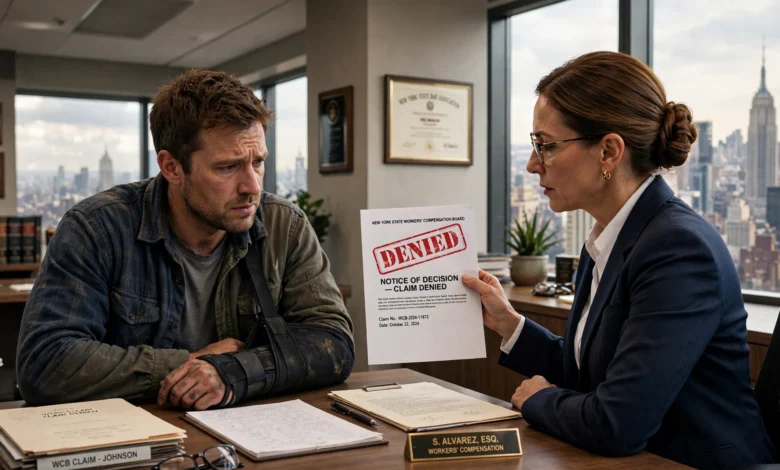
Getting hurt on the job is stressful enough without an insurance company telling you your claim doesn’t qualify. A New York workers’ compensation denial letter can feel like the end of the road, but it isn’t. Every year, thousands of injured workers across the state open a Notice of Controversy or a judge’s decision and see the word “disallowed” where they expected “awarded.” The good news is that New York built an entire appeals system specifically for this situation, and a denial is really just the first round, not the final word.
This article breaks down the five reasons workers’ compensation claims get denied most often in New York, from missed paperwork deadlines to disputes over whether an injury even happened at work. It also walks through the actual appeal process step by step, using the real forms and deadlines the Workers’ Compensation Board uses, so you know exactly what to file and when.
Whether your claim was denied outright or your benefits were cut short, understanding why insurers push back and how the Board reviews these disputes puts you in a much stronger position to get the outcome you deserve. Let’s get into the details.
Understanding Why Claims Get Denied in the First Place
Before appealing anything, it helps to know how the system works. New York runs on a no-fault model, which means you don’t have to prove your employer did something wrong to get benefits. You only have to show that the injury or illness happened in the course of your job. That sounds simple, but insurance carriers still have plenty of room to dispute a claim, and they use it often.
A denial doesn’t automatically mean your case is weak. It often means the carrier is protecting itself by challenging anything that isn’t airtight. Once you understand the specific angle they’re attacking, you can respond to it directly instead of guessing.
5 Common Reasons for a New York Workers’ Compensation Denial
1. Missed Deadlines or Late Reporting
Timing matters more in this process than most people realize. New York Workers’ Compensation Law requires that you notify your employer of an injury within 30 days, and you generally have up to two years to file a formal claim using Form C-3. If either of these windows is missed, the carrier has an easy basis to deny the claim, even if the injury itself is completely legitimate.
Common timing problems include:
- Waiting weeks to tell a supervisor about a strain or repetitive stress injury
- Assuming a minor injury will heal without needing to report it, then having it worsen
- Filing the claim form late because of confusion over which forms are required
2. The Injury Isn’t Considered Work-Related
This is probably the single biggest source of disputes. The carrier’s job is to determine whether your injury actually arose “out of and in the course of employment.” If there’s any ambiguity, expect a fight.
This shows up in situations like:


- Injuries during a lunch break off company property
- Pre-existing conditions that were aggravated, but not caused, by work
- Injuries during a commute (generally not covered unless you were on a work errand)
- Claims where there were no witnesses and the carrier questions the timeline
3. Insufficient or Inconsistent Medical Evidence
Medical documentation carries enormous weight in a workers’ compensation claim. If your treating physician’s notes are vague, inconsistent with your reported symptoms, or don’t clearly connect the diagnosis to a workplace incident, the carrier will use that gap to deny or limit benefits.
Watch out for:
- Gaps in treatment that suggest the injury wasn’t serious
- Doctors who don’t use the specific causation language the Board expects
- An independent medical examination (IME) that contradicts your own doctor’s findings
4. Disputes Over Pre-Existing Conditions
If you’ve had a prior back injury, arthritis, or a previous workers’ comp claim in the same body part, insurers will often argue that your current condition is a continuation of the old injury rather than a new work-related one. This is one of the most common reasons for a denied workers’ compensation claim in New York, especially for workers in physically demanding jobs where wear and tear accumulates over years.
The carrier doesn’t need to prove the old injury caused 100% of your current problem. They only need to raise enough doubt that the Board asks for more evidence, which slows everything down.
5. Employer or Carrier Disputes the Facts of the Incident
Sometimes the denial has nothing to do with medicine or paperwork and everything to do with a factual disagreement. The employer might claim the incident didn’t happen the way you described it, that you were violating a safety rule, or that alcohol or intentional misconduct played a role. These cases often turn into a “he said, she said” situation that gets resolved at a hearing rather than through paperwork alone.
How to Appeal a Workers’ Compensation Denial in New York
New York’s appeal system runs through several levels, and each one has its own form and deadline. Missing a deadline at any stage can close off your right to move forward, so mark these dates the moment you receive a decision.
Step 1: File a Request for a Hearing (Form RFA-1W)
If your claim is disputed, the first formal step is requesting a hearing before a Workers’ Compensation Law Judge (WCLJ). This is typically done using Form RFA-1W, and it’s usually filed within 30 days of receiving the denial notice. This is where you formally put your objection on the record.
Step 2: Attend the Hearing Before a WCLJ
At the hearing, both sides present evidence. You’ll want your medical records, wage documentation, and any witness statements organized and ready. The judge reviews everything and issues a written decision that either awards benefits, denies them, or sends the case back for more information.
Step 3: File an Application for Board Review (Form RB-89)
If the judge rules against you, the next step is filing an Application for Board Review, known as Form RB-89. This must be filed within 30 calendar days of the judge’s decision, and it needs to clearly identify the specific errors you’re challenging, whether that’s a legal misapplication, an overlooked fact, or a medical finding you disagree with. The application must also be under 15 pages according to current Board instructions, so it needs to be focused and well organized rather than exhaustive.
A three-member panel from the New York State Workers’ Compensation Board reviews the case at this stage and can affirm, modify, or reverse the judge’s ruling. Filing this form correctly and on time is one of the most important things you can do in the appeals process, since a late or incomplete application can end your case before it’s even reviewed.
Step 4: Request a Full Board Review
If the three-member panel’s decision wasn’t unanimous, either side can request that the Full Board review it, and the Board is required to take up the case. If the panel decision was unanimous, the Full Board has discretion over whether to hear it. This step is another chance to correct an error, but it’s also a narrower window since the Board is generally looking for clear mistakes rather than reweighing every piece of evidence again.
Step 5: Appeal to the Appellate Division, Third Department
If the Full Board upholds the denial, your final option is appealing to the Appellate Division of the New York Supreme Court, Third Department. This is a formal court proceeding, not an administrative one, and it almost always requires an attorney. At this stage, the court is reviewing whether the Board’s decision was supported by substantial evidence, not retrying the facts of your case from scratch.
You can find official forms, filing addresses, and current procedural rules directly through the New York Workers’ Compensation Board’s appeals page, which is worth bookmarking if you’re actively going through this process.
Tips to Strengthen Your Appeal
A denial letter can feel personal, but the appeal process rewards a methodical approach more than an emotional one. A few things consistently make a difference:
- Keep every document. Incident reports, medical records, correspondence with the carrier, and pay stubs all matter. Missing documentation is one of the easiest things for a carrier to exploit.
- Get consistent medical treatment. Gaps in care are one of the first things reviewers flag, even if your injury genuinely improved and then worsened again.
- Match your testimony to your paperwork. Inconsistencies between what you told your doctor, your employer, and the Board create openings for doubt.
- Watch every deadline. The 30-day windows for RFA-1W and RB-89 filings are strict. Calendar them the day you receive any decision.
- Address the specific denial reason. Don’t submit a general appeal. Directly rebut whatever reason the carrier or judge cited.
When to Call a Workers’ Compensation Attorney
You’re allowed to handle a workers’ compensation appeal on your own, and many people file the initial hearing request without a lawyer. But once a case reaches the Board Review or Appellate Division stage, the legal arguments get more technical, and the stakes are usually higher because more time and money are on the line.
It’s worth talking to an attorney if:
- Your claim was denied based on a disputed pre-existing condition
- The carrier is using an independent medical exam to contradict your own doctor
- You’ve already lost at the hearing level and are considering Board Review
- Your case involves a permanent disability classification or a large wage loss
Most workers’ compensation attorneys in New York work on a contingency basis, meaning they only get paid if you receive benefits, and their fee is set by the Board rather than negotiated freely. That structure makes it low-risk to at least get a consultation before deciding how to proceed on your own.
Conclusion
A New York workers’ compensation denial is frustrating, but it’s rarely the final answer. Most denials trace back to one of five recurring issues: missed deadlines, disputes over whether the injury was work-related, weak or inconsistent medical evidence, pre-existing condition arguments, or a factual disagreement about how the incident happened. Once you know which of these applies to your case, you can build a targeted appeal instead of a scattered one.
New York’s appeals system, from the initial hearing request through Board Review and, if necessary, the Appellate Division, gives injured workers a real path to overturn an unfair decision, as long as deadlines are respected and the evidence is organized. If your claim has been denied, treat it as the start of a process rather than the end of one, and don’t hesitate to get professional guidance when the stakes are high.