Phoenix Construction Injuries: Arizona Workers Comp for Contractors
Phoenix construction injuries raise tough questions about Arizona workers comp for contractors. Here's what coverage, claims, and deadlines actually look like.

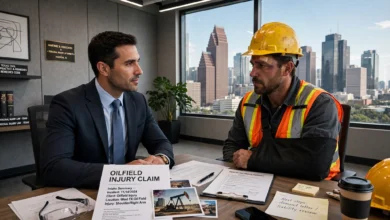
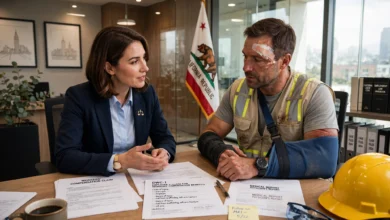
Construction work built Phoenix, and it’s still building it. Cranes over downtown high-rises, framing crews in Buckeye and Queen Creek, roofing companies chasing the heat before it chases them off the roof. With that much activity comes a steady stream of Phoenix construction injuries, and a lot of confusion about what happens next. Who pays the medical bills? Does a subcontractor even qualify? What happens if a general contractor says you’re not “really” an employee?
Arizona workers comp for contractors is one of the more misunderstood corners of the state’s injury system, mostly because construction sites blend W-2 employees, 1099 subcontractors, temp labor, and owner-operators on the same job. Each of those categories gets treated differently under Arizona law, and getting the classification wrong can cost an injured worker real money and real time.
This article walks through how workers’ compensation actually applies to construction work in the Phoenix area: who’s covered, what benefits look like, how the claims process runs through the Industrial Commission of Arizona, and where contractors most often get tripped up. Whether you’re a framer who got hurt on a job in Mesa, a roofing subcontractor unsure if you qualify, or a small construction business owner trying to stay compliant, the goal here is to give you a clear, practical picture of where you stand.
Why Phoenix Construction Injuries Happen So Often
Construction consistently ranks among the most dangerous industries in the country, and the Phoenix metro adds a few local wrinkles on top of the usual risks. Triple-digit summer heat, rapid residential growth on the outskirts of the Valley, and a dense concentration of commercial and high-rise projects downtown all contribute to a steady flow of jobsite injuries.
The most common categories of construction injuries in the Phoenix area include:
- Falls from height — off ladders, scaffolding, roofs, and unfinished floors
- Struck-by incidents — falling tools, swinging equipment, or debris
- Caught-in or caught-between accidents — trench collapses, equipment entanglement
- Electrocution — contact with power lines or exposed wiring
- Heat-related illness — heat exhaustion and heatstroke during summer months
- Overexertion and repetitive strain — back, shoulder, and knee injuries from lifting and repeated motion
The federal Occupational Safety and Health Administration tracks these as the industry’s “fatal four” hazards — falls, struck-by, caught-in/between, and electrocution — and they account for the large majority of construction fatalities nationwide. Arizona’s booming residential and commercial building activity means Phoenix crews are exposed to all of them on a regular basis.
How Arizona Workers Comp Applies to Construction Work
Arizona runs a no-fault workers’ compensation system. That means an injured worker doesn’t need to prove the employer was negligent to receive benefits — if the injury happened in the course of employment, medical treatment and partial wage replacement are generally available regardless of who caused the accident. In exchange, the employer generally can’t be sued for damages outside the workers’ comp system, a concept known as the “exclusive remedy” rule.
For construction specifically, coverage depends heavily on one question: is the injured worker actually an employee, or a genuine independent contractor?
The One-Employee Rule
Arizona doesn’t have a small-business exemption for construction. The moment a construction business hires its first W-2 worker, full-time, part-time, or temporary, it’s required to carry workers’ compensation insurance. There’s no threshold based on hours worked or how long the job lasts. This is a stricter standard than many states use, and it catches a lot of small residential contractors off guard.


Sole proprietors, partners, and LLC members generally aren’t required to cover themselves, though they can elect coverage voluntarily. Corporate officers of an Arizona corporation are presumed to be employees unless they file the proper opt-out paperwork with the Industrial Commission of Arizona (ICA).
Employee vs. Independent Contractor: The Real Test
This is where Arizona workers comp for contractors gets complicated. Arizona uses a “right of control” or “totality of the facts” test to determine whether a worker is truly an independent contractor or an employee in disguise. Simply calling someone a 1099 subcontractor, or having them sign a contract that says so, doesn’t settle the question on its own.
Factors the ICA and courts look at include:
- Who controls the method and manner of the work, not just the final result
- Whether the worker uses their own tools and equipment
- Whether the worker sets their own hours or works a schedule set by the hiring company
- Whether the work performed is part of the hiring company’s regular business
- Whether the worker can hire helpers or subcontract the job themselves
- How the worker is paid (by the job versus by the hour)
- Whether the worker carries their own liability insurance and business license
Arizona also has a specific safe-harbor tool for this exact situation: the Declaration of Independent Business Status (DIBS). A signed DIBS agreement, or a separate written agreement disclosing that the contractor isn’t entitled to comp benefits from the hiring company, creates a rebuttable presumption of independent-contractor status for workers’ comp purposes. It’s optional, and skipping it isn’t automatically held against the hiring party, but using it correctly gives both sides more certainty.
Misclassification is common on construction sites, particularly with framing crews, drywall subs, and cleanup labor paid in cash or by the job. If a worker who was called a 1099 contractor was actually being directed and controlled like an employee, that worker may still be entitled to full workers’ comp benefits, and the general contractor or subcontractor who hired them may be on the hook for coverage they never purchased.
What Benefits Are Available After a Construction Injury
Once a claim is accepted, Arizona workers’ comp benefits for a construction injury generally include:
- Medical care — all reasonable and necessary treatment related to the injury, including emergency care, surgery, physical therapy, and prescriptions
- Temporary compensation — roughly two-thirds of the worker’s average monthly wage while they’re unable to work, subject to state maximum and minimum caps
- Permanent partial disability benefits — for lasting impairment that doesn’t fully prevent a return to work
- Permanent total disability benefits — for injuries severe enough to prevent any gainful work
- Vocational rehabilitation — job training or placement help if the worker can’t return to their prior construction trade
- Death benefits — for dependents in the case of a fatal jobsite accident
Injuries excluded from coverage typically involve intoxication, willful self-inflicted harm, or horseplay unrelated to the job. Everything else arising out of and in the course of employment is generally covered, whether it’s a single traumatic event like a fall or a gradual condition like a repetitive-strain shoulder injury from years of overhead work.
Filing a Workers Comp Claim After a Phoenix Construction Injury
The claims process runs through the Industrial Commission of Arizona, the state agency that administers workers’ comp for the entire state, including every construction site in the Phoenix metro.
Step-by-Step Process
- Report the injury immediately. Tell your supervisor or employer as soon as the injury happens, even if it seems minor at first. Construction injuries like back strain or joint damage can worsen quickly, and delayed reporting is one of the top reasons claims get challenged.
- Get medical treatment and mention the job connection. At the first medical visit, tell the provider the injury is work-related. The doctor typically completes a Worker’s and Physician’s Report of Injury, which starts the formal claim.
- File your claim with the ICA. Reporting to your employer alone doesn’t count as filing a claim. The written report has to reach the Industrial Commission. The employer is separately required to file an Employer’s Report of Injury within 10 days of learning about it.
- Wait for the carrier’s decision. Once the ICA receives the claim, the insurance carrier generally has 21 days to accept or deny it and must send a written Notice of Claim Status.
- Protest a denial if needed. If the claim is denied, the worker has 90 days to file a Request for Hearing and challenge the decision in front of an administrative law judge.
- Document everything along the way. Photos of the injury and jobsite, names of witnesses, and copies of every form filed all strengthen a claim if it’s ever disputed.
The One-Year Deadline
Arizona law gives injured workers one year from the date of injury, or from the date they knew or reasonably should have known the injury was work-related, to file a formal claim. For gradual conditions like hearing loss, repetitive strain, or diagnoses like PTSD, that clock starts when the connection to the job becomes apparent, not necessarily the date of the incident itself. Missing this window can permanently bar an otherwise valid claim, so treating the deadline as a hard stop rather than a suggestion matters.
Special Considerations for Contractors and Subcontractors
Construction projects almost always involve layers of contractors: a general contractor, several subcontractors, and sometimes labor brokers supplying temporary crews. This layering creates a few recurring problems.
Subcontractors Who Hire Their Own Crew
An independent contractor who brings on helpers or subcontracts part of a job may be required, under Arizona law, to carry workers’ compensation coverage for those workers, even if the contractor themselves isn’t covered by anyone else. Small crews that skip this step often find out the hard way, when an injury turns into a coverage gap that lands on the contractor personally.
General Contractor Liability
In some situations, a general contractor can end up responsible for workers’ comp coverage on a subcontractor’s crew if that subcontractor didn’t carry their own policy. This is sometimes called “statutory employer” exposure, and it’s part of why reputable general contractors in the Phoenix area require proof of workers’ comp insurance before letting any sub start work.
Uninsured or Underinsured Contractors
If a worker is hurt on a job where the responsible contractor didn’t carry required coverage, the claim doesn’t just disappear. Arizona has mechanisms, including the Special Fund administered through the ICA, that can step in for certain uninsured employer situations. This is a scenario where getting legal guidance early tends to matter, since the process for pursuing benefits from an uninsured employer is more involved than a standard claim.
Common Reasons Construction Comp Claims Get Denied
Insurance carriers scrutinize construction claims more than most, partly because the injuries are often serious and the payouts can be large. Frequent reasons for denial include:
- Classification disputes — the carrier argues the injured person was an independent contractor, not an employee
- Late reporting — the injury wasn’t reported to the employer or the ICA promptly
- Pre-existing condition arguments — the carrier claims the injury (especially back, shoulder, or knee issues) predates the job
- Disputed cause — no witnesses, or conflicting accounts of how the accident happened
- Intoxication allegations — post-accident drug or alcohol testing showing a positive result
None of these automatically end a claim. Workers who receive a denial have the right to appeal through the ICA hearing process, and many denials are successfully overturned once additional medical records or witness statements are submitted.
What Contractors and Employers Should Do to Stay Compliant
For construction business owners in the Phoenix area, staying on the right side of Arizona’s workers’ comp rules isn’t just about avoiding penalties. It protects the business from far larger exposure if a jobsite accident happens and coverage isn’t in place.
- Carry a policy the moment you hire your first employee. There’s no grace period and no small-crew exception.
- Use a written DIBS agreement for genuine independent contractors. Verbal understandings don’t hold up well if a classification dispute reaches the ICA.
- Require proof of coverage from every subcontractor before they start work. This limits statutory employer exposure.
- Train crews on heat safety, fall protection, and reporting procedures. Fewer incidents mean fewer claims, lower premiums, and less downtime on the job.
- Report injuries promptly and accurately. Delayed or incomplete Employer’s Reports of Injury create friction with the ICA and can look bad if a claim is later disputed.
Frequently Asked Questions
Does Arizona workers’ comp cover heat stroke on a construction site? Yes. Heat-related illness that develops from working conditions, including extreme summer heat on a Phoenix jobsite, is generally treated the same as any other work-related injury or illness, provided it’s properly reported and documented.
Can a 1099 construction subcontractor ever get workers’ comp? Only if they’re found to actually meet the legal test for an employee despite being labeled a contractor, or if they’ve voluntarily elected coverage for themselves. A genuine independent contractor, correctly classified, generally isn’t covered unless they’ve bought their own policy.
What if my employer doesn’t have workers’ comp insurance? You may still be able to pursue benefits through the ICA’s process for uninsured employers, and depending on the circumstances, you may also have the option to pursue a civil claim outside the workers’ comp system. This is a situation where speaking with an attorney early is worth the time.
How long does a typical Phoenix construction comp claim take? Straightforward claims can be accepted and paying benefits within a few weeks of filing. Disputed claims, especially those involving classification arguments or serious permanent injuries, can take months and may require a hearing before an administrative law judge.
Conclusion
Phoenix construction injuries sit at the intersection of a physically demanding industry and a workers’ comp system that treats employees, independent contractors, and subcontractors very differently. Getting hurt on a jobsite is stressful enough without also having to untangle whether you’re covered, who your employer actually is on paper, and whether the one-year filing deadline is already ticking.
Understanding how Arizona workers comp for contractors actually works, from the one-employee rule to the DIBS classification test to the claims timeline through the Industrial Commission of Arizona, gives both injured workers and construction business owners a much clearer path forward. When classification is murky, a claim gets denied, or an employer turns out to be uninsured, getting informed guidance early usually makes the difference between a claim that stalls out and one that gets resolved fairly.