Florida Workers Comp: Can You Sue Your Employer for Workplace Injuries?
Florida workers comp usually blocks employer lawsuits, but real exceptions exist. Here's when you can sue and what your injury claim options are.
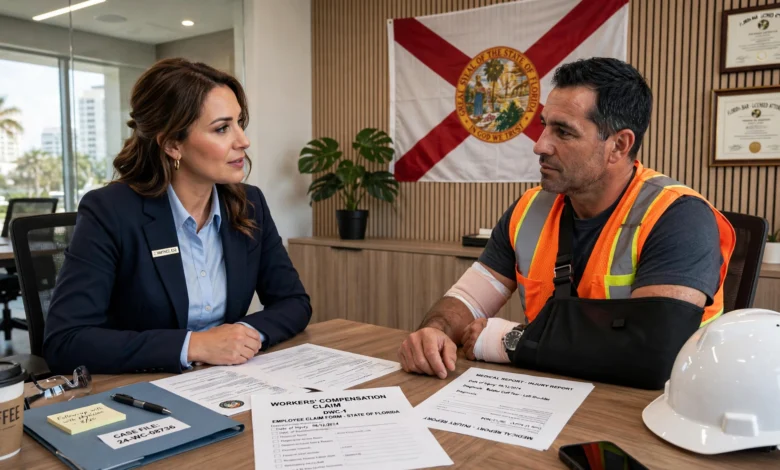
If you’ve been hurt on the job in Florida, one question probably comes to mind fast: can you sue your employer, or are you stuck with whatever workers’ comp offers? It’s a fair question, because workers’ compensation benefits often feel limited compared to what a personal injury lawsuit could pay out. There’s no compensation for pain and suffering, and the checks that do arrive rarely cover your full lost income.
Florida workers comp operates on a trade-off that’s been baked into state law for decades. Employees give up the right to sue their employer for negligence, and in exchange, employers pay medical bills and a portion of lost wages regardless of who caused the accident. This is called the exclusive remedy rule, and it applies to the overwhelming majority of workplace injuries in the state.
But “overwhelming majority” isn’t “all.” Florida law carves out a handful of narrow situations where an injured worker can step outside the workers’ comp system and file a civil lawsuit instead, sometimes against the employer directly, and sometimes against a third party connected to the accident. This article walks through exactly when that’s possible, what you’d need to prove, and what steps make sense if you’re dealing with a workplace injury right now.
What Is Florida Workers’ Comp and the Exclusive Remedy Rule
Every business in Florida with four or more employees (or one or more in construction) is generally required to carry workers’ compensation insurance. When an employee gets hurt on the job, that insurance is supposed to cover:
- Medical treatment related to the injury
- A percentage of lost wages during recovery
- Compensation for permanent disability, if applicable
- Death benefits for surviving dependents, in fatal cases
In return for this no-fault system, Florida Statute 440.11 makes workers’ comp the exclusive remedy for workplace injuries. That means an injured employee generally cannot sue their employer for negligence, even if the employer’s carelessness caused the accident. The rule also shields coworkers from most personal injury lawsuits connected to a workplace accident.
The idea behind this system, as courts have explained, is to guarantee injured workers get medical care and partial wage replacement quickly, without having to prove fault in court, while giving employers protection from expensive negligence lawsuits. It’s a compromise, and like most compromises, it doesn’t always feel fair to the person on the losing end of a bad injury.
Can You Sue Your Employer in Florida? The Short Answer
In most cases, no. If your injury happened during the course of your job duties and your employer carried the required insurance, workers’ comp is your only path to compensation from that employer. This holds true even in cases where your employer was clearly negligent, such as failing to maintain equipment or ignoring a known hazard.
That said, Florida courts have recognized that exclusive remedy immunity shouldn’t apply “in the most egregious circumstances.” The legislature intended to give employers immunity from suit except in the most egregious circumstances. That phrase matters, because it’s the legal foundation for the exceptions below.
There are really only two statutory exceptions to the exclusive remedy rule in Florida: a failure to secure workers’ compensation insurance, or an intentional tort committed by the employer. A few related situations, like third-party liability and fellow-employee gross negligence, also open the door to a lawsuit, even though they don’t technically pierce employer immunity itself.


Exception 1: Your Employer Didn’t Carry Workers’ Comp Insurance
This is the more straightforward of the two exceptions. Florida law requires most employers to secure workers’ comp coverage. If a company skips this requirement, whether out of cost-cutting, ignorance, or an attempt to misclassify workers as independent contractors, it loses the legal protection that comes with carrying that insurance.
If an employer fails to secure payment of compensation as required by law, an injured employee may elect to claim compensation under the workers’ compensation chapter or maintain an action at law for damages on account of the injury. In plain terms, you get to choose. You can still pursue a claim through the state’s Uninsured Employer’s Fund, or you can file a civil lawsuit against the employer directly.
The advantage of suing in this scenario is significant. When an employer lacks coverage, Florida law strips away several defenses they’d normally have in a negligence case, including:
- The defense that the injury was caused by another employee’s negligence
- The defense that you assumed the risk of the job
- The defense of comparative negligence reducing your damages
Without these defenses available, an uninsured employer is in a weak position if the case goes to court, and a successful lawsuit can result in a considerably higher payout than a standard comp claim would ever provide.
Exception 2: The Employer Committed an Intentional Tort
This is the exception most people ask about, and it’s also the hardest one to actually win. Florida’s intentional tort exception allows an injured employee to sue their employer directly when the employer’s conduct crosses the line from negligence into something closer to deliberate harm.
The legal foundation traces back to Turner v. PCR, Inc., a 2000 Florida Supreme Court case. In that decision, the court held that an exception to workers’ compensation immunity existed for intentional torts committed by an employer, and that an injured employee could satisfy the exception by showing either that the employer intended to injure them, or that the employer engaged in conduct objectively certain to result in injury.
The Florida Legislature responded in 2003 by narrowing that exception considerably, worried that courts were applying it too broadly. Under the amended statute, an employer’s actions are treated as an intentional tort, not an accident, only when the employee proves by clear and convincing evidence one of two things.
Deliberate Intent to Injure
The first path requires showing the employer actually meant to hurt you. This is rare in workplace injury cases and usually only comes up in situations involving workplace violence, deliberate sabotage, or similarly extreme conduct. Ordinary carelessness, even severe carelessness, doesn’t meet this bar.
Conduct Virtually Certain to Cause Injury
The second and more commonly argued path is that the employer engaged in conduct it knew, based on explicit prior warnings or similar past incidents, was virtually certain to result in injury or death, and then sent the employee to perform that task anyway while hiding the danger. The law requires showing the employer either deliberately intended to injure the worker or engaged in conduct the employer knew, based on explicit warnings that specifically alerted to a known danger or other prior similar acts, was virtually certain to end in employee injury or death.
This is a much higher standard than “the employer violated a safety rule” or “the employer should have known better.” Courts have repeatedly found that even serious OSHA violations, by themselves, usually don’t meet the intentional tort threshold. What tends to matter is whether there’s a documented history: prior complaints, prior near-misses, or explicit warnings that management ignored before sending an employee into the same hazardous situation again.
Because of how narrow this exception is, it’s extremely difficult for most injured workers to meet the necessary criteria to pursue an intentional tort claim against their employer. These cases require strong documentary evidence and are almost always handled with an attorney experienced in this specific area of Florida law.
Suing a Third Party Instead of Your Employer
Here’s where a lot of injured workers find real relief, even when they can’t sue their own employer. The exclusive remedy rule only protects your employer and, in most cases, your coworkers. It does not protect outside parties whose negligence contributed to your injury.
Common third-party defendants in a Florida workplace injury case include:
- Equipment or machinery manufacturers, when a defective product caused the injury
- General contractors or subcontractors on a construction site who weren’t your direct employer
- Property owners whose premises weren’t reasonably safe
- Drivers who caused a car accident while you were working, such as during a delivery route
- Vendors, maintenance companies, or other businesses whose negligence created the hazard
If a third party’s carelessness played a role in your accident, you can typically pursue a workers’ comp claim against your employer’s insurance and a separate personal injury lawsuit against that third party. This is one of the most valuable strategies for maximizing compensation after a serious workplace accident, since a personal injury lawsuit allows recovery of pain and suffering damages that workers’ comp simply doesn’t provide.
Suing a Coworker for Gross Negligence
Fellow employees generally share the same immunity as the employer, but that protection isn’t absolute either. Fellow-employee immunity does not apply to an employee who acts with willful and wanton disregard, or with gross negligence, when such conduct results in injury or death, or proximately causes such injury or death.
In practice, this means an ordinary mistake by a coworker, forgetting to mark a wet floor, misjudging a lift, isn’t enough to support a lawsuit. But conduct that goes well beyond carelessness, such as recklessly operating heavy machinery near coworkers after repeated warnings, could potentially support a gross negligence claim against that individual coworker.
What Recent Florida Case Law Says
Florida courts have continued to reinforce how narrow these exceptions are, and how strictly the process must be followed. A 2025 Fifth District Court of Appeal decision, Steak ‘N Shake v. Spears, is a good example. The court held that unless one of the two narrow exceptions applies, intentional torts or lack of coverage, employers remain shielded from civil liability under Florida Statute 440.11, and only the workers’ comp system decides whether an injury is compensable.
In that case, an employee suffered severe emotional trauma during an armed robbery at work but never filed a workers’ comp claim before suing. Because she never filed, the carrier never evaluated the claim and no judge of compensation claims ever ruled on compensability, so the employer’s statutory immunity remained fully intact. The takeaway is important: even in cases involving frightening or traumatic circumstances, skipping the workers’ comp process first generally won’t open the door to a civil lawsuit later. You typically have to let the comp system weigh in before pursuing any other legal path.
What to Do After a Workplace Injury in Florida
Whether or not you end up with grounds to sue, the steps you take immediately after an injury shape everything that follows, including whether you preserve the option to pursue a claim outside of workers’ comp later.
- Report the injury right away. Florida law requires notifying your employer within 30 days, though sooner is always better for both your health and your case.
- Get medical treatment from an authorized provider. Your employer or their insurance carrier typically has the right to direct your initial treatment under workers’ comp.
- Document everything. Take photos of the scene, keep copies of incident reports, and write down what happened while it’s fresh.
- Identify anyone else who may share fault. If equipment, a contractor, or another company’s employee played a role, note it early.
- Watch for delays, denials, or pressure to skip filing a claim. These can sometimes signal larger problems with how your case is being handled.
- Keep records of lost wages and ongoing symptoms. This matters for both a comp claim and any potential civil case.
When to Talk to a Florida Workers’ Comp Attorney
Given how narrow the intentional tort exception is, and how specific the requirements are for third-party and uninsured-employer claims, this isn’t really an area where guesswork serves you well. An attorney who regularly handles Florida workers comp cases can review your accident, pull your employer’s insurance status, and evaluate whether a third party bears responsibility, all things that are hard to sort out on your own while you’re also trying to recover physically.
It’s also worth noting that consulting an attorney doesn’t require you to abandon your workers’ comp claim. In fact, running both tracks together, a comp claim for your employer’s insurance and a lawsuit against a negligent third party, is one of the more common and effective strategies injured workers use in Florida.
For the full statutory language governing these rules, the Florida Senate publishes the current version of Chapter 440, Florida’s Workers’ Compensation Law, and The Florida Bar’s Journal offers a detailed breakdown in its analysis of the intentional tort exception to employer immunity.
Conclusion
Florida workers comp is designed to be the exclusive remedy for most workplace injuries, which means suing your employer directly is rarely an option. But it’s not never. If your employer failed to carry the required insurance, or if they committed a genuine intentional tort by knowingly sending you into a situation virtually certain to cause harm, the law allows you to step outside the comp system and pursue a civil lawsuit.
Beyond that, third-party lawsuits against negligent contractors, manufacturers, or other outside parties remain available even when your employer is fully protected, and they’re often the most realistic path to fuller compensation. Given how fact-specific and legally narrow these exceptions are, working with an experienced Florida workers’ comp attorney is usually the clearest way to understand exactly where your case stands.