California Wrongful Death Lawsuits: Who Can File and How Much to Expect
Losing someone to negligence changes everything. Here's who can file a California wrongful death lawsuit and what compensation typically looks like.
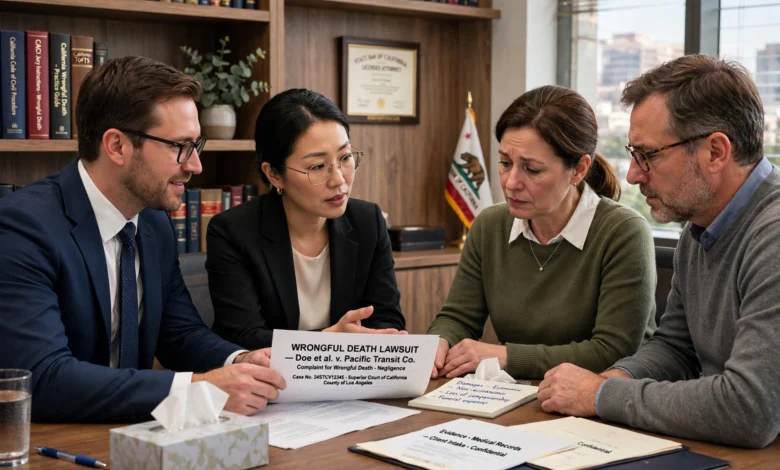
There’s no version of this article that makes losing someone easier to read about. If you’re here, chances are someone you love died because of another person’s carelessness, recklessness, or outright negligence, and now you’re trying to figure out what comes next. That’s a strange place to be. You’re grieving, but you’re also stuck dealing with practical questions: Am I even allowed to file a lawsuit? Who else in my family gets a say? What is this actually worth in dollars, and does anyone deserve to put a price on it?
A California wrongful death lawsuits is a civil claim brought by a deceased person’s survivors against whoever caused their death through negligence, recklessness, or an intentional act. It’s separate from any criminal case that might also be happening. A criminal trial punishes the wrongdoer; a wrongful death claim gets money to the people left behind, covering things like lost income, funeral costs, and the loss of a relationship that can’t be replaced.
This guide walks through exactly who has legal standing to file, what “wrongful death” actually means under California law, how damages get calculated, and what kind of settlement or verdict range families in similar situations have seen. None of this replaces a conversation with a licensed California attorney about your specific case, but it should give you a clear, honest starting point.
What Qualifies as a Wrongful Death in California
California law defines wrongful death fairly broadly. Under California Code of Civil Procedure §377.60, a wrongful death claim arises whenever someone’s death is caused by the wrongful act or neglect of another person or entity. That’s a wide net, and it covers far more situations than most people assume.
Common causes of wrongful death lawsuits in California include:
- Car, motorcycle, and truck accidents caused by a negligent driver
- Medical malpractice, including surgical errors, misdiagnosis, or birth injuries
- Defective products, machinery, or vehicles
- Slip-and-fall or other premises liability incidents
- Workplace accidents involving third-party negligence
- Nursing home abuse or neglect
- Criminal acts, such as assault or DUI-related deaths
The common thread is that the death had to be preventable. If a defendant acted carelessly, ignored a known danger, or violated a safety standard, and that failure led to someone dying, their family generally has grounds to pursue a wrongful death claim.
It’s worth noting that a wrongful death case can move forward even if no one was ever criminally charged, and even if a criminal case results in an acquittal. Civil and criminal cases run on separate tracks with separate burdens of proof. A criminal conviction requires proof beyond a reasonable doubt; a civil wrongful death case only needs a “preponderance of the evidence,” meaning it’s more likely than not that the defendant’s negligence caused the death. That’s a meaningfully lower bar, which is part of why families sometimes win a civil case even after a criminal trial didn’t go their way.
Who Can File a Wrongful Death Lawsuit in California
This is usually the first question families ask, and it’s also the one with the most legal nuance. California doesn’t let just anyone who’s grieving file suit. The right to sue is limited by statute to specific categories of people, and the order matters.
First in line: spouses, domestic partners, and children
Under CCP §377.60, the people with the clearest right to file a California wrongful death lawsuit are:


- The decedent’s surviving spouse or registered domestic partner
- The decedent’s surviving children
- If a child of the decedent has also died, that child’s own children (the decedent’s grandchildren) can step into their parent’s place
If the deceased person has a spouse or children, those individuals typically take priority over more distant relatives. In most cases, all eligible heirs are expected to join together in a single lawsuit rather than filing separate, competing claims, since California generally requires one unified wrongful death action per death.
If there’s no surviving spouse or child
When someone dies without a spouse, domestic partner, or children, the law expands the list of who can file. In that situation, the people next entitled to bring a claim are typically:
- Parents of the deceased, if they would inherit under California’s intestate succession rules
- Siblings, if there’s no surviving parent
- Other relatives who would legally be entitled to the decedent’s property under intestacy law
Essentially, if the closest relatives aren’t alive to file, the right passes to whoever would inherit if the deceased had died without a will.
Financially dependent individuals who may also qualify
California law also carves out room for people who depended on the deceased financially, even if they aren’t a spouse, partner, or biological child. This can include:
- A putative spouse (someone who reasonably believed they were legally married to the decedent, even if the marriage turns out to be invalid)
- Stepchildren who were financially dependent on the decedent
- Parents of the decedent who relied on them financially, even if not first in line otherwise
- Any minor who lived in the decedent’s household for at least 180 days before the death and was at least 50% financially dependent on them
This dependent category exists because California recognizes that “family” isn’t always defined neatly by blood or marriage. A blended family, a long-term partner without a legal marriage, or a household with informal caregiving arrangements can all create the kind of financial dependency the law was designed to protect. This financially dependent group can include a putative spouse, stepchildren, dependent parents, and qualifying minors who lived in the household and were at least half supported by the decedent.
What if the decedent had no family at all?
In rare situations where no eligible relative or dependent exists, the decedent’s personal representative, meaning the executor or administrator of their estate, can bring the wrongful death claim on behalf of the estate.
If you’re unsure whether you qualify, that uncertainty is common and not a reason to assume you’re out of luck. A California wrongful death attorney can review your relationship to the decedent and tell you where you fall in the priority order, often in a single free consultation.
Wrongful Death Claims vs. Survival Actions: They’re Not the Same Thing
People frequently confuse these two, and the distinction actually affects how much money is available.
A wrongful death lawsuit compensates the survivors for their own losses, things like lost financial support, loss of companionship, and funeral expenses. It belongs to the family, not the deceased person’s estate.
A survival action, on the other hand, is a separate claim that belongs to the deceased person’s estate. It covers damages the deceased person could have claimed had they lived, such as pain and suffering they experienced between the injury and their death, along with medical bills incurred before death.
Here’s where it gets a little more complicated: California temporarily allowed survival actions to include pain and suffering damages for cases filed between January 1, 2022 and December 31, 2025, under a legislative pilot program. Those damages were allowed in survival lawsuits filed from January 1, 2022 through December 31, 2025, as part of a state legislature pilot program, but on January 1, 2026 the state reverted to the old rule, and pain and suffering compensation isn’t possible in survival lawsuits filed after that date.
If your case involves a death that happened before the pilot ended, the timing of when the lawsuit is filed can matter quite a bit, so this is a detail worth flagging to your attorney early.
What You Need to Prove in a California Wrongful Death Case
Like any negligence claim, a wrongful death lawsuit generally requires proving four elements:
- Duty of care – The defendant owed a legal duty to the deceased person (a driver’s duty to follow traffic laws, a doctor’s duty to meet the standard of care, a property owner’s duty to maintain safe premises, etc.)
- Breach – The defendant failed to meet that duty
- Causation – That failure directly caused the death
- Damages – The death resulted in quantifiable losses to the survivors
Evidence typically comes from police or accident reports, medical records, witness statements, expert testimony (accident reconstructionists, medical experts, economists), and sometimes surveillance or dashcam footage. Building this case is almost always more effective with a lawyer involved, since gathering and preserving evidence quickly, before it disappears or memories fade, matters a lot in these cases.
How Much Compensation to Expect in a California Wrongful Death Lawsuit
This is usually the question families care about most, and honestly, it’s the hardest one to answer with a single number. Every case is different, and the value depends heavily on the circumstances of the death, the decedent’s earning capacity, and how many dependents are involved. That said, here’s how the calculation generally breaks down.
Economic damages
These cover the tangible, calculable financial losses tied to the death, including:
- Loss of the income and financial support the deceased would have provided over their expected working years
- Loss of benefits, such as health insurance or retirement contributions
- Funeral and burial expenses
- Medical expenses incurred prior to death
- Loss of household services the deceased would have provided (childcare, home maintenance, etc.)
Economic damages are typically calculated with the help of a forensic economist, who estimates lifetime earnings based on the decedent’s age, occupation, health, and career trajectory. There is no cap on economic damages in California wrongful death cases.
Non-economic damages
These cover the harder-to-quantify losses that come from losing a relationship:
- Loss of love, companionship, comfort, and affection
- Loss of the moral support and guidance the decedent provided
- Loss of consortium (for a surviving spouse or partner)
- The survivors’ grief and emotional suffering, in some contexts
Under general California law, non-economic damages in wrongful death cases are not capped, which is different from many other states. This means a jury has considerable discretion in valuing the loss of a relationship, and verdicts can vary widely depending on the facts, the decedent’s role in the family, and how sympathetic the case appears to a jury.
The exception: medical malpractice cases and the MICRA cap
There’s one major exception to the “no cap” rule: cases involving medical malpractice. Under California’s Medical Injury Compensation Reform Act (MICRA), non-economic damages in malpractice-related wrongful death cases are capped. The cap has actually shifted quite a bit in recent years. Assembly Bill 35 overhauled the old $250,000 flat cap that had been in place since 1975, replacing it with a stepped increase.
As of January 1, 2026, the MICRA cap for wrongful death cases involving medical malpractice is $650,000, and it’s scheduled to rise by $50,000 each year until it reaches $1 million in 2033. The cap for non-fatal malpractice cases is currently $470,000, rising by $40,000 annually on the same schedule.
Importantly, this cap only applies to non-economic damages in malpractice cases. Economic damages (medical bills, lost income, cost of future care) remain uncapped regardless of the type of case.
Punitive damages
In cases involving especially reckless or intentional conduct, such as a drunk driving death or a case involving fraud or malice, California allows survivors to seek punitive damages. These aren’t meant to compensate the family; they’re meant to punish the defendant and discourage similar conduct in the future. Punitive damages are less common than economic or non-economic damages and require a higher showing of the defendant’s mental state.
So, realistically, how much is a case worth?
There’s genuinely no universal number here, and any website that promises you a specific figure without knowing your case is guessing. Settlements and verdicts in California wrongful death cases have ranged from the low six figures for cases with limited economic loss and shared fault, up into the tens of millions for cases involving young children with dependents, high earners, or particularly egregious corporate or medical negligence. Some firms report settlements in the range of several million dollars for cases involving strong liability evidence and significant lost future earnings.
Factors that tend to push a settlement higher include:
- The decedent’s age and earning potential (a death that cuts off decades of future income tends to be valued more highly than the loss of an already-retired person, from a purely economic standpoint)
- The number of dependents relying on that income
- Clear, well-documented liability with minimal shared fault
- The degree of negligence or recklessness involved
- Available insurance coverage or the defendant’s assets
Statute of Limitations: How Long You Have to File
In most California wrongful death lawsuits, you generally have two years from the date of death to file a claim, under California Code of Civil Procedure §335.1. Miss that window, and courts will typically dismiss the case regardless of how strong the evidence is, so this deadline matters enormously.
There are exceptions that can shorten or complicate the timeline:
- Claims against a government entity (a city, county, state agency, or public employee) require a formal administrative claim to be filed, often within just six months of the death, before a lawsuit can even be filed.
- Medical malpractice cases follow a different rule under CCP §340.5: generally one year from discovery of the malpractice, or three years from the date of the underlying injury, whichever comes first. There’s also a mandatory 90-day pre-filing notice requirement in malpractice cases.
- Cases involving a minor plaintiff or other unique circumstances can sometimes toll (pause) the statute of limitations.
Given how quickly some of these deadlines move, it’s worth talking to an attorney as soon as possible rather than waiting, even if you’re still processing the loss. Evidence also tends to disappear over time: surveillance footage gets overwritten, memories fade, and physical evidence at an accident scene can be repaired or removed.
How the Wrongful Death Filing Process Works
While every case has its own path, a typical California wrongful death lawsuit moves through these general stages:
- Consultation and investigation – An attorney reviews the circumstances, gathers police or incident reports, medical records, and any available witness statements, and determines who the potential defendants are.
- Filing the complaint – A formal lawsuit is filed in the appropriate California superior court, naming the defendant(s) and outlining the claims.
- Discovery – Both sides exchange evidence, take depositions, and consult expert witnesses (medical experts, accident reconstructionists, economists).
- Settlement negotiations – The majority of wrongful death cases in California settle before trial, often after mediation or informal negotiation between attorneys.
- Trial – If no settlement is reached, the case proceeds to trial, where a judge or jury determines liability and damages.
Because all eligible heirs are generally required to be part of one unified lawsuit, families sometimes need to sort out internally who will take the lead in bringing the claim, particularly when there’s more than one qualifying survivor. An attorney can help coordinate this so the case moves forward smoothly rather than getting bogged down in family disagreements.
Do You Need a Lawyer for a Wrongful Death Claim?
Technically, no law requires you to hire an attorney. Practically, almost no one handles these cases alone, and for good reason. Wrongful death cases involve expert testimony, complex damage calculations, insurance company negotiations, and strict procedural deadlines. Most wrongful death attorneys in California work on contingency, meaning they only get paid if you recover compensation, so there’s typically no upfront cost to at least get a case evaluated.
If you’re trying to decide whether it’s worth reaching out to an attorney, a few signs suggest it’s worth the conversation:
- There’s any ambiguity about who’s at fault
- Multiple parties might share responsibility
- The death involved a government entity, employer, or medical provider
- You’re unsure whether you qualify as an eligible survivor under California law
- The insurance company is offering a quick settlement (this is often a sign they’re trying to close the case before you understand its full value)
For more detail on how California’s wrongful death statutes are structured, the California Courts self-help resources provide official guidance on civil case procedures, and Nolo’s legal encyclopedia offers a plain-language breakdown of how these claims work in practice.
Final Thoughts
Filing a California wrongful death lawsuit won’t undo what happened, and no dollar figure changes that. But it can cover the financial gap left behind, hold a negligent party accountable, and give a family some closure through a legal process built specifically for this kind of loss. Under California law, the right to file generally belongs first to a surviving spouse, domestic partner, or children, then extends to parents, siblings, or other heirs if no closer relative exists, and even to financially dependent stepchildren or household members in certain situations.
Compensation covers both economic losses like lost income and non-economic losses like companionship, with no general cap except in medical malpractice cases, where 2026’s MICRA limit sits at $650,000 for wrongful death claims. Because the statute of limitations is typically just two years (and much shorter for government or malpractice claims), the most important step is simply not waiting too long to talk to someone who can tell you exactly where your case stands.