Florida Wrongful Death Damages: Economic vs Non-Economic Compensation
Understand Florida wrongful death damages, from economic losses like lost income to non-economic compensation for grief and pain.
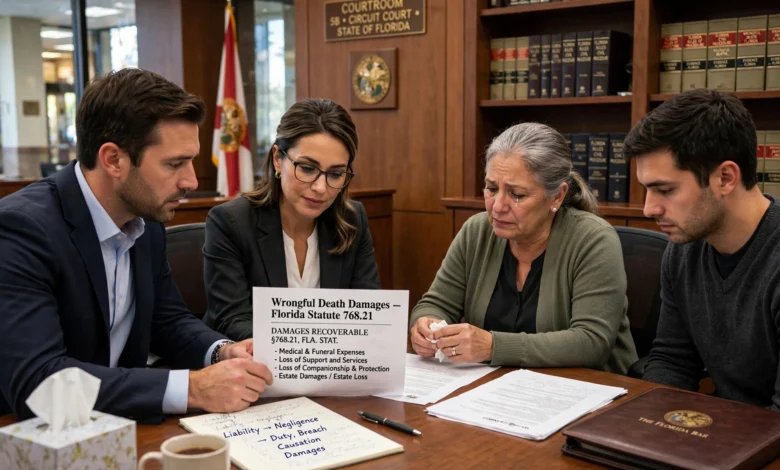
Losing a family member because of someone else’s negligence turns your whole world upside down. On top of the grief, there are often bills piling up, income that stopped coming in, and a legal system that suddenly matters more than you ever wanted it to. If you’re trying to make sense of a potential claim, understanding Florida wrongful death damages is one of the first steps toward getting your footing back.
Florida law splits wrongful death compensation into two broad categories: economic damages and non-economic damages. Economic damages cover the financial side of the loss, things like lost income, medical bills, and funeral costs. Non-economic damages address the human side, the pain, the missing presence at the dinner table, the guidance a parent no longer gets to give.
These two categories aren’t just legal jargon. They determine who can recover what, how a case gets valued, and how insurance companies and juries approach a claim. A surviving spouse’s losses look different from what an adult child can recover. A young parent’s economic loss calculation looks nothing like a retiree’s.
This article walks through both types of damages under Florida’s Wrongful Death Act, who qualifies to receive them, how they’re calculated, and what tends to increase or decrease a claim’s value. Whether you’re just starting to research your options or you’re already working with an attorney, this guide should give you a clearer picture of what compensation in a Florida wrongful death claim actually looks like.
What Is the Florida Wrongful Death Act?
Florida’s Wrongful Death Act, found in Florida Statutes Chapter 768, gives certain surviving family members and a decedent’s estate the right to pursue compensation when someone dies because of another party’s negligence, recklessness, or intentional wrongdoing. This could stem from a car accident, medical malpractice, a defective product, a workplace accident, or any number of situations where a death was preventable.
The law is built around a simple idea: when a death is caused by someone else’s fault, the people left behind and the decedent’s estate shouldn’t have to absorb the financial and emotional fallout alone. The statute that lays out exactly what can be recovered is Florida Statute § 768.21, and it’s the backbone of any wrongful death damages discussion in this state.
Importantly, only a personal representative of the estate can file the wrongful death lawsuit itself, even though the compensation ultimately gets distributed among eligible survivors and the estate according to the statute’s rules.
Who Can File and Who Can Recover
Not everyone connected to the decedent has an automatic right to compensation. Florida Statute § 768.18 defines who counts as a “survivor” for purposes of the law. Generally, this includes:
- The surviving spouse
- Surviving children (minor children always qualify; adult children qualify only if there’s no surviving spouse)
- Surviving parents, if the decedent left no spouse or children
- Any blood relative or adoptive sibling who was partly or wholly dependent on the decedent for support or services, in certain limited situations
This matters because it directly shapes who’s entitled to non-economic damages, and it can get complicated fast. Adult children, for instance, are generally excluded from recovering damages if the decedent had a surviving spouse. Surviving parents face similar restrictions if there’s a spouse or children in the picture. These exclusions catch a lot of families off guard, which is one more reason it helps to talk with a Florida wrongful death attorney early in the process rather than assuming everyone in the family automatically has a claim.


Economic Damages in a Florida Wrongful Death Claim
Economic damages are the measurable, dollars-and-cents losses tied directly to the death. They’re meant to restore, as much as money can, the financial position the survivors and the estate would have been in if the death hadn’t happened. Because these losses can be documented with pay stubs, invoices, tax returns, and expert projections, they tend to be the more straightforward half of a wrongful death claim to calculate, even though the numbers themselves can get large.
Lost Income and Lost Earning Capacity
One of the biggest components of economic compensation is the income the decedent would have earned had they lived. This isn’t just about what they made last year. It typically factors in:
- The decedent’s age and expected working years remaining
- Their salary history, career trajectory, and any planned promotions or raises
- Bonuses, commissions, and employer-paid benefits like retirement contributions and health insurance
- The likelihood of continued employment based on health and career stability
A 35-year-old engineer with two decades of career growth ahead will generally produce a larger lost income calculation than a 70-year-old who was already semi-retired. Economists and vocational experts are often brought in to project these numbers and reduce them to present value, which accounts for the fact that a lump sum paid today is worth more than the same amount spread out over future years.
Loss of Support and Services
Beyond direct income, Florida wrongful death damages also account for the value of support and services the decedent provided to their family. This can include:
- Household labor like cooking, cleaning, home maintenance, and childcare
- Financial support the decedent regularly gave to a spouse, children, or dependents
- Services that would need to be replaced by hiring outside help, such as a nanny or a handyman
Under Florida Statute § 768.21(1), each survivor may recover the value of lost support and services from the date of injury through death, plus future losses reduced to present value. Courts look at the survivor’s relationship to the decedent, the decedent’s probable net income available for distribution, and the replacement value of the services lost.
Medical and Funeral Expenses
Nearly every wrongful death claim includes reimbursement for:
- Medical bills incurred between the injury and death, if there was a period of survival
- Funeral and burial expenses
- Related out-of-pocket costs, like transportation for hospital visits or home care
These expenses are usually recoverable by whoever actually paid them, whether that’s the estate or an individual family member, and they’re generally supported with receipts and invoices from providers and funeral homes.
Loss of Net Accumulations to the Estate
The decedent’s estate can also pursue what’s called loss of net accumulations, essentially the additional wealth the decedent would likely have built up and left behind had they lived out a normal life expectancy. This factors in projected savings, investments, and any prospective inheritance the family might have expected to receive, minus estimated living expenses. It’s one of the more complex calculations in a wrongful death case and almost always requires an economic expert to model out realistically.
Non-Economic Damages in a Florida Wrongful Death Claim
Where economic damages deal with numbers, non-economic damages deal with everything money can’t fully fix. Florida law recognizes that losing a parent, spouse, or child causes real harm that isn’t captured by a pay stub, and it allows eligible survivors to seek compensation for that harm too.
Pain and Suffering of Survivors
Surviving family members can seek compensation for their own mental anguish and emotional distress caused by the death. This includes:
- A surviving spouse’s grief and loss of companionship
- A parent’s suffering over the death of a child
- A minor child’s loss of parental guidance, companionship, and protection
- An adult child’s mental pain and suffering, but only when the decedent left no surviving spouse
The emotional weight of these claims is real, but juries still need something to go on. Testimony from family members, friends, therapists, or grief counselors often helps establish the depth of the relationship and the impact of the loss.
Loss of Companionship and Protection
Beyond general pain and suffering, Florida law specifically recognizes loss of companionship and protection for a surviving spouse, and loss of parental companionship, instruction, and guidance for surviving minor children (and, in some cases, adult children who were dependent on the decedent). These categories try to put a value on the relationship itself, the day-to-day presence of a spouse or parent that simply can’t be replaced.
Pain and Suffering of the Decedent
If the decedent survived for some period between the injury and death, their estate may be able to recover for the conscious pain and suffering the decedent experienced before dying. This is separate from the survivors’ own grief and requires evidence, often medical records or witness accounts, showing the decedent was aware of their suffering.
Economic vs Non-Economic Damages: Key Differences
It helps to see the two categories side by side.
- Nature of the loss – Economic damages compensate for financial harm; non-economic damages compensate for emotional and relational harm.
- Ease of calculation – Economic damages rely on documentation and expert projections; non-economic damages rely on testimony and the jury’s judgment of the relationship’s value.
- Who can recover them – Economic damages are often available more broadly among survivors and the estate; non-economic damages are restricted to specific relationships defined in Florida Statute § 768.21, with notable exclusions for adult children and parents when a spouse or minor children exist.
- Caps and limitations – Florida does not impose a general statutory cap on non-economic damages in ordinary negligence wrongful death cases, though medical malpractice wrongful death claims have their own separate history of legislative caps that has shifted over the years following court rulings.
- Evidence required – Economic claims lean on pay stubs, tax returns, and actuarial tables; non-economic claims lean on personal testimony, photographs, and accounts of the relationship.
What Affects the Value of a Florida Wrongful Death Claim
Several factors shape how much a wrongful death case is ultimately worth, whether through settlement or a jury verdict.
- Age of the decedent. Younger victims with longer projected working years and life expectancy generally support larger economic damages calculations.
- Earning potential. A decedent with a high salary, strong career trajectory, or valuable professional license tends to produce a bigger lost income figure than someone with modest or sporadic earnings.
- Number and closeness of survivors. More eligible survivors, and closer relationships to the decedent, often mean more non-economic damages claims stacked into the case.
- Degree of fault. If the defendant’s conduct was especially reckless, this can affect settlement leverage and, in some cases, open the door to punitive damages under Florida Statute § 768.73.
- Quality of documentation. Well-documented income, clear medical and funeral bills, and credible testimony about the relationship all strengthen a claim’s value.
- Insurance policy limits. Even a strong claim can be limited in practice by the available insurance coverage or the defendant’s assets.
The Legal Process for Pursuing Wrongful Death Damages
Filing a wrongful death claim in Florida generally follows this path:
- Appointment of a personal representative, usually named in the decedent’s will or appointed by the probate court, who has the legal authority to file the lawsuit under Florida Statute § 768.20.
- Investigation and evidence gathering, including accident reports, medical records, financial documentation, and expert consultations to build out both economic and non-economic components of the claim.
- Filing the lawsuit within Florida’s statute of limitations, which is generally two years from the date of death for most wrongful death claims, though exceptions and different timelines can apply depending on the circumstances.
- Settlement negotiations, where most cases resolve before ever reaching trial.
- Trial, if a settlement can’t be reached, where a judge or jury determines liability and the amount of damages based on the evidence presented.
- Distribution of proceeds, allocated among the estate and eligible survivors according to Florida Statute § 768.21, often requiring court approval when minor children are involved.
Given how many moving parts there are, and how strict the eligibility rules can be, it’s worth reviewing Florida’s Wrongful Death Act directly through the Florida Legislature’s official statutes to understand the exact language governing your situation, and consulting resources like the American Bar Association for general guidance on how wrongful death litigation typically unfolds.
Common Questions About Florida Wrongful Death Damages
Can Punitive Damages Be Awarded?
Yes, in certain cases. Punitive damages aren’t meant to compensate the family directly but to punish especially egregious conduct and deter similar behavior in the future. Florida Statute § 768.73 places some limits on punitive damages amounts, and they’re not available in every case, only where the evidence shows intentional misconduct or gross negligence.
Are There Caps on Non-Economic Damages?
For most ordinary negligence wrongful death claims in Florida, there is no blanket statutory cap on non-economic damages. Medical malpractice cases have had a more complicated history, with legislative caps enacted and later struck down or narrowed by Florida courts. Anyone dealing with a malpractice-related wrongful death claim should get current guidance, since this area of law has shifted more than most.
How Long Do Families Have to File?
Florida generally requires a wrongful death lawsuit to be filed within two years of the date of death. Missing this window typically means losing the right to pursue the claim altogether, so acting promptly matters even while a family is still grieving.
Do Both Economic and Non-Economic Damages Apply in Every Case?
Not necessarily. Eligibility depends on the survivor’s relationship to the decedent and the specific facts of the case. A surviving spouse, for example, can typically pursue both types of damages, while an adult child might be limited or excluded entirely if a spouse survives the decedent.
Final Thoughts
Florida wrongful death damages exist to address two very different kinds of loss: the financial hole left behind and the emotional one. Economic damages, covering lost income, medical and funeral expenses, and loss of future accumulations, tend to be calculated through documentation and expert analysis, while non-economic damages, covering pain, suffering, and loss of companionship, rely on testimony and the human story behind the case.
Who can recover which type of compensation depends heavily on the survivor’s relationship to the decedent under Florida Statute § 768.21, and the value of any claim depends on factors like the decedent’s age, earning potential, and the strength of the evidence presented. If you’re navigating a wrongful death situation in Florida, understanding both categories of damages, and how they interact with the state’s eligibility rules, is an essential step toward pursuing fair compensation for your family.