UK Fatal Accident Claims: London Solicitors for Bereaved Families
Losing a loved one is devastating. Learn how London solicitors help bereaved families pursue UK fatal accident claims and fair compensation.
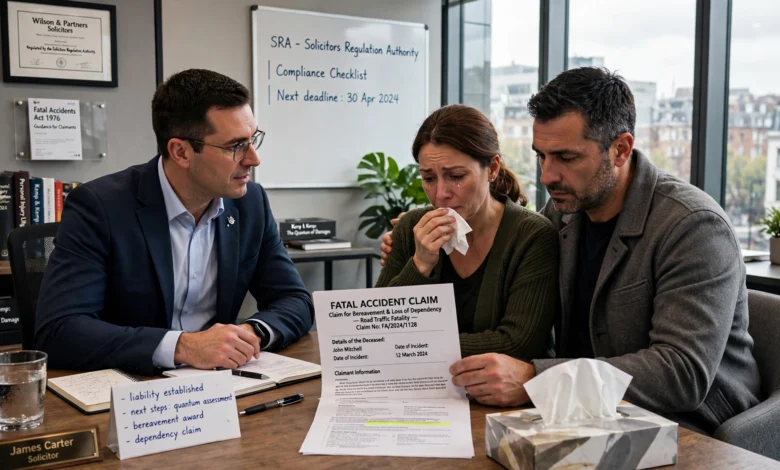
UK fatal accident claims exist for one simple reason: when someone dies because of another person’s negligence, the law recognises that their family shouldn’t be left to carry the financial and emotional fallout alone. If you’ve lost a husband, wife, parent, or child in an accident that wasn’t your loved one’s fault, you may be entitled to bring a claim under English law, and a specialist London solicitor can guide you through what is often an unfamiliar and painful process.
This isn’t a topic anyone wants to research. You’re probably reading this in the middle of grief, dealing with a coroner’s inquest, funeral arrangements, and a hundred practical problems you never expected to face. That’s exactly why it helps to understand, in plain terms, what a fatal accident claim actually involves: who can bring one, what compensation covers, how long you have to act, and what a good solicitor does for you beyond simply “handling the paperwork.”
Below, we’ve broken down the law, the process, and the practical considerations that matter most to bereaved families in London and across England and Wales, so you can make informed decisions at a time when clear thinking is in short supply.
What Are Fatal Accident Claims?
A fatal accident claim is a legal claim brought after someone dies as a result of another party’s negligence, recklessness, or breach of duty. It’s a form of personal injury claim, except the injured person has died, so the claim is brought on their behalf by their estate or their dependants rather than by the person themselves.
These claims typically arise from:
- Road traffic collisions
- Workplace accidents
- Medical negligence or clinical errors
- Accidents in public places (unsafe premises, poor maintenance, faulty equipment)
- Industrial disease (such as mesothelioma from asbestos exposure)
- Criminal acts, including unlawful killing
The purpose of a fatal accident claim isn’t to “put a price on a life,” even though it can feel uncomfortably close to that. It’s to compensate the people left behind for the financial support they’ve lost, the costs they’ve incurred, and, to a limited extent, the grief the law formally recognises.
The Legal Basis: Two Acts Working Together
In England and Wales, fatal accident compensation rests on two separate pieces of legislation that work alongside each other:
- The Law Reform (Miscellaneous Provisions) Act 1934 – This allows the deceased’s estate to claim for losses the deceased suffered before death, such as pain and suffering between the accident and death, medical expenses, and lost earnings up to the point of death.
- The Fatal Accidents Act 1976 – This allows dependants of the deceased to claim for losses they suffer as a result of the death, including loss of financial support, loss of services, and a fixed statutory sum known as the bereavement award.
Understanding this distinction matters because a single fatal accident often generates two overlapping but legally separate claims, and a solicitor experienced in this area will know how to run both together for maximum recovery.
Who Can Bring a Fatal Accident Claim in the UK?
Not everyone who has lost a loved one is automatically entitled to compensation under the Fatal Accidents Act. The law is quite specific about who qualifies as a “dependant,” and this is one of the first things a solicitor will assess.


Eligible Dependants
Under the Fatal Accidents Act 1976, a claim can generally be brought by:
- A spouse or civil partner of the deceased
- A former spouse or civil partner
- A cohabiting partner who lived with the deceased for at least two years immediately before the death
- A parent or other ascendant of the deceased
- A child or other descendant of the deceased
- Anyone treated by the deceased as a parent or child of the family
If you’re unsure whether you fall into one of these categories, a solicitor can confirm your eligibility quickly, there’s no need to guess or assume you don’t qualify.
Who Can Claim the Bereavement Award
The bereavement award (sometimes called the bereavement damages payment) is a fixed statutory sum intended to compensate for grief itself, separate from any financial dependency loss. It’s currently set at £15,120 for deaths occurring on or after 1 May 2020, having been increased from £12,980.
This award can only be claimed by a narrower group of people:
- The husband, wife, or civil partner of the deceased
- A cohabiting partner who lived with the deceased for at least two years before the death (for deaths on or after 6 October 2020)
- The parents of a deceased child who was under 18 and never married
This narrow eligibility list has been criticised for years, most notably it historically excluded cohabiting partners entirely until a legal challenge forced reform, and it still excludes adult children grieving a parent, or parents grieving an adult child. Many personal injury lawyers argue this remains an unfair and outdated feature of UK law, and it’s worth discussing with your solicitor how it might affect your specific claim.
What Compensation Can Bereaved Families Claim?
A fatal accident claim isn’t a single lump sum with one label attached. It’s usually made up of several distinct heads of loss, and a thorough solicitor will pursue all of them rather than settling for the most obvious one.
1. The Bereavement Award
As covered above, this is a fixed sum currently set at £15,120, payable only to specific close relatives.
2. Dependency Claims
This is often the largest and most complex part of a fatal accident claim. Dependency claims compensate surviving family members for the financial support they would have received had their loved one lived. This can include:
- Loss of the deceased’s income and future earnings
- Loss of pension contributions and benefits
- Loss of services the deceased provided, such as childcare, DIY, gardening, or care for elderly relatives
- Loss of “intangible” benefits, such as a parent’s guidance and care for young children
Calculating dependency claims involves actuarial assumptions about how long the deceased would likely have worked, how their income might have progressed, and how long the dependency would have continued. Solicitors typically instruct actuaries or rely on published tables (such as the Ogden Tables) to produce a defensible figure, rather than a rough estimate.
3. Funeral Expenses
Reasonable funeral costs are recoverable as part of a fatal accident claim, provided they’re proportionate. This can help ease one of the more immediate financial pressures families face after a death.
4. Estate Claims Under the 1934 Act
If the deceased suffered before dying, whether for minutes or months, their estate can claim for:
- Pain, suffering, and loss of amenity between the accident and death
- Medical and care costs incurred before death
- Loss of earnings up to the date of death
5. Other Financial Losses
Depending on the circumstances, additional claims might cover:
- Cost of a “gratuitous carer” who gave up work or reduced hours to look after the deceased before death
- Travel costs to hospital
- Costs associated with administering the estate
A good solicitor will build a complete picture of these losses rather than treating them as an afterthought, because collectively they often represent far more than the bereavement award alone.
Common Causes of Fatal Accidents
Fatal accident claims arise from a wide range of circumstances, and the legal approach can differ depending on the cause. Common scenarios include:
- Road traffic accidents – collisions involving cars, motorcycles, cyclists, or pedestrians, often involving uninsured or untraced drivers
- Workplace accidents – falls from height, machinery failures, exposure to hazardous substances, or breaches of health and safety law
- Medical negligence – misdiagnosis, surgical errors, medication mistakes, or delayed treatment
- Public liability incidents – accidents in shops, restaurants, on public transport, or on poorly maintained land
- Industrial disease – long-latency conditions such as mesothelioma, often linked to historic asbestos exposure
- Product liability – deaths caused by faulty or dangerous products
Each of these requires a different investigative approach, different evidence, and sometimes different defendants (an employer, an NHS trust, a local authority, an insurer), which is why choosing a solicitor with genuine experience across these areas matters.
Why Choose a London Solicitor for a Fatal Accident Claim
Fatal accident law applies uniformly across England and Wales, so the legal rules themselves don’t change depending on where you live. What does change is the value of having a London solicitor who understands the practical realities of pursuing a claim in the capital.
Local Knowledge of Coroners’ Courts
Fatal accidents almost always trigger a coroner’s inquest, and London has several busy coroner’s courts, each with its own procedures and pace. A solicitor who regularly appears before London coroners understands what to expect, can advise you on your rights at the inquest, and can help ensure findings from the inquest support, rather than undermine, your civil claim.
Experience With High-Value and Complex Claims
London solicitors frequently handle claims involving higher earners, complex pension arrangements, cross-border elements, or claims against large employers and institutions headquartered in the capital. This kind of experience matters when a dependency claim needs to reflect a genuinely complex financial picture.
Access to Specialist Support Networks
Established London firms often have direct relationships with actuaries, forensic accountants, medical experts, and counselling services, resources that can strengthen a claim and support a family’s wider wellbeing during the process.
No Win, No Fee Arrangements
Most reputable solicitors handling fatal accident claims offer conditional fee agreements, commonly known as no win, no fee. This means:
- You don’t pay upfront legal fees
- The solicitor only receives payment if the claim succeeds
- The fee is typically a agreed percentage of the compensation recovered, capped by law
This arrangement removes a significant barrier for families who are already dealing with the financial strain that follows a death.
The Fatal Accident Claims Process: Step by Step
While every case is different, most UK fatal accident claims follow a broadly similar path:
- Initial consultation – A solicitor reviews the circumstances of the death, confirms who is eligible to claim, and explains funding options.
- Investigation – Gathering evidence, including police reports, witness statements, medical records, and, where relevant, health and safety investigation findings.
- Coroner’s inquest – In most sudden or unexplained deaths, an inquest will take place to establish the cause of death. Your solicitor can represent your interests here.
- Letter of claim – A formal letter is sent to the party believed to be responsible (or their insurer), setting out the basis of the claim.
- Liability investigation – The defendant investigates and either admits or denies responsibility.
- Valuation of losses – Working with actuaries and financial experts to calculate dependency, funeral costs, and other losses accurately.
- Negotiation or court proceedings – Most claims settle through negotiation, but if liability or valuation can’t be agreed, court proceedings may follow.
- Settlement or judgment – Compensation is paid, either as a lump sum or, in some larger cases, as a combination of lump sum and periodical payments.
Throughout this process, your solicitor should keep you informed in plain language, not legal jargon, and should never rush you into decisions you’re not comfortable with.
Time Limits for Fatal Accident Claims
One of the most important things to understand early is that UK fatal accident claims are subject to strict time limits, generally referred to as the limitation period.
- In most cases, you have three years from the date of death (or the date of knowledge, if later) to start court proceedings.
- For claims involving children, the three-year clock doesn’t start until the child turns 18.
- Different or shorter time limits can apply in specific circumstances, such as claims involving certain public bodies or international travel accidents.
Missing this deadline can mean losing the right to claim entirely, regardless of how strong the case is. If you’re at all unsure where you stand, it’s worth speaking to a solicitor promptly, even if you’re not ready to pursue a claim in full yet. Many firms offer a no-obligation initial conversation specifically so families can protect their position without committing to anything.
For the full statutory wording on bereavement damages and dependency, you can review the Fatal Accidents Act 1976 on legislation.gov.uk, which sets out the legal framework in detail.
How a Solicitor Supports Bereaved Families Beyond Compensation
A good fatal accident solicitor does far more than calculate figures and send letters. Families consistently report that the right legal support helps in ways that go beyond the money itself:
- Explaining the coroner’s inquest process in advance, so it feels less overwhelming
- Liaising with insurers, employers, or NHS trusts so the family doesn’t have to deal with defensive or evasive correspondence directly
- Coordinating with the police or Health and Safety Executive, where a criminal or regulatory investigation is running alongside the civil claim
- Signposting bereavement counselling and support services, recognising that legal support and emotional support are both part of recovery
- Managing practical deadlines, such as estate administration and probate, which often overlap with the claim itself
This wider role matters because grief doesn’t pause for legal processes, and families shouldn’t have to become experts in tort law while also arranging a funeral.
Choosing the Right Fatal Accident Solicitor in London
Not all personal injury firms handle fatal accident work regularly, and this is genuinely specialist territory. When comparing London solicitors for a fatal accident claim, it’s worth checking:
- Track record – Have they handled fatal accident and dependency claims specifically, not just general personal injury cases?
- Regulation – Are they authorised and regulated by the Solicitors Regulation Authority (SRA)?
- Funding options – Do they offer no win, no fee arrangements, and are the terms explained clearly upfront?
- Accessibility – Will you have a named solicitor who responds promptly, rather than being passed between case handlers?
- Approach to inquests – Do they have experience representing families at coroner’s inquests in London specifically?
- Client reviews and testimonials – What do previous clients say about how they were treated during a difficult time?
It’s entirely reasonable to speak with more than one firm before deciding. Most reputable solicitors expect this and won’t pressure you into signing anything on a first call.
For general guidance on what to expect from an inquest and your rights as a bereaved family member, the Ministry of Justice’s guide to coroner services is a useful independent starting point alongside legal advice.
Conclusion
Losing a loved one in circumstances that were preventable is one of the hardest things a family can go through, and no amount of compensation changes that. But UK fatal accident claims exist to make sure bereaved families aren’t left facing financial hardship on top of grief, whether that’s through the fixed bereavement award, a properly calculated dependency claim, funeral expenses, or a combination of all three. Understanding who can claim, what compensation actually covers, and how strict the time limits are gives families a clearer footing at a genuinely difficult time.
Working with an experienced London solicitor, ideally one who offers no win, no fee funding and has real experience with coroner’s inquests, means you don’t have to navigate the legal process alone while also grieving. If you’ve lost someone in an accident that wasn’t their fault, an early conversation with a specialist solicitor costs nothing and can protect your family’s position for the months and years ahead.