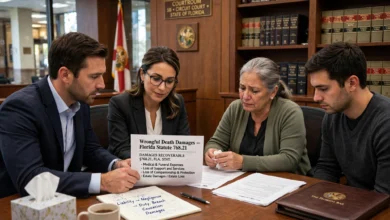
New York Wrongful Death Claims: Compensation for Lost Loved Ones
New York wrongful death claims explain who can sue, what damages families can recover, and the two-year deadline you can't afford to miss.

Losing a family member because of someone else’s carelessness or misconduct is one of those things you can’t really prepare for. One day you’re living your life, and the next you’re dealing with a funeral, a mountain of paperwork, and a hole in your family that nothing fills. If you’re reading this, there’s a good chance you’re in the middle of that exact situation, and you’re trying to figure out what New York wrongful death claims actually involve and whether your family has a case.
The short answer is: it depends on how your loved one died, who’s left behind, and how quickly you act. New York has some of the more restrictive wrongful death laws in the country, which surprises a lot of families. Unlike many states, New York doesn’t let you recover money for grief or emotional pain, only for the financial hole the death left behind. That doesn’t mean the compensation is small. For a family that lost a primary earner, or a parent who provided years of care and guidance to young kids, the financial losses can add up to a substantial number.
This guide walks through who can file a claim, what counts as compensable loss, how long you have to act, and what the process actually looks like from the moment you contact a lawyer to the day a settlement gets approved by the court.
What Is a Wrongful Death Claim in New York?
A wrongful death claim is a civil lawsuit filed when a person dies because of another party’s negligence, recklessness, or intentional conduct. It’s a separate legal action from any criminal case that might result from the same incident. If a drunk driver kills someone, for example, the state might bring criminal charges, but that’s a completely different process from the civil wrongful death case the family can pursue for compensation. The two cases don’t depend on each other, and a criminal conviction isn’t required for a wrongful death claim to succeed.
New York’s wrongful death statute is found in Estates, Powers and Trusts Law (EPTL) § 5-4.1, and it’s been part of state law since 1847. At its core, the law treats a wrongful death lawsuit as a continuation of the personal injury claim the deceased person could have brought if they had survived. If the conduct that caused the death would have supported a personal injury lawsuit, the estate can now pursue that same claim on behalf of the surviving family.
Common causes of wrongful death cases in New York include:
- Car, truck, motorcycle, and pedestrian accidents
- Medical malpractice and surgical errors
- Construction site accidents
- Defective products
- Nursing home neglect or abuse
- Premises liability (unsafe conditions on someone’s property)
- Workplace accidents involving third parties
- Criminal acts, including assault or homicide
Whatever the cause, the legal question is the same: did someone else’s wrongful act, neglect, or default cause the death? If the answer is yes, the family may have grounds for a claim.
Who Can File a Wrongful Death Claim in New York?
This is where New York law surprises a lot of people. You might assume that as a spouse, parent, or child of the deceased, you can personally file a lawsuit. You can’t. Under EPTL § 5-4.1, only the personal representative of the estate has legal standing to bring a wrongful death action. This person is either:
- The executor named in the deceased person’s will, or
- An administrator appointed by the Surrogate’s Court if there’s no will
If you’re a spouse, adult child, or parent and no one has been appointed yet, one of the first steps your attorney will help with is petitioning the Surrogate’s Court to name a personal representative. This isn’t just red tape. Without a properly appointed representative, there’s no one with the legal authority to bring the case forward, and the clock on your filing deadline keeps running the whole time.


Once someone is appointed, they file the lawsuit on behalf of the decedent’s distributees, meaning the family members who are legally entitled to inherit under New York’s intestacy laws. This typically includes:
- A surviving spouse
- Children (biological and legally adopted)
- Parents, if there’s no spouse or children
- Siblings, in some circumstances, if there’s no closer surviving family
Importantly, any money recovered doesn’t go to the estate’s general creditors or get divided according to a will. It’s distributed to the distributees based on the actual pecuniary loss each person suffered, and the court oversees that distribution to make sure it’s fair.
What Compensation Is Available in New York Wrongful Death Cases?
Here’s the part of New York wrongful death claims that trips up the most families. New York limits recoverable damages to pecuniary loss, meaning measurable financial harm. Grief, emotional suffering, and loss of companionship, however real and however devastating, are not compensable under current New York law. This is set out in EPTL § 5-4.3, the measure-of-damages statute, and New York is one of only a small number of states that takes this approach.
That said, pecuniary loss covers more ground than people initially expect. Recoverable damages generally include:
Loss of Financial Support
This covers the income and financial contributions the deceased would have provided to their family over their expected working life. Courts look at the person’s age, health, occupation, earning history, education, and career trajectory. Economists are often brought in to calculate a lifetime value based on these factors.
Loss of Services
Many people contribute to a household in ways that don’t show up on a paycheck: childcare, cooking, home repairs, driving kids to school, managing finances. When someone dies, the family often has to pay someone else to do these things. That replacement cost is factored into the claim.
Loss of Parental Guidance and Nurture
When a parent dies, especially the parent of a minor child, New York law recognizes that the child loses more than money. They lose the guidance, training, and nurturing that parent would have provided. Courts assign a monetary value to this loss based on the child’s age and the parent’s role in their life.
Medical Expenses Before Death
If the person survived for any period between the injury and their death, the medical bills incurred during that time are recoverable.
Funeral and Burial Costs
Reasonable funeral and burial expenses are compensable as part of the claim.
Loss of Inheritance
In some cases, courts will consider what the deceased likely would have accumulated and left to their heirs had they lived a full life, though this is a more complex and less commonly awarded category.
It’s worth noting that New York doesn’t cap wrongful death damages the way some other states do. There’s no statutory ceiling on what a family can recover; the number is driven entirely by the actual pecuniary losses that can be proven.
Survival Actions: A Related but Separate Claim
Alongside the wrongful death claim, the personal representative can often file what’s called a survival action. This is a separate legal claim that seeks compensation for the conscious pain and suffering the deceased experienced between the time of injury and the time of death. Unlike the wrongful death claim, a survival action can include compensation for pain and suffering, but it requires evidence that the person was conscious and aware of what was happening to them. Medical records, witness accounts, and first responder reports are typically used to establish this.
Because these are two distinct causes of action with different legal standards, they’re often filed together, but each has to be proven on its own terms.
The Statute of Limitations: Why Timing Matters So Much
If there’s one thing every family dealing with a potential wrongful death case needs to understand right away, it’s the deadline. New York’s wrongful death statute of limitations is two years from the date of death, not the date of the accident or injury. This is set out in EPTL § 5-4.1, and it’s shorter than the standard three-year window that applies to most other personal injury claims in New York under CPLR § 214.
A few important wrinkles:
- The clock starts at death, not injury. If someone is hurt in an accident in January and dies from those injuries fourteen months later, the two-year period starts from the date of death, not the original accident.
- Government defendants have shorter deadlines. If a city agency, public hospital, or an entity like the MTA may be responsible, a Notice of Claim typically must be filed within 90 days of the personal representative’s appointment. Miss that window, and you may lose the right to sue a government entity even though the two-year deadline hasn’t technically expired.
- Tolling exceptions are narrow. Some pauses that apply to other injury cases, like when a plaintiff is a minor, rarely apply the same way in wrongful death cases, since the claim belongs to the estate rather than an individual beneficiary. There is a narrow exception if the only beneficiary entitled to recover is a minor child.
- 9/11-related deaths have a slightly extended window of two and a half years, reflecting the unique circumstances of latent illnesses tied to Ground Zero exposure.
Missing this deadline is one of the few mistakes in this area of law that can’t be fixed later. Courts generally have no discretion to revive a claim once the statute of limitations has expired, no matter how strong the underlying case is. If you’re even considering a claim, the smart move is to talk to an attorney well before that two-year mark, since building the case, getting a personal representative appointed, and gathering evidence all take time.
The Grieving Families Act: A Pending Change Worth Knowing About
For years, New York lawmakers have debated the Grieving Families Act, a bill that would significantly change how wrongful death claims work in this state. If passed, it would:
- Allow recovery for grief, anguish, and loss of companionship, not just financial loss
- Extend the statute of limitations from two years to three
- Expand who is eligible to recover damages beyond the traditional distributee framework
As of now, the bill has been vetoed multiple times, most recently with the governor citing concerns about the financial impact on hospitals and insurers. It is not currently law. Until it is signed and takes effect, every wrongful death claim in New York is still governed by the pecuniary-loss-only standard under EPTL § 5-4.1 and § 5-4.3. It’s worth keeping an eye on, since a change here would meaningfully expand what grieving families can recover, but families dealing with a claim today need to plan around the law as it currently stands, not the law as it might someday be.
How the Wrongful Death Claims Process Works
Every case is different, but most wrongful death lawsuits in New York follow a similar path:
- Appointment of a personal representative. If there’s no executor named in a will, the family petitions the Surrogate’s Court to appoint an administrator.
- Investigation and evidence gathering. This includes accident reports, medical records, expert opinions, and financial documentation showing the deceased’s earnings and contributions to the household.
- Filing the claim. The lawsuit (or, for government defendants, a Notice of Claim followed by a lawsuit) is filed within the applicable deadline.
- Discovery. Both sides exchange evidence, take depositions, and consult experts, including economists who calculate the value of lost future earnings.
- Negotiation or trial. Many wrongful death cases settle before trial, but the case can go before a jury if the parties can’t agree on a fair number.
- Surrogate’s Court approval. This is a step unique to wrongful death cases in New York. Even after a settlement is reached, it must be approved by the Surrogate’s Court through a compromise order before any money reaches the family. The court reviews how the settlement is being apportioned among the distributees to make sure it’s fair, particularly when minor children are involved.
That last step catches some families off guard. Even a fully negotiated settlement isn’t final until a judge signs off on it, which adds a layer of protection but also a bit of additional time to the process.
Why Legal Representation Matters in These Cases
You’re not legally required to hire a lawyer to bring a wrongful death claim, but in practice, very few families handle these cases without one, and for good reason. Proving pecuniary loss isn’t as simple as adding up a few pay stubs. It usually requires:
- Economic experts who can project a lifetime of lost earnings and benefits
- Vocational specialists who can speak to career trajectory and earning capacity
- Medical experts, especially if a survival action is also being pursued
- A clear understanding of Surrogate’s Court procedure, since that court has its own rules separate from the general civil courts
Most attorneys handling these cases work on contingency, meaning the family pays nothing upfront and the fee comes out of any settlement or award. Given the strict deadlines, the procedural steps involving the Surrogate’s Court, and the technical work of proving financial loss, getting an attorney involved early tends to make a real difference in the outcome.
If you’re not sure where to start, the New York State Unified Court System’s Surrogate’s Court page offers background on how estate representatives are appointed, which is often the very first legal step in a wrongful death case. For a broader look at how wrongful death law works at the federal and state level, the Cornell Legal Information Institute has a solid plain-language overview of the general legal framework that underlies these claims across the country.
Frequently Asked Questions
Can more than one family member receive compensation from a single claim? Yes. The personal representative files one lawsuit, but the recovery is divided among all distributees based on each person’s individual pecuniary loss. A surviving spouse and children, for example, might each receive a different share depending on their relationship to the deceased and their financial dependence on them.
What if my loved one didn’t have a will? The Surrogate’s Court will appoint an administrator, typically the closest surviving family member who petitions for the role, to act as the personal representative. This doesn’t prevent the family from pursuing a wrongful death claim; it just adds a step before filing.
Does it matter if my loved one was partly at fault? New York follows a pure comparative negligence rule, meaning a family can still recover damages even if the deceased was partially responsible for the accident. The award is simply reduced by the deceased’s percentage of fault.
Is there a cap on how much a family can recover? No. Unlike some states, New York doesn’t impose a statutory cap on wrongful death damages. The amount is based entirely on the pecuniary losses that can be documented and proven.
What happens if the responsible party doesn’t have insurance or enough assets? This can limit what a family actually collects, even if a court awards a large judgment. An attorney can help identify all potentially liable parties and applicable insurance policies to maximize what’s actually recoverable.
Final Thoughts
Losing a loved one to another person’s negligence or wrongdoing is a loss no settlement can truly make right, but New York law does give families a path to hold the responsible party accountable and recover the financial support that death took away. The rules are specific: only a personal representative can file, damages are limited to measurable pecuniary loss rather than grief or companionship, and the two-year statute of limitations under EPTL § 5-4.1 leaves little room for delay.
Between appointing an estate representative, gathering evidence, and navigating Surrogate’s Court approval, the process has real complexity, which is why most families work with an experienced wrongful death attorney to build the strongest possible case. If you’ve lost someone because of another party’s carelessness or misconduct, understanding these rules early, and acting on them before the clock runs out, is one of the most important things you can do for your family’s financial future.